Renewed Iran war, AI investment, and tariffs add to price pressures
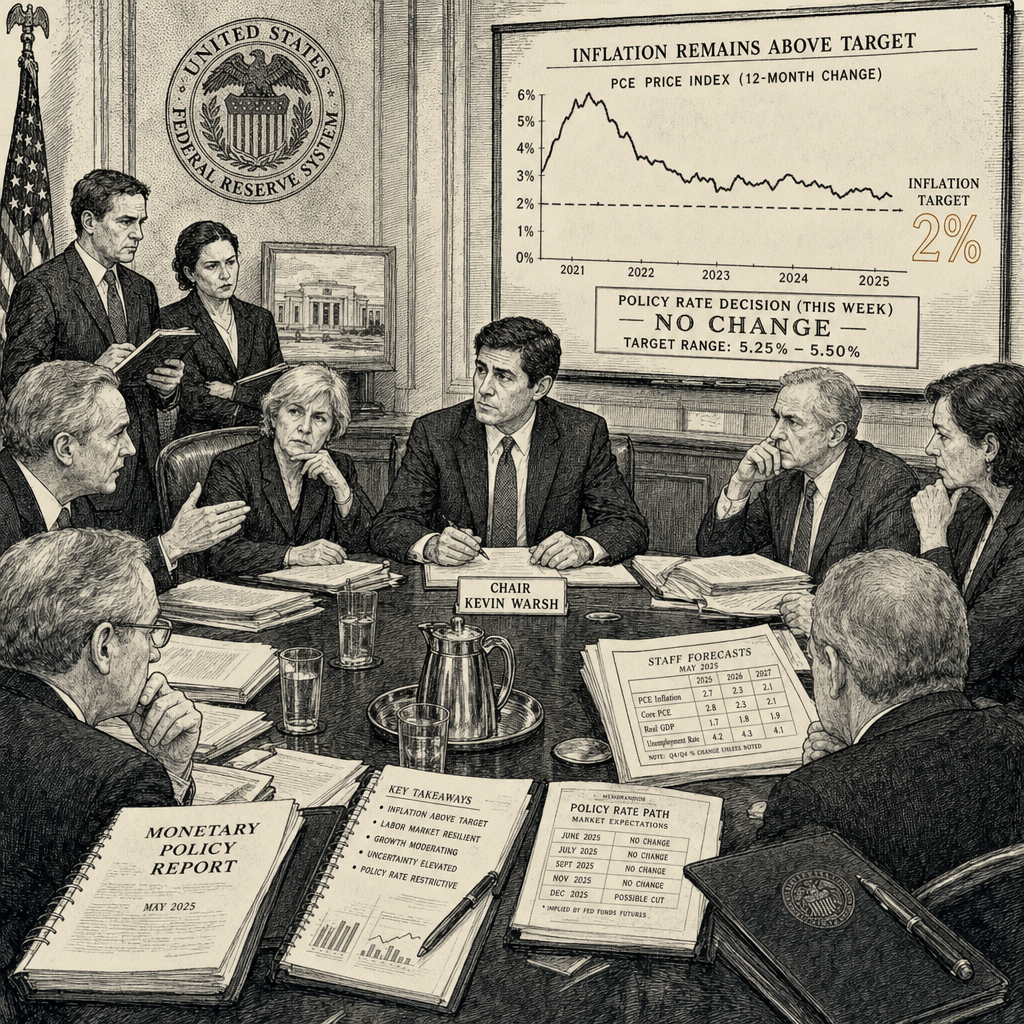
The Federal Reserve’s two-day policy meeting that begins Tuesday is expected to result in no change to the central bank’s benchmark interest rate, but Chair Kevin Warsh is facing intensifying pressure from within the central bank to begin raising rates as inflation continues to run above the Fed’s 2% target.
Inflation according to the Fed’s preferred measure has remained above 2% for more than five years, the Associated Press reported. Core inflation, which strips out volatile food and energy categories, has been climbing since last December and has stayed at approximately 3% or higher since 2023. Several Fed officials have warned that without clear progress soon, rate increases will be necessary.
“Unfortunately, inflation does not appear to be headed sustainably back all the way to 2%,” Lorie Logan, president of the Federal Reserve Bank of Dallas, said in recent remarks. Logan, who is a voting member of the Federal Open Market Committee, added that “modestly higher interest rates would better balance the outlook.”
A series of external factors are compounding the inflationary pressure. The Associated Press reported that the renewed Iran war is driving oil and natural gas prices higher, a development expected to worsen inflation in the months ahead. Surging investment in artificial intelligence infrastructure is increasing the costs of laptops, smartphones, and electricity. Additionally, tariffs imposed by President Donald Trump on dozens of U.S. trading partners could result in further price increases.
The renewed price pressures could prove temporary rather than triggering a sustained inflation burst similar to the 2021-2022 spike, according to the AP report. However, with inflation already having exceeded the Fed’s target for an extended period, the central bank may find it harder to look past even brief price increases. A rate hike could provoke opposition from Trump, who appointed Warsh.