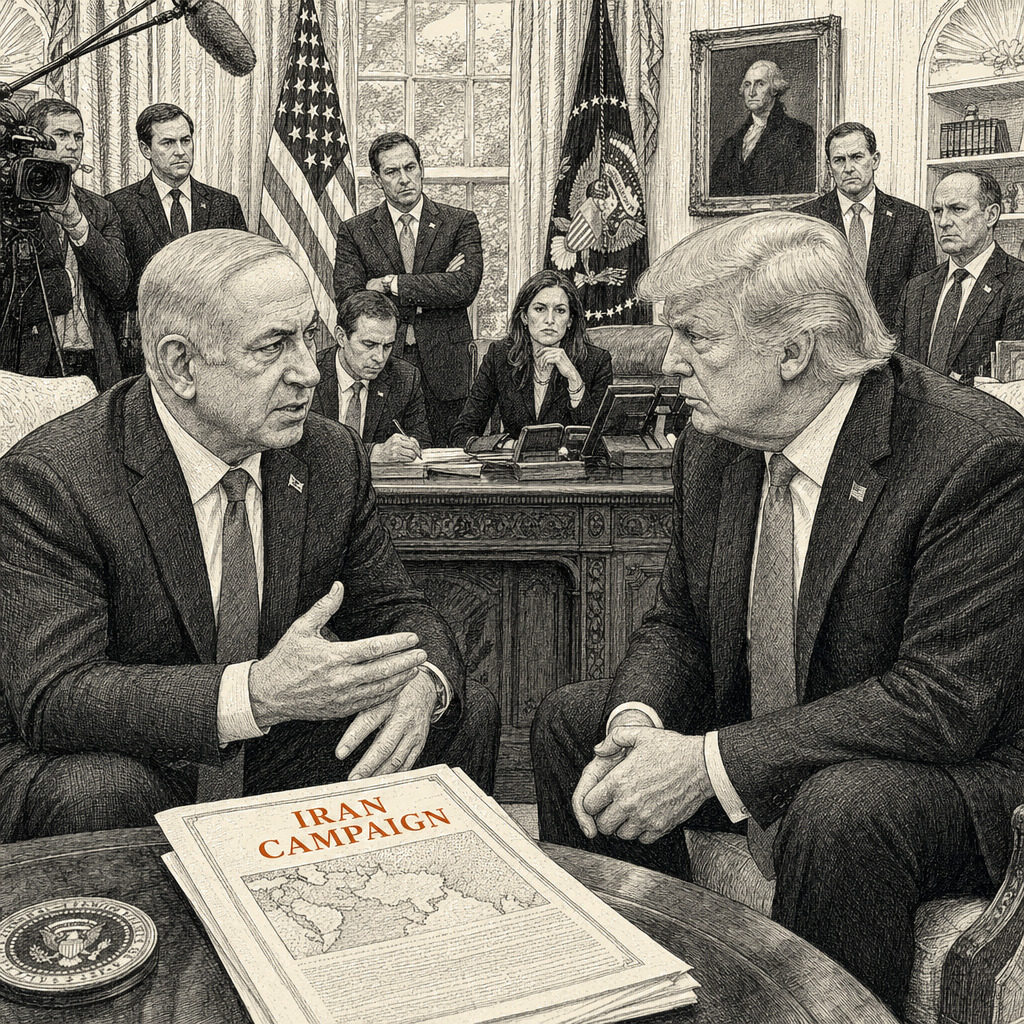
Trump says there is ‘little difference’ with Netanyahu on Iran
Israeli Prime Minister Benjamin Netanyahu met President Donald Trump at the White House on Tuesday for their first face-to-face meeting since the two countries launched a joint military campaign against Iran in February, a White House official said.
The United States and Israel began the campaign with a united front, according to the report, with both militaries operating in coordination to target Iran’s leadership. After Iran responded with drones and missiles against U.S. bases and cities in the Gulf and disrupted shipping through the Strait of Hormuz, Trump faced pressure from allies in the region and at home to end the conflict.
Trump acknowledged differences with Netanyahu when asked Monday whether the two leaders were on the same page on Iran. “We have a little difference,” Trump told reporters. “But pretty close, yeah.”
The two leaders plan to discuss the framework agreement the U.S. and Israel signed with Lebanon over the Israel-Hezbollah war and the expansion of the Abraham Accords, according to a White House official who spoke on condition of anonymity to preview the meeting.
Netanyahu also plans to share with Trump Israeli intelligence on Iran’s nuclear program, according to a person familiar with the prime minister’s visit who spoke on condition of anonymity because they were not authorized to speak to the media.
In an interview on Fox News Channel’s “Sunday Morning Futures” with Maria Bartiromo, Netanyahu said he hoped to sit down with Trump “to hear what he has in mind” for Iran. “Because I think, in many ways, it’s his decision” on how to move forward, Netanyahu said. “If he can do so without returning to intense military fighting, that’s fine. Why not?” He added: “But one way or the other, they have to end their nuclear program.” Netanyahu also warned that Israel would respond “very forcefully” to any attack from Iran.
Israel has taken steps in Lebanon and Gaza in recent days. In southern Lebanon, where Israeli forces occupy much of the territory, Israel agreed to allow the Lebanese army to deploy to some villages as part of a pilot program testing their ability to secure areas once controlled by Hezbollah. The U.S. State Department said Monday the next round of talks between Israel and Lebanon will take place next week in Rome with a focus on expanding the program.
On Gaza, Israel’s security cabinet approved Sunday a measure that would grant entry to the first members of an international stabilization force outlined last year in a U.S.-backed ceasefire deal between Israel and Hamas. Few countries have pledged troops for the force, and Israel would approve their entry on a case-by-case basis. The troops, including from Morocco and Uganda, would be allowed to operate only in a small area in Rafah, where the plan is to vet and house some displaced Palestinians.
Trump faces pressure to end the conflict as November midterm elections approach, according to the report. Netanyahu is up for reelection.
Vice President JD Vance is expected to attend the meeting with Netanyahu, according to a person familiar with the plan who spoke on condition of anonymity. In June, Vance warned Israeli officials that Trump was their only friend among world leaders, the person said.
An AP-NORC poll published earlier this month found a dramatic erosion of support among American adults for Israel. The country has lost significant bipartisan support in the United States, particularly over its conduct in Gaza.
Israeli commentators have publicly noted the strains. Amit Segal, a political analyst for the daily newspaper Israel Hayom, wrote Monday: “The Americans are making it clear to the Israelis they are the ones who are running the war. It is clear to everyone that Israel has been put in the back seat.” Ben Caspit, a political commentator for Israel’s Maariv newspaper, wrote: “We’ve lost America. Thank you, Bibi.”