Voters in Maine, Wisconsin and Georgia describe strain at the pump and in daily life
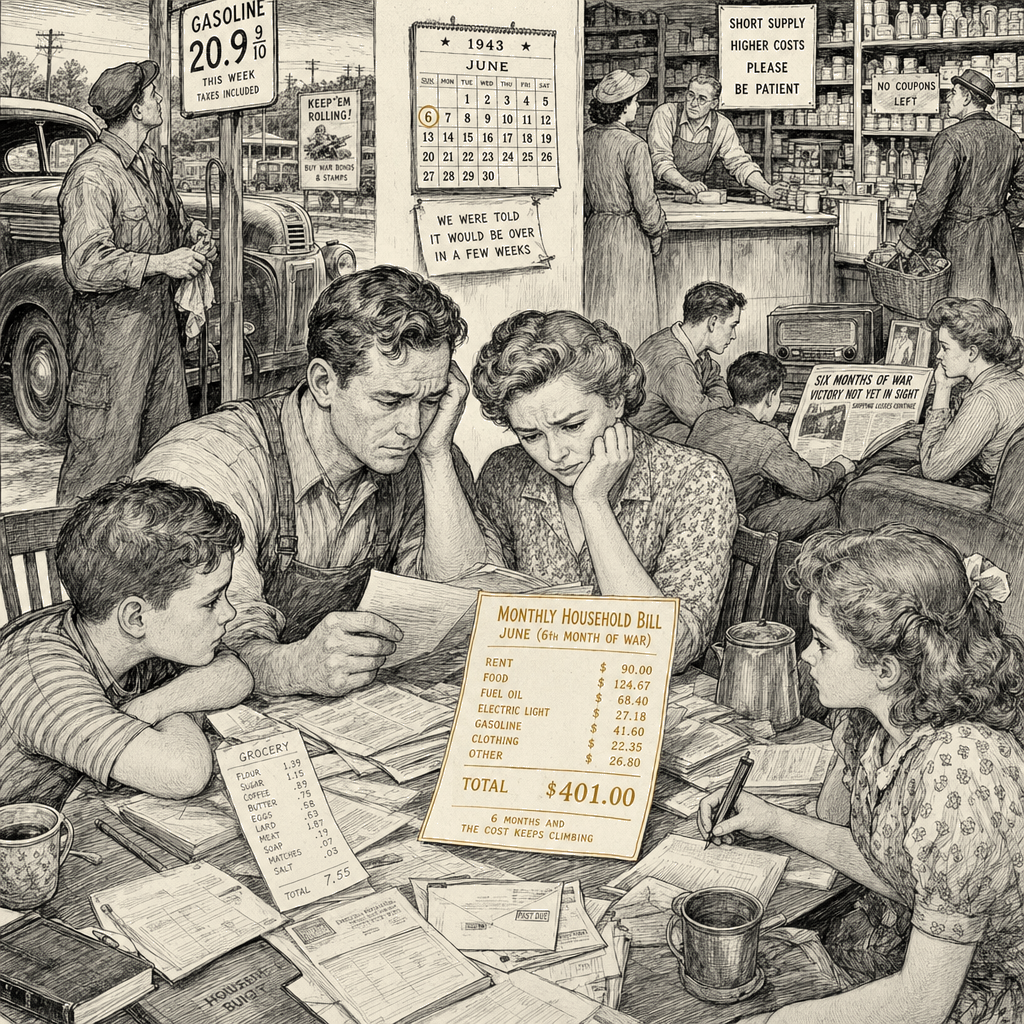
The average price of gasoline topped $4 a gallon for the first time in years, according to AAA data, as the US-Israel military campaign against Iran entered its sixth month. Analysts have also noted that lower- and middle-income households spend a larger share of their budgets on fuel, meaning the same price spike weighs more heavily on them than on wealthier consumers.
The Guardian interviewed voters in Maine, Wisconsin and Georgia about how the war has affected their daily lives. Their responses reflected a shared sense of economic squeeze, though they diverged sharply on what the United States should do next.
Rising fuel costs and a tightening household budget
Lydia Stone, 31, who works in the logging industry in North York, Maine, and is raising an 18-month-old daughter, described an industry squeezed from both directions: rising fuel costs while the price customers pay for wood remains flat. “It’s been a huge jump in prices, and makes life a lot harder,” she said. Stone said the line at her local food pantry has grown noticeably longer and that her best friend’s husband was deployed on little notice. “A huge part of what has been so frustrating … is like the fact my tax dollars are going to fund murdering people, at the same time that it’s cutting social services, it’s cutting Snap benefits for my neighbors,” Stone said.
Robert Edelstein, 62, who runs a window-tinting business in Douglas County, Wisconsin, said: “In the general election, I would automatically vote for anybody that was against the war.” He added: “I think it’s the stupidest thing that could ever possibly have happened.” Comparing the decision to the Iraq war launched under George W. Bush, Edelstein said: “It’s screwed everything up, as we all know … it’s absolutely stupid.”
Bipartisan criticism of open-ended involvement
The frustration crossed party lines. Terrence Dahmen, 73, a retired independent-leaning voter from Cable, Wisconsin, who said he usually votes Democratic, described American involvement as “a huge mistake.” “We weren’t provoked into that fight, and we weren’t attacked,” he said. “I saw no reason to go there other than possibly controlling oil somehow.” Dahmen said the country should instead invest in solar, wind, and geothermal power.
In Georgia, Jimmy Carter, a retired teacher with no relation to the former president, said of the campaign: “It’s a dumbass idea. I don’t know who fed him that idea.” Carter noted that even his own brother, a Trump voter, agreed with his assessment.
Supporters cite long-term rationale but seek an exit
Not all voters opposed the campaign. Nick Marine, a retired sailor who attended a Trump rally in Marietta, Georgia, said: “I think what President Trump is doing is good. I think it took a long time for us to get to this point … I’m glad it’s finally being resolved.” Marine voiced concern for Iranian civilians cut off from water, sanitation and electricity by the fighting and argued against disproportionate force, saying: “You don’t want to behead your neighbor, because in a month or so, you’re going to be doing commerce with them.”
Richard Bradley, a retired Army major and combat engineer from Mableton, Georgia, whose son and daughter currently serve, said he supports the broader rationale for confronting Iran but wants a clear exit. “I’d rather fight bad guys in their land instead of mine,” he said. Still, he said: “I kind of take a little bit of an issue with where we’re at now … we need to be figuring out how to finish it up, so it doesn’t turn into another … enduring war.” His own father fought in the Gulf war, he noted, and he didn’t “want my kids to fight unfinished business that my generation left.”
Clay Harvison, a mixed martial artist from Marietta who voted for Trump, said the conflict should have ended months ago. “He should have left it when he had already bombed them,” Harvison said, blaming pressure from Israeli leaders for drawing the US deeper. He said the war threatens the legacy Trump seems to prize most: “being remembered as being great … he’s messing with that really bad right now.” Younger voters in particular, he said, are asking why a president who campaigned against foreign wars is now presiding over one, arguing that “the military-industrial complex is laundering our tax dollars instead of going into fixing our streets.”
An opposition rooted in solidarity with Iranian civilians
Salman Majidi, an Iranian immigrant and software developer from Atlanta, stood among anti-Trump protesters holding a “Free Iran” sign, but his objection to the campaign was distinct from the anti-war position. A supporter of Iran’s exiled former crown prince, Reza Pahlavi, Majidi argued the American campaign was a rescue rather than a war of choice. “Tens of thousands of Iranian civilians have been murdered by the Islamic regime in just two days,” he said, arguing the toll predates and outweighs the American strikes. “We deserve a better life in Iran.”
Whether a ceasefire holds, and whether Tehran and Washington sit down for more than a pause, remains an open question. What is not in doubt, according to The Guardian, is that voters of nearly every political persuasion are adding up gas receipts, deployment orders, and casualty counts, and asking what the war was for.