Mine waste extraction offers bridge as new U.S. mines remain years away
Phoenix Tailings operates a small refinery inside an office park in Exeter, New Hampshire, where workers in heat-resistant suits and sealed face masks use electrolysis to separate critical elements from the powder left behind at traditional mines. Mining waste sits in 1-ton bags in the company’s warehouse beneath a giant American flag.
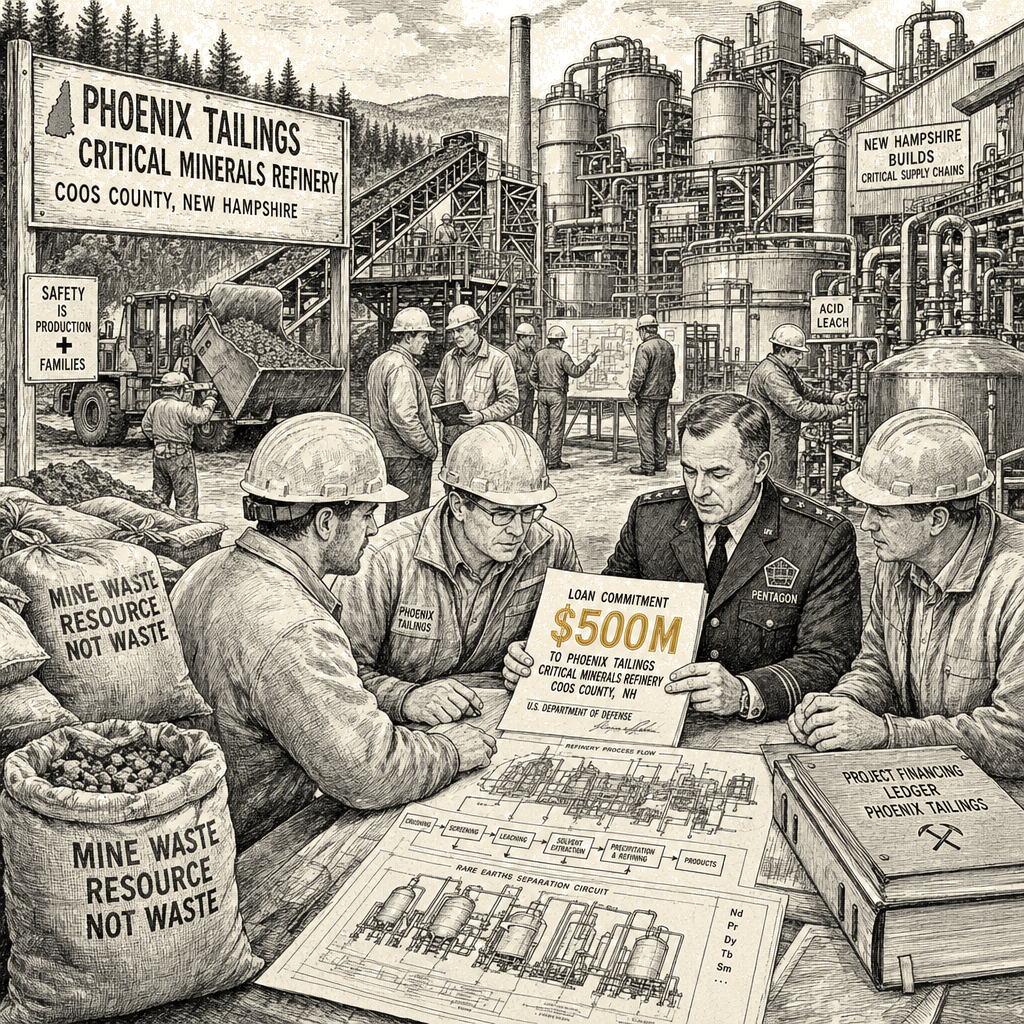
The company plans to build a new factory with a $500 million loan from the Pentagon to drastically expand its separation and metallization capacity, a particularly weak stage in the U.S. mines-to-magnets supply chain. Construction is expected to take 14 to 18 months.
The urgency has grown as the war in the Middle East rapidly draws down munitions. Critical minerals are a key ingredient in widely used U.S. weapons systems such as Tomahawk cruise missiles, THAAD interceptors and F-35 fighter jets. The White House is demanding military contractors speed up weapons production while also imposing stricter rules banning them from sourcing critical-mineral components from China.
“It will be a tall order and a challenge to replenish these stocks and scale up in the time frame needed to meet defense demand and regulations,” said Anthony Balladon, the company’s chief commercial officer and a co-founder. He said the company is working hard to greatly increase its capacity.
The Trump administration wants the key elements produced domestically. The U.S. is quickening its pace to rebuild a domestic critical-minerals supply chain, but most new U.S. mines are years away from reality. Extracting some of these elements from existing mine waste can help satisfy growing demand in the meantime.