Federal rules bar Apple from ordering custom CXMT chips
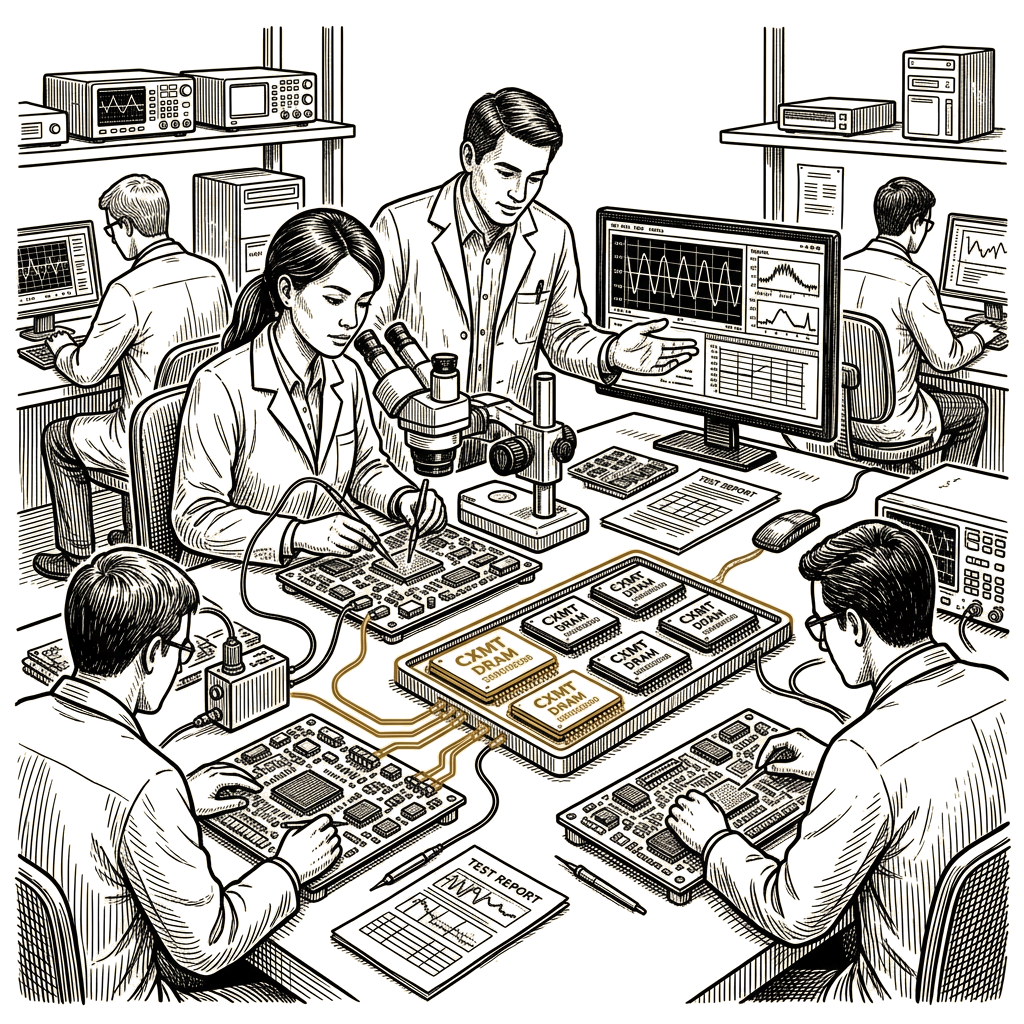
Apple has tested memory chips from China’s CXMT across product lines including iPhones and MacBooks, according to people familiar with the matter, and has held early talks with the company about supplying components with the goal of using them in some devices sold in China. Apple hopes to win the White House’s blessing to do business with the Chinese company.
The testing comes as Apple works through a memory-chip crunch during the artificial-intelligence boom. The company is raising prices on its products globally, blaming the rising cost of memory chips because of high demand from AI companies. Getting access to Chinese supplies could help the iPhone maker ease its crunch, the people said. Memory-chip prices have roughly quadrupled over the past year, according to research firm TechInsights.
Federal rules complicate any arrangement. U.S. companies are barred from transferring technology to CXMT — including any communication about technical details and product specifications, a routine part of creating the specialized chips that Apple typically uses — which effectively stops Apple from ordering custom chips. The rules permit Apple to use off-the-shelf CXMT components and to negotiate prices with the Chinese company, according to Kevin Wolf, a lawyer at Akin Gump who advises companies on export controls. Even if Apple is strictly adhering to U.S. regulations, it might still want cover from the Trump administration to avoid political blowback.
Some U.S. policymakers fear that if CXMT gets orders from leading American companies, the memory-chip maker would gain access to American know-how and more funds to advance its technology. They say that could help Beijing’s military and undercut U.S.-based Micron Technology, which is building new factories in Idaho and upstate New York. The U.S. has put CXMT on a list of entities that the Pentagon says have links to China’s military. Micron has warned administration officials that allowing CXMT to sell to U.S. tech companies could hollow out the domestic memory-chip industry, according to people familiar with the discussions. White House spokesman Kush Desai said in July the administration would pursue “investments and economic relief for the American people while safeguarding our national security.”
Using standard CXMT components would carry technical costs for Apple. The company often tailors components to its devices to maximize performance, and standard CXMT memory chips could force Apple to redesign certain parts of its products. Industry analysts also say CXMT’s technology still trails its foreign competitors, in part because the company’s access to the most sophisticated chip-making equipment is restricted.
At present, CXMT would not be a panacea for Apple, the people said. The Chinese company has maxed out its production capacity this year, leaving little room for new international clients.
Laptop makers HP and Acer have already started using memory chips from CXMT in devices sold outside the U.S., people familiar with the matter said. The two companies have secured limited quantities of memory chips and are seeking to lock in more supplies for next year, some of the people said. Nikkei Asia earlier reported on the moves by HP and Acer.
CXMT has become the world’s fastest-growing supplier of DRAM, the mainstay memory chip. Its revenue in the second quarter of this year was more than eight times the level of a year ago, thanks to strong demand, expanding production capacity and price increases, and it took 7% of global market share by revenue, according to Counterpoint data. The company recently listed its shares in Shanghai and is the most valuable company listed in mainland China, with a market capitalization equivalent to $520 billion as of Friday. Many CXMT products are fetching prices on par with—and occasionally at a premium to—those of Micron and South Korea’s SK Hynix and Samsung Electronics, the people said, a pricing strategy partly driven by CXMT’s tight supply and higher production costs compared with foreign competitors.
CXMT is giving priority to domestic technology companies including ByteDance, Tencent and Xiaomi, all of which are boosting their AI offerings. It is building new plants, aiming to more than double its current production capacity by 2028.
Rising memory costs have begun suppressing shipments of computers and smartphones. Global personal-computer shipments fell 4% in the second quarter from a year earlier, while smartphone shipments dropped 11%, according to Counterpoint Research.
“The question is not about ‘how’ but ‘when’ CXMT will be able to break into the Big Three Memory Club,” Counterpoint researcher Neil Shah wrote in a report, referring to SK Hynix, Samsung and Micron.
The Wall Street Journal, which reported this story, is owned by News Corp, which has a commercial agreement to supply news through Apple services.
Apple’s move advances the lobbying push that MSI reported in July, when Apple sought permission from the Trump administration to use memory chips from Chinese manufacturers CXMT and YMTC in devices sold outside the U.S. while Micron urged officials to block the plan (Apple pushes Trump to allow Chinese memory chips; Micron opposes). The talks also follow CXMT’s Shanghai stock-market debut, where shares surged 472% in the biggest mainland China IPO in years (CXMT shares surge 472% in biggest mainland China IPO in years).