California gasoline averages $5.60 a gallon, highest in U.S.
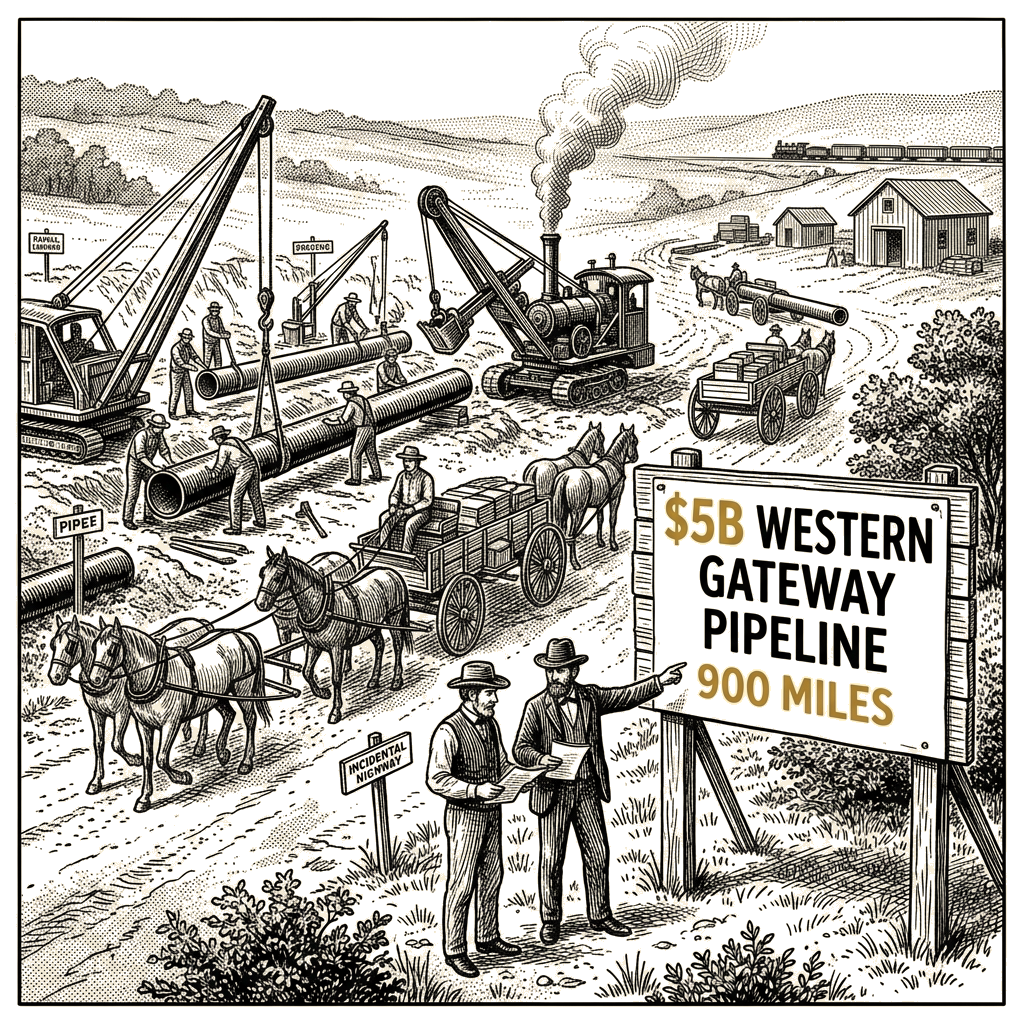
Phillips 66 and two partners on Tuesday sanctioned the Western Gateway Pipeline system, a $5 billion project to build a 900-mile pipeline that will ferry 230,000 barrels a day of gasoline, jet fuel and diesel from the Texas Panhandle to Arizona and California. The companies expect the pipeline to start moving fuel in 2029 at a level that almost makes up for two recent California refinery closures.
In Phoenix, the new line will connect with an existing 500-mile pipeline that ends in Colton, Calif., about an hour east of Los Angeles. Partner Kinder Morgan, a pipeline operator, owns the segment between Arizona and California and will reverse the flow, which currently takes fuel out of California, to send fuel into the state. Refiner HF Sinclair holds a minority stake. The companies said they would move fuel from refineries in Texas, Oklahoma and near St. Louis, Mo.
The fuel is sorely needed, as California faces the highest pump prices in the country. The war with Iran has curbed the state’s imports from South Korea and Japan, as well as its oil imports from the Middle East. California lost 20% of its capacity to turn crude oil into fuel when Phillips 66 closed its 139,000 barrel-a-day Los Angeles refinery in December and Valero shuttered a 145,000 barrel-a-day facility in Benicia, near San Francisco, in April.
“A dedicated project that brings refined products into the state will be critical for its energy security,” said Donald Baldridge, a midstream and chemicals executive at Phillips 66.
On Monday, a gallon of gasoline in California averaged about $5.60, the highest price of any state in the country. The state’s diesel supply has been particularly strained since the outbreak of the war with Iran earlier this year, with a gallon of the trucking fuel going for $6.86, up from $5.15 a year ago. In some California cities, fuel can cost upward of $7 a gallon.
Over the past decade, California policymakers have tried to steer the state away from fossil fuel consumption, a push that has boosted demand for electric vehicles, which account for one in five new car sales in the state. California still consumes 1.8 million barrels of oil each day, more than any other U.S. state except Texas.
The state, which decades ago was a hub of oil drilling, has seen an exodus of oil producers and refiners since the 1980s and now imports 75% of the oil it consumes. This year’s war with Iran, which effectively closed the Strait of Hormuz, has disrupted global energy flows for months; before the war, up to a fifth of the world’s oil and gas supplies moved through the Strait from countries including Saudi Arabia, Iraq and Kuwait.
One of California’s biggest suppliers, Saudi Arabia, didn’t deliver oil to the U.S. in July, the first time monthly federal data show that happening since 1985. California is more reliant on oil shipments from Saudi Arabia, Iraq and the United Arab Emirates than any other state. At the same time, Asian countries that ship jet fuel and gasoline to California have curbed their exports because they lack an adequate supply of Middle East oil to run their refineries at full capacity.
One bright spot has been imports from Texas. The amount of fuel flowing from the Gulf Coast to the West Coast surged nearly sevenfold from February to May after the Trump administration issued a 60-day waiver of the Jones Act, a shipping rule dating to 1920 that prohibits foreign vessels from carrying goods between American ports. On Monday, the administration extended the Jones Act waiver for another 90 days.
Newsom’s office called the pipeline a “promising opportunity” to boost the state’s fuel supplies while using an existing pipeline that won’t add to the oil industry’s environmental impact in the state. Newsom has blamed President Trump and the conflict with Iran for high energy prices. Trump recently told oil companies that they should lower retail fuel prices.
California still has a buffer against the war-induced supply shock in the oil and refined fuels it holds in storage, but those inventories have been drawn down to low levels even as Chevron and other companies send full tankers from the Gulf Coast to refill them, said Andy Walz, who leads Chevron’s refining, pipeline and chemical business.
“Things are getting drawn down to historical levels,” Walz said. “Without a resolution fairly soon, we’re headed toward some higher prices and tougher times for everybody.”