Emergency care remains available regardless of immigration status, ministry says
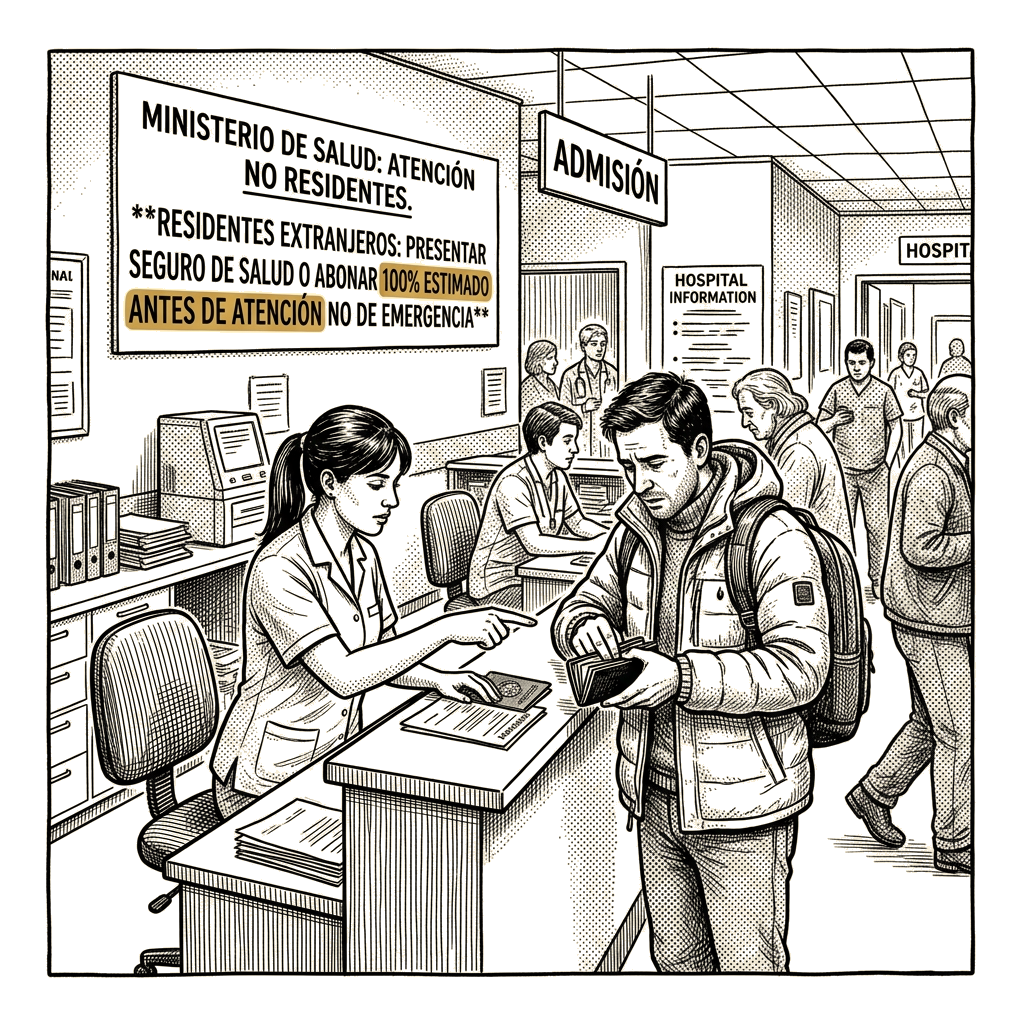
Argentina’s Health Ministry on Tuesday announced regulations requiring nonresident foreigners to show proof of health insurance with sufficient coverage or pay 100% of the estimated cost upfront before receiving non-emergency care at federally administered hospitals. The new rules implement prior changes to Argentina’s immigration law and establish the procedures federal hospitals must follow when treating patients who lack permanent residency.
Lugones defended the measure as a way to better manage public resources. “This marks a before and after in protecting the pocketbooks of taxpayers in the Argentine Republic,” he said on X.
The government’s Official Response Office said on X that federally administered hospitals had for years used public funds to provide routine medical care at no cost to foreigners who did not permanently reside in Argentina. “That ends today,” the office said. “President Milei’s government is correcting a distortion that Argentines were paying for: a healthcare system funded by local taxes that provided free care to people who do not live, work or contribute here.”
Emergency care will remain available to everyone regardless of immigration status. Once a life-threatening condition has been resolved, however, patients will be billed for subsequent medical expenses incurred through their discharge.
The national policy follows similar measures adopted by several Argentine provinces. Under Argentina’s federal system, each province maintains authority over its local healthcare system, and several jurisdictions — particularly those near international borders — had already introduced similar rules requiring nonresident foreigners to pay for medical care.
The northern province of Salta was among the first, introducing charges for certain medical services provided to foreigners with temporary or provisional residency in February 2024. According to Salta Health Ministry data published by Argentine financial news outlet Ámbito Financiero, medical visits by nonresident foreigners fell to 77 in 2024 from 31,561 in 2023. Ten such visits were recorded between January and July 2026.
Salta Gov. Gustavo Sáenz’s government attributed the decline to a reduction in organized “medical tours” — trips from neighboring countries to receive medical care at no cost. Provincial officials said the savings allowed the government to redirect resources to other healthcare needs, including buying 34 ambulances and hospital supplies.
“Now, we have beds for our patients,” Salta Health Minister Federico Mangione said.
Argentine news outlet Crónica reported that other jurisdictions, including Jujuy, Mendoza, Santa Cruz and the city of Buenos Aires, later adopted similar policies. Milei had previously announced plans to extend the approach to the federal level.