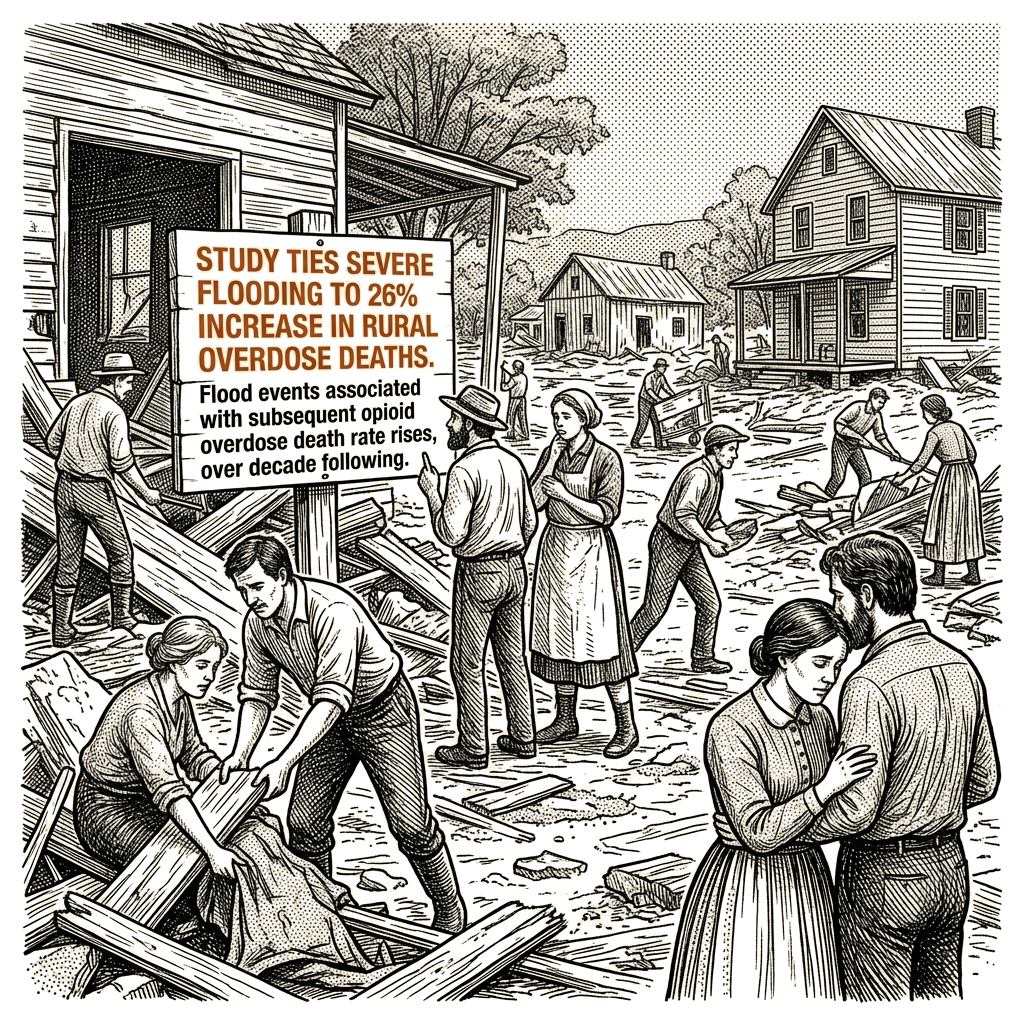
Research estimates 1,368 overdose deaths in Appalachia connected to severe floods
A study of rural Appalachian counties found that severe floods were associated with a 26% increase in opioid overdose death rates during the decade following a flood event, Penn State researchers found. The elevated risk persisted for years, the researchers said, as flooding disrupted treatment services and destroyed homes while separating people in recovery from their support networks.
The study, led by Penn State assistant professor of rural sociology Kristina Brant along with co-authors Mengjun Ge and Zhen Lei, examined data from 2000 to 2017 across rural Appalachian counties. The researchers defined severe floods as events that received a presidential disaster declaration and caused at least one fatality.
During the 10 years following a severe flood, the annual overdose death rate in affected counties was 26% higher than in comparable counties that did not experience flooding, according to the study. That amounts to 2.6 additional deaths per 100,000 residents per year.
The researchers estimated that 1,368 of the 11,744 opioid overdose deaths officially recorded in rural Appalachia from 2000 to 2017 were connected to the effects of severe floods.
Rural Appalachia has long been considered an epicenter of the overdose crisis, driven by the spread of prescription opioids in the 2000s and synthetic opioids such as fentanyl in the 2010s. West Virginia had the highest overdose mortality rate of any U.S. state from 2014 to 2024, reaching 81.9 overdose deaths per 100,000 residents at its peak in 2023, compared with a national rate of 31.3.
Even as treatment access has expanded and substance use-related harms have begun to decline nationally, recovery resources remain concentrated away from the rural communities where they are most needed. Nearly two-thirds of West Virginia’s counties are classified as rural by the federal Office of Management and Budget, but only 18% of the state’s 140 certified recovery houses are in those rural counties, according to the study.
To understand the mechanisms behind the increased risk, the researchers interviewed treatment and harm reduction workers in areas affected by the 2022 flood in southeastern Kentucky. Those respondents described how flooding cut off access to services, either because people could not travel or because treatment facilities themselves flooded.
They also described how the loss of homes and jobs, lasting trauma, and displacement from social support networks led some people in recovery to resume drug use and contributed to new use among people who had never used before, particularly when mental healthcare was not readily accessible.
The harm was compounded when people lost access to overdose prevention tools such as Naloxone and fentanyl test strips, making drug use riskier, the respondents told the researchers.
The study found that flood damage most affects individuals with no more than a high school education and those in counties designated as economically distressed by the Appalachian Regional Commission, with these groups seeing the largest increase in overdose death risk.
The researchers also documented how some community members adapted during flooding to continue providing care. They heard accounts of methadone providers traveling to patients’ homes in ATVs to bring them to clinics, and harm reduction workers using boats to deliver Naloxone, food, and water to flooded homes. Primary care providers and community health workers visited emergency shelters to offer counseling and ensure people had access to medications.
The researchers recommended that treatment providers develop contingency plans for patients during disasters and be included in community disaster preparedness and recovery planning. They also suggested that making substance use treatment more flexible through telehealth and mobile clinics could help providers adapt after disasters in rural areas.