EU has not invoked blocking statute to shield ICC personnel
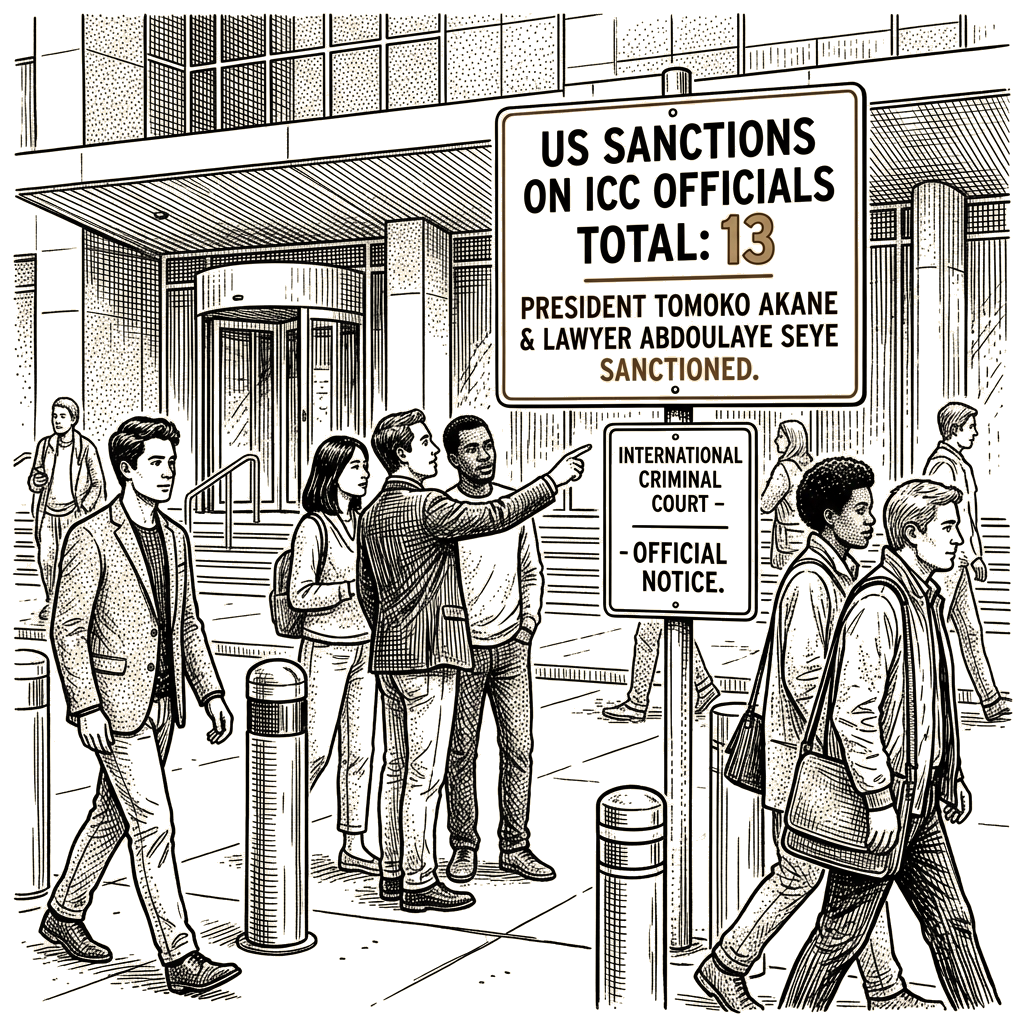
The Trump administration has imposed sanctions on two more senior officials of the International Criminal Court — court president Tomoko Akane of Japan and senior trial lawyer Abdoulaye Seye of Senegal — bringing the total number of sanctioned ICC personnel to 13. The sanctions were reported Friday by Kenneth Roth, a Guardian US columnist and former executive director of Human Rights Watch.
Roth reported that Seye was sanctioned, evidently for his role advancing the prosecution of Israeli officials. The sanctions, he wrote, deprive their targets of access to the international financial system — blocking credit cards, bank accounts, and the ability to navigate a modern economy. Roth described this as “a tool once reserved for corrupt or violent officials who were otherwise beyond the law.”
In announcing the sanctions, Secretary of State Marco Rubio accused the ICC of threatening “America sovereignty,” a claim Roth characterized as accurate “only if Americans (and Israelis) have a sovereign right to commit war crimes wherever they want.” Rubio also said: “We expect more countries to join our campaign by ending their funding and participation in this politicized and unaccountable court,” adding that the United States would work to dismantle the court “brick by brick, if necessary.”
The ICC has 125 member states. Roth reported that only Venezuela and Chad have followed the US call to leave the court. Venezuela announced its withdrawal following what Roth described as the Trump administration’s “seizure of Nicolás Maduro.” Chad announced its departure after a call from a State Department official. Separately from the US campaign, three military juntas in the Sahel — Niger, Mali, and Burkina Faso — have also announced exits from the ICC.
The European Union has not invoked a “blocking statute” — legislation designed to negate the application of US sanctions in Europe by prohibiting European banks from complying — to protect ICC personnel, despite saying it “deeply regrets” the new sanctions. Roth attributed the EU’s reluctance to “fear among banks, particularly in the Netherlands, of retaliation from Trump.” The ICC is headquartered in The Hague, the Dutch seat of government.
Roth argued that the US position on ICC jurisdiction is internally inconsistent. When a country joins the ICC, it accepts jurisdiction over its own citizens and confers jurisdiction over crimes committed on its territory, even by foreigners. The United States never joined the court but objected to this territorial-jurisdiction principle when the Rome Statute was adopted in 1998, losing a vote of 120 to seven.
Since then, Roth wrote, the US government has accepted territorial jurisdiction “when convenient.” After the ICC used it to prosecute Vladimir Putin — Russia never joined the court — for the kidnapping of children from Ukraine, an ICC member state, then-President Joe Biden called the prosecution “justified,” and the late Senator Lindsey Graham, described by Roth as “a Republican leader on foreign policy,” orchestrated a unanimous Senate resolution in support.
Territorial jurisdiction “suddenly became toxic again,” Roth wrote, when the ICC used it to charge Israeli Prime Minister Benjamin Netanyahu and former Israeli Defense Minister Yoav Gallant with deliberately starving and depriving Palestinian civilians in Gaza. Israel is not a member of the ICC, but Palestine, where the alleged crimes took place, is.
Territorial jurisdiction could also be used to charge foreigners from non-member states with aiding and abetting crimes in states where the ICC has jurisdiction, Roth wrote. He cited potential cases against UAE officials for alleged genocide in Sudan’s Darfur region by sending arms and mercenaries to the paramilitary Rapid Support Forces, Rwandan officials for alleged war crimes in eastern Democratic Republic of Congo by supporting the M23 rebel group, and US officials — “Trump’s real concern,” Roth wrote — for aiding and abetting alleged genocide in Gaza by supplying arms and military aid to Israel.
Under Article 70 of the Rome Statute, retaliation against an official of the court “on account of duties performed” is itself a crime of obstructing justice, according to Roth. The court would have jurisdiction, he wrote, because the sanctions relate to the prosecution of Israeli officials for crimes allegedly committed on Palestinian territory.
Roth is a senior fellow at Yale University and the author of “Righting Wrongs: Three Decades on the Front Lines Battling Abusive Governments.”