Twenty-year sales streak rests on affluent older diners
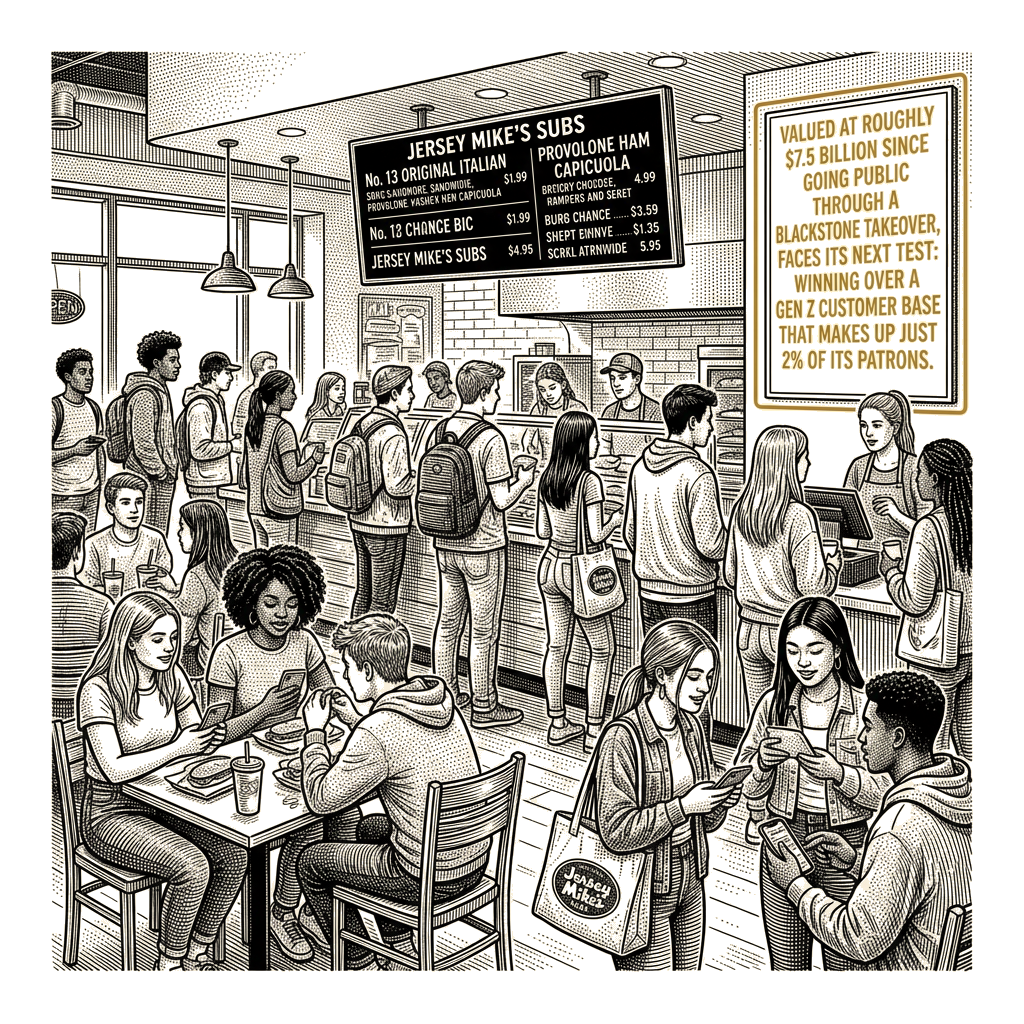
Jersey Mike’s Subs, valued at roughly $7.5 billion since going public through a Blackstone takeover, faces its next test: winning over a Gen Z customer base that makes up just 2% of its patrons. The sandwich chain’s stock already prices in much of that growth going right, according to a Wall Street Journal Heard on the Street column by David Wainer published September 1, 2026.
The New Jersey-born chain has spent decades cultivating the customer base it now serves. That track record produced 20 straight years of same-store sales gains and pushed systemwide sales to $4.3 billion in 2025, making Jersey Mike’s the No. 2 sub chain in America behind Subway, according to Wainer. The growth has delivered pricing power most casual-dining chains lack: a sub, drink and chips runs $15 to $20, with the chain catering to the upper half of what Wainer described as a K-shaped economy.
But that customer base is skewed older and unusually affluent for fast casual. Roughly 70% of Jersey Mike’s customers are Gen Xers or Boomers, while Gen Z accounts for just 2%, according to Wall Street analyst reports citing company figures. More than 60% of patrons earn more than $80,000, and only 14% make under $40,000. The demographic concentration sets up the central challenge for a chain aiming to grow from about 3,300 stores to 15,000 worldwide: broadening reach without sacrificing the premium positioning that made the model work.
Jersey Mike’s carries roughly $1.8 billion in net debt, some of it used to fund distributions to Blackstone pre-IPO. The chain trades at an enterprise value of about 20 times projected earnings before interest, taxes, depreciation and amortization, a premium to franchised peers Wingstop and McDonald’s, which trade at roughly 15 times. The premium reflects Jersey Mike’s status as a rare growth story in the restaurant business, Wainer reported, but the harder test, Wainer wrote, is keeping the chain’s momentum going after the easy growth is gone.
The chain has begun testing value offerings. Its $10.99 “Boardwalk Bundle” sits alongside limited-time items such as a chicken salad to broaden appeal. Wainer wrote that the balance is delicate: lean too hard on discounts and Jersey Mike’s risks following Subway’s path, eroding the premium positioning that defines its model.
Marketing presents a parallel challenge. Jersey Mike’s historically relied on broad television audiences and sponsorships, including an NFL partnership with Eli Manning as brand ambassador, while devoting about 1% of its 2025 marketing budget to social media, versus 10% to 25% at many scaled peers, according to its IPO filing. Reaching Gen Z requires shifting toward Instagram and TikTok, a move the company says it is now making. A foot-long sub has already gone viral before: Nick Jonas posted his own off-menu turkey and provolone creation on TikTok, inspiring similar posts, Wainer noted.
Jersey Mike’s has built much of the digital infrastructure needed to support the shift. The chain has more than 12.5 million active loyalty members and an ordering app, with digital sales exceeding 40% of the total. Loyalty members visit about three times as often as other customers, according to the company — a frequency that Wainer said the chain aims to extend to casual diners through personalized offers.
The approach mirrors a playbook Chief Executive Charlie Morrison previously deployed at Wingstop, where a data-driven digital strategy helped fuel growth. Blackstone brought Morrison in during 2025 to modernize Jersey Mike’s with a similar playbook. Whether that playbook translates from chicken wings to subs, and from older loyalists to a younger demographic, will determine whether the chain meets the expectations now embedded in its valuation, Wainer wrote.