U.S. weighs curbs on Chinese AI tools as executives push for openness
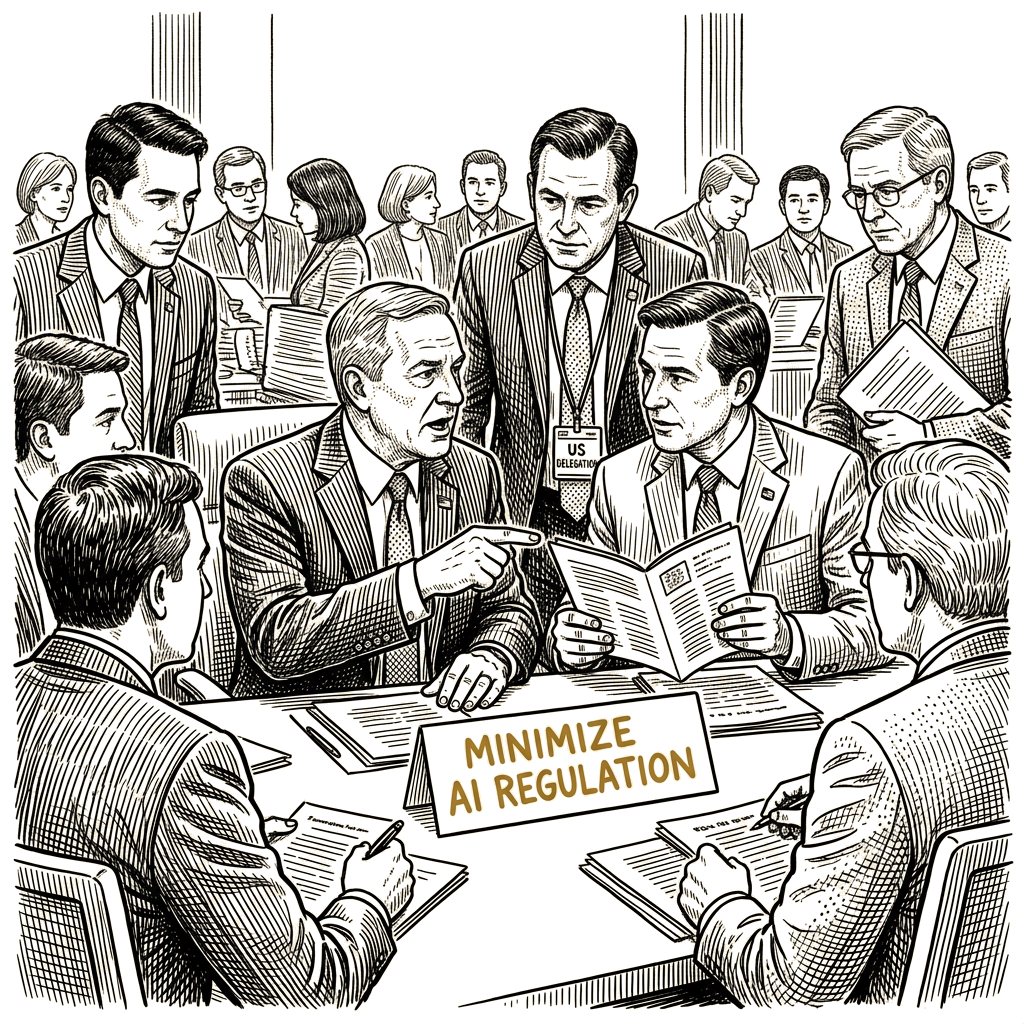
At a Group of 20 innovation and technology summit in Chapel Hill, N.C. on Tuesday, tech executives and Trump administration officials urged policymakers from the world’s leading economies to keep artificial-intelligence rules to a minimum, warning that aggressive regulation could limit the technology’s economic and medical benefits. Nvidia Chief Executive Jensen Huang, OpenAI’s Sam Altman, Meta Platforms CEO Mark Zuckerberg and Elon Musk of Tesla and SpaceX were among the speakers. Commerce Secretary Howard Lutnick, White House AI adviser David Sacks and Michael Kratsios, director of the White House Office of Science and Technology Policy, joined them in making the case.
Lutnick told reporters that President Trump is “committed to ensuring that the United States leads in AI and brings the American AI stack across the world to our G-20 partners.” The administration has expanded its oversight of the industry through voluntary prerelease testing of the most powerful tools while stopping short of mandatory regulation.
Huang argued that government rules should target demonstrated harms rather than speculative ones. “Don’t regulate hypothetical, theoretical harm. Regulate actual and pragmatic harm,” he told officials from the G-20 countries, adding that advances in model training already make AI safer than the rules proposed by the Biden administration and others. After his remarks, officials from around the world took turns taking photos with the head of the world’s largest chip designer, who has become a global figure because of Nvidia’s ubiquity in the AI boom.
The talks came in the same week as recent hacks of other organizations by AI models from OpenAI and Anthropic, incidents that underscored both the rapid pace of the technology and mounting security concerns. Sen. Bernie Sanders, I-Vt., called this week for a global pause in AI development. OpenAI and other companies have added layers of security to prevent safety incidents and are releasing models in phases following the incidents.
Outside the venue on the University of North Carolina campus, dozens of students and local activists briefly protested, adding to a wave of pushback against the build-out of data centers powering AI across the country. The county hosting the summit recently passed a one-year moratorium on new data centers, one of dozens of localities to do so in recent months over fears about excessive power and water usage.
Lutnick singled out the moratoriums for criticism, calling concerns about high water usage from the facilities “misinformation.” “By setting a moratorium on data centers, that means the next set of opportunities just won’t go to you,” he said.
The Trump administration has increased scrutiny of AI in what it describes as the least restrictive way possible. The administration reviews the most powerful tools before release and briefly shut down two Anthropic models in June over security concerns. The White House has stopped short of instituting mandatory regulations, instead calling prerelease testing voluntary.
The U.S. is also working to steer other countries toward American models and away from cheaper Chinese alternatives, which the administration warns could leave partner nations dependent on tools whose security cannot be verified. China signed a set of broad innovation principles alongside other G-20 countries at the summit. Chinese companies have released powerful open-weight models in recent weeks that let users download the numerical parameters determining their behavior, prompting administration officials to consider restricting access to those tools on security grounds.
Zuckerberg and other executives have pushed back on such restrictions. “Beyond just what we release ourselves, we’re very strong advocates that open source should not be something that people try to restrict or lock down,” Zuckerberg told officials. Huang and other executives have similarly argued that broadening access to all AI tools is the best way to bolster security systems.
Musk, who said minimal regulation is key to fostering innovation and criticized Europe’s regulatory system in remarks delivered with European officials in the audience, said AI could increase the size of the global economy by 20% to 30%, an impact he said would be felt as more AI-powered robots are deployed across industries.
Palantir CEO Alex Karp and Tom Brown, chief compute officer at Anthropic, also spoke. Altman and Demis Hassabis, chief scientist of Google parent Alphabet, were among the few executives to mention the need for global AI standards and oversight to address cybersecurity and other potential harms, though both said such threats did not justify restricting access to the technology.
Altman compared AI’s emergence to electrification. “It would be approximately as bad of an idea to say, ‘We’re not going to have AI in our country’ as it was to say, ‘We’re not going to have electricity in our country’ back 100 plus years ago,” he said.
The Chapel Hill meetings took place during the same week as G-20 finance minister talks held elsewhere in the state and serve as part of the run-up to the G-20 leaders summit planned for Miami later this year. The U.S. and China are expected to discuss global AI cooperation during talks later this month that will include meetings between Trump and Chinese leader Xi Jinping.