Wyden, Harrigan press Pentagon on data broker tracking of troops
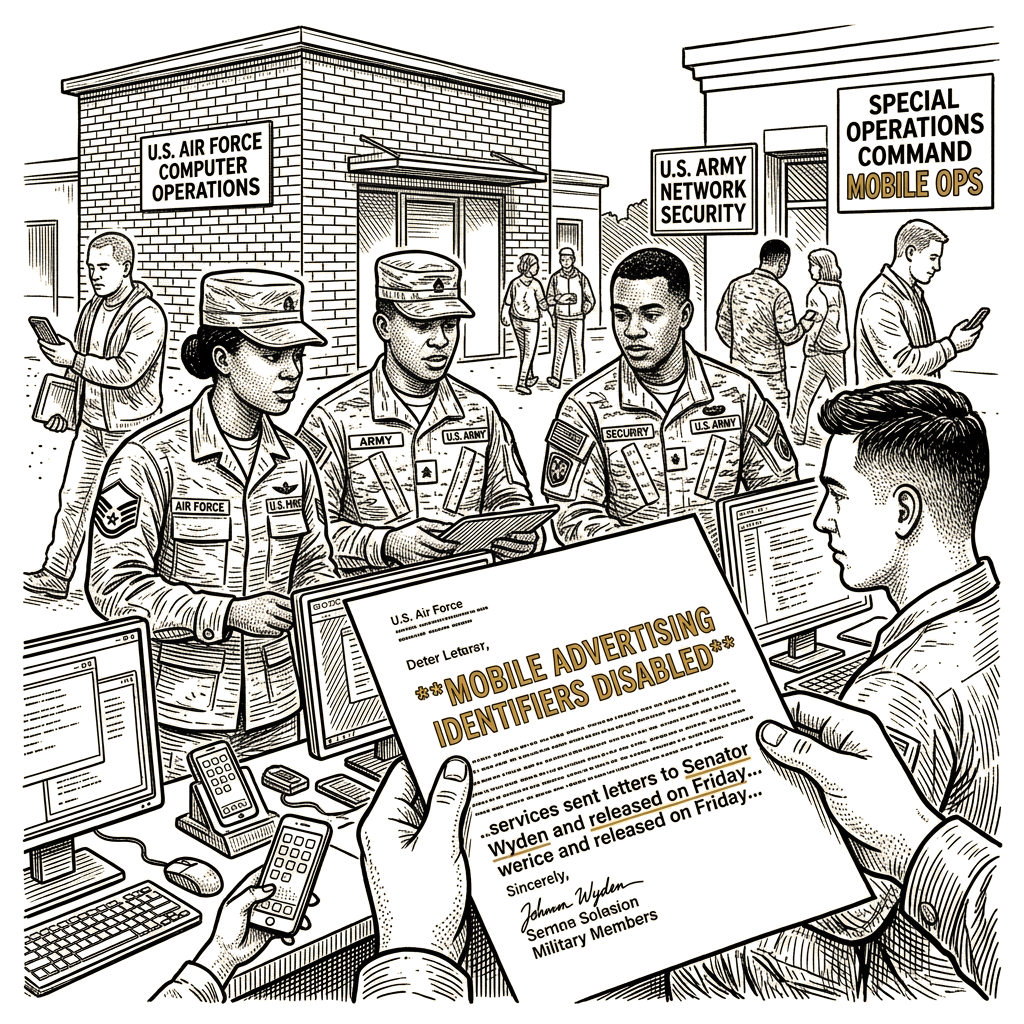
The US Air Force, Army, and Special Operations Command have disabled mobile advertising identifiers on military computers and phones, according to letters the services sent to Senator Ron Wyden, an Oregon Democrat, and released on Friday. The action follows reports that commercially available location data had been used to track and target American forces deployed to the Middle East.
In its letter to Wyden, the Air Force said it had disabled advertising identifiers on its computers and mobile phones two months ago, a timeline that would place the change around July 2026. US Special Operations Command said in a separate letter that it had “recently” disabled the identifiers on its Windows devices. The Army told Reuters that advertising IDs tied to mobile devices had been disabled since earlier in 2026.
The disclosures detail the response across the armed services. The Army said in a statement that advertising IDs had been blocked on Windows computers “since before 2021” but that Android and Apple mobile devices had only had the identifiers disabled by default “since at least February 2026.” Similar letters from the Army and Navy to Wyden said they had disabled advertising IDs on military devices but gave no indication of when the restrictions were imposed. Messages seeking comment from the Navy went unreturned. The Air Force and Special Operations Command declined further comment.
The effort to limit location data generated by smartphones comes as military officials weigh increasingly strict restrictions on phone use overall. In July, Reuters reported that some deployed personnel in the Middle East could be ordered to surrender their phones amid concerns that mobile videos they were posting to the internet were helping Iran target American bases in the region.
On Friday, Wyden and Representative Pat Harrigan, a North Carolina Republican, sent a joint letter to the Pentagon asking for an investigation into whether the military had properly countered the dangers of the location data trade. The letter included the updates from the various service branches on their efforts to disable advertising IDs on military devices.
In a statement, Wyden said it was clear that the military’s efforts “have not been effective at neutralizing this threat.” Harrigan said that US enemies “should not be able to pull out a credit card and buy information that helps them track American troops.” The Pentagon said in an email that it would respond to the lawmakers directly.
Mobile advertising IDs, often abbreviated as MAID, are unique identifiers tied to specific devices that can be used to track a person’s activity across mobile apps and pinpoint their physical location. Data brokers collate and resell personal data, which can be used to track and target military personnel deployed to war zones.
Zach Edwards, co-founder of the privacy ad technology company Decryptads, said that efforts to disable MAID on military-operated devices were “definitely a positive thing.” The restrictions, he said, “will essentially ensure their location isn’t being included in bulk data sales being done by numerous vendors.”
Edwards cautioned, however, that military personnel might still be tracked through apps in other, more complicated ways. Service members could be located, he said, by triangulating technical device details with network data or other location information gathered through parallel channels.