Crude oil near $100 a barrel, up about 45% from early July
Six months into the Iran war, US fuel prices have climbed to a record in the diesel market while gasoline sits near its highest level since 2022, yet the energy shock has produced only a narrow inflation footprint beyond gasoline, jet fuel and the industries most directly exposed to them.
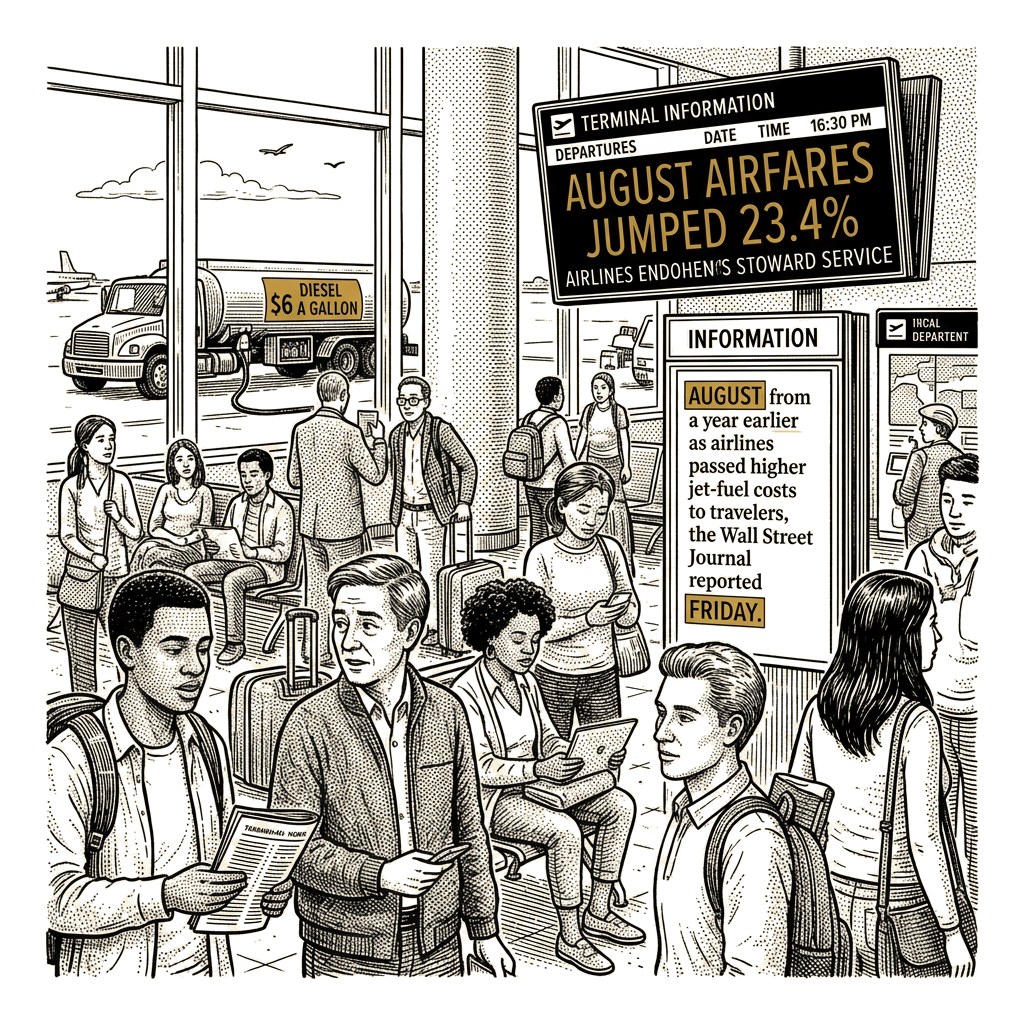
Airfares have tracked the fuel surge. Federal data show Americans are increasingly willing to spend on trips, making it easier for airlines to pass higher jet fuel costs on to travelers. Airfares were up 23.4% in August from a year earlier. That may not change soon as high stock prices continue to fatten travel budgets. “The boomers who are traveling and eating out won’t cut demand just because the fed funds rate rose by 25 basis points,” LPL Financial chief economist Jeffrey Roach wrote in a note Friday.
The picture in the diesel market is sharper still. Diesel prices are up more than 60% since late February, outpacing regular gasoline, and topped $6 a gallon for the first time on record Friday. The national average for regular gasoline reached about $4.30 on Friday, up 44% since the US and Israel attacked Iran at the end of February, according to AAA.
The broader inflation picture has been less alarming. Core prices excluding volatile food and energy were up 2.4% in August from a year earlier, matching analysts’ expectations and slightly cooler than July’s yearly increase, the Labor Department reported Friday. Food prices ran a bit higher, up 2.7% in the year ending in August, but economists say they aren’t seeing signs energy prices are having much impact on food.
While diesel cars are rare, the fuel is vital behind the scenes. The fuel powers farmers’ tractors and combines, and the rising price has made it more expensive to transport produce to supermarkets. Perishable goods such as seafood and dairy are particularly vulnerable because refrigerated transport is more fuel-intensive, said David Ortega, an economist at Michigan State University.
The effect of higher energy prices had a very small impact on core inflation in the second quarter, said Grace Zwemmer of Oxford Economics. She estimates the impact will grow in the third quarter, but remain muted. While core inflation excludes the direct cost of energy, oil and gas prices still influence it.
Businesses are often reluctant to pass on higher energy bills to their customers, according to economist Sung Won Sohn. Many firms hedge against rising fuel prices, and oil prices cooled over the summer before their most recent spike. Crude oil hovered around $100 a barrel on Friday afternoon, up about 45% from early July.
If businesses no longer think that their fuel bills will come back down soon, they become more likely to raise prices. Consumers expecting prolonged inflation often rush into purchases, which puts even more upward pressure on prices.
“Energy inflation does not stay at the gas station,” Sohn wrote in a note to clients Friday. “It travels by truck, airplane and cargo ship into nearly every store in America.”