Trend originated on Snapchat, spread from Ireland and UK to North America
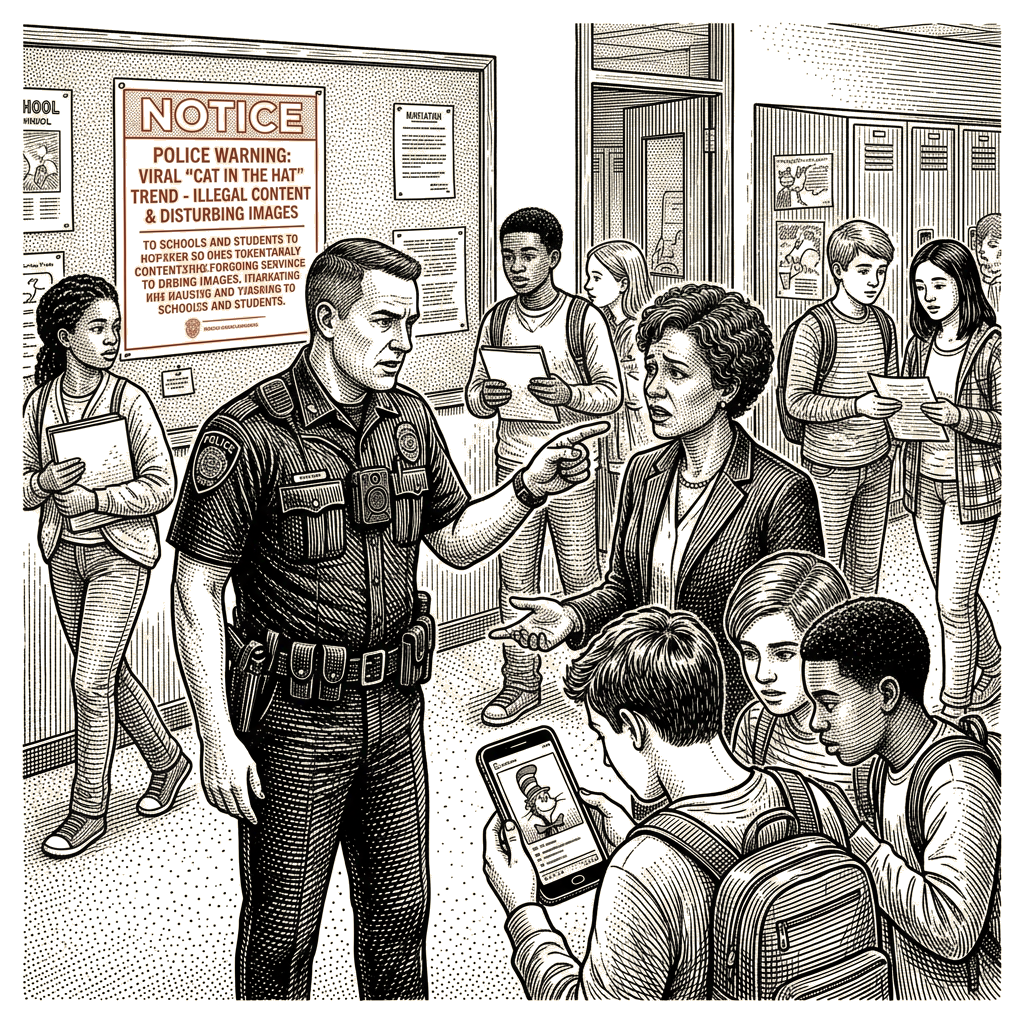
Schools and police departments in multiple U.S. states are warning about a viral “Cat in the Hat” social media trend that has prompted the arrests of several teenagers and increased security at schools. The Guardian reported that disturbing or AI-generated versions of the Dr. Seuss character are being used to threaten students, schools, and communities.
In Hutchinson, Kansas, near Wichita, a 15-year-old high school student was arrested after allegedly posting a video on social media that made ominous threats toward students using the trend. According to the Hutchinson Police Department, the juvenile created a TikTok account for the community referencing the Cat in the Hat trend and was charged with two counts of criminal threat.
“Threats of any nature are taken seriously by the Hutchinson Police Department and Hutchinson High School,” the department said in a statement. “Regardless of whether a post is intended as a joke, it is unlawful to cause others, particularly students, to fear for their safety.”
In Worth County, Georgia, two students at Worth County High School are facing charges after the school district said they participated in the viral social media hoax. Both students will also face disciplinary action, school officials said, without specifying the criminal charges.
In Grand Junction, Colorado, police increased their presence at West Middle School and Grand Junction High School “out of an abundance of caution” after a Cat in the Hat post circulated in the community. The post led to the arrest of a 14-year-old student.
The trend features images and short videos showing a disturbing version of the Cat in the Hat — often resembling the version played by Mike Myers in the 2003 live-action film — lurking outside homes, schools, or on streets at night. Some footage appears to be AI-generated while other posts include real people wearing costumes, and more disturbing versions have named individuals or included lists of supposed targets.
The posts originally circulated in Ireland and the United Kingdom in August 2026 before quickly becoming viral in parts of the United States and Canada, the BBC reported. Even though social media users often view the trend as a hoax or prank, authorities are warning that causing people to fear for their safety could potentially constitute criminal harassment.
Law enforcement authorities are urging students to report any safety concerns to a trusted adult, school administrator, or law enforcement official rather than reposting or sharing the content.