Ganges tops danger level; central US heatwave forecast to persist
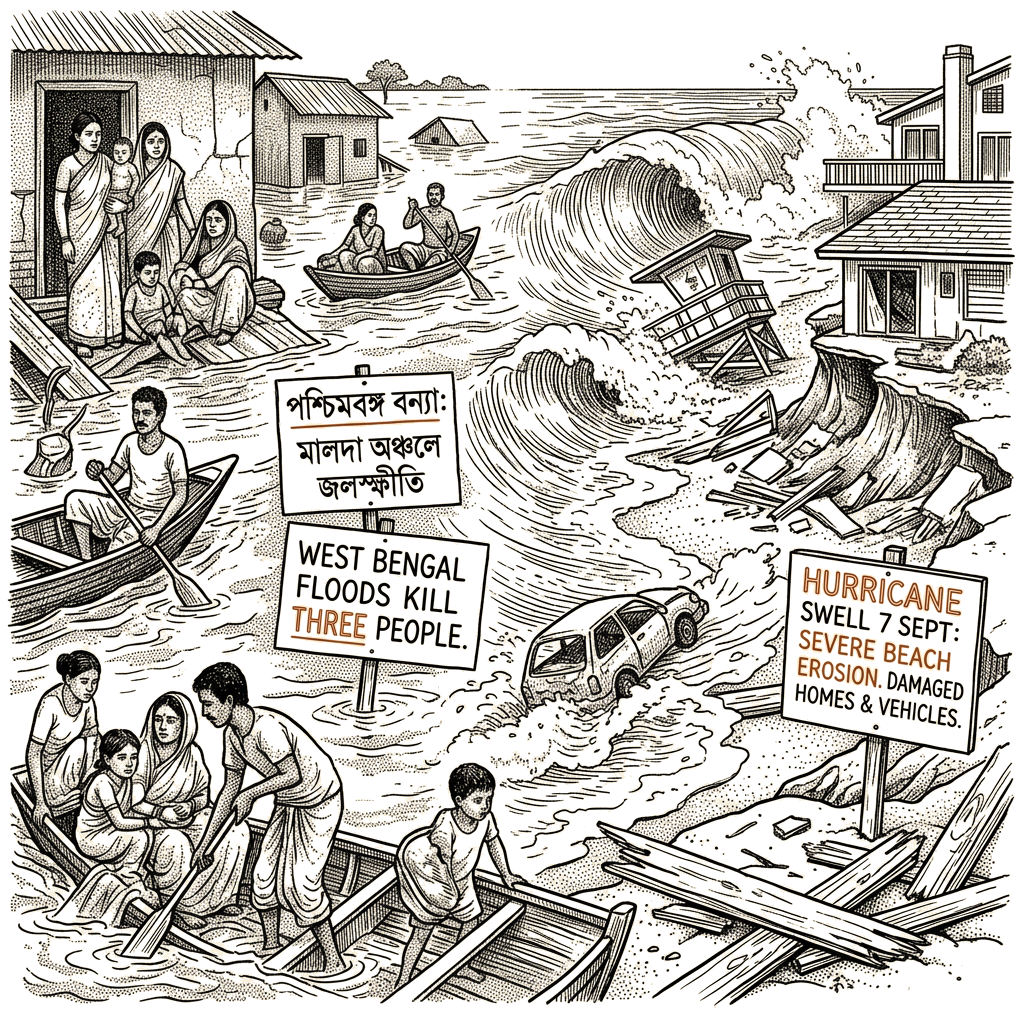
Flooding around the city of Malda in the Indian state of West Bengal since Thursday has had a devastating effect, with three deaths recorded and many areas still flooded. Numerous villages remain affected, along with the region of Bhutni. Erosion from the flooding, reported from Khaskol, led to a disruption in river flow that produced a more severe impact in Bhutni. More than 100 boats have been sent out for evacuation.
At East Basudevpur, a 20-foot (6-metre) embankment collapsed, reducing the channel from 550 feet to under 150 feet — a change that could lead to further flooding unless repairs are made. The flooding followed heavy rainfall that drove the Ganges River to rise about 75cm above its “extreme danger” level.
A swell caused by Hurricane Marie led to significant beach erosion across Orange county, California, on 7 September. The erosion formed cliff edges on some of the beaches and exposed old asphalt, pipes, and even pieces of an old pier. Flooding caused by the swell damaged homes and vehicles, flooded streets, and left behind a layer of sand. The swell has been estimated to be between 8 and 10 feet tall. Local residents characterized the event as one of the most severe cases of beach erosion in their experience, even though erosion is not uncommon in the area.
After the hottest summer on record for the US, above-average temperatures are expected to continue this week as a heatwave grips many central states. A persistent area of high pressure and a very warm surface after recent heat will help to drive daytime temperatures widely into the high 30s Celsius or up to 40°C across Oklahoma, Kansas, and nearby states. Models project the heat will remain locked in through much of the remainder of the month, increasing the risk of wildfires; other parts of the country are already under red flag warnings.
The reporting was compiled by Magdalena Shopova for MetDesk and published in the Guardian’s Weather tracker column on 14 September 2026.