Tehran continues Strait of Hormuz attacks despite ceasefire
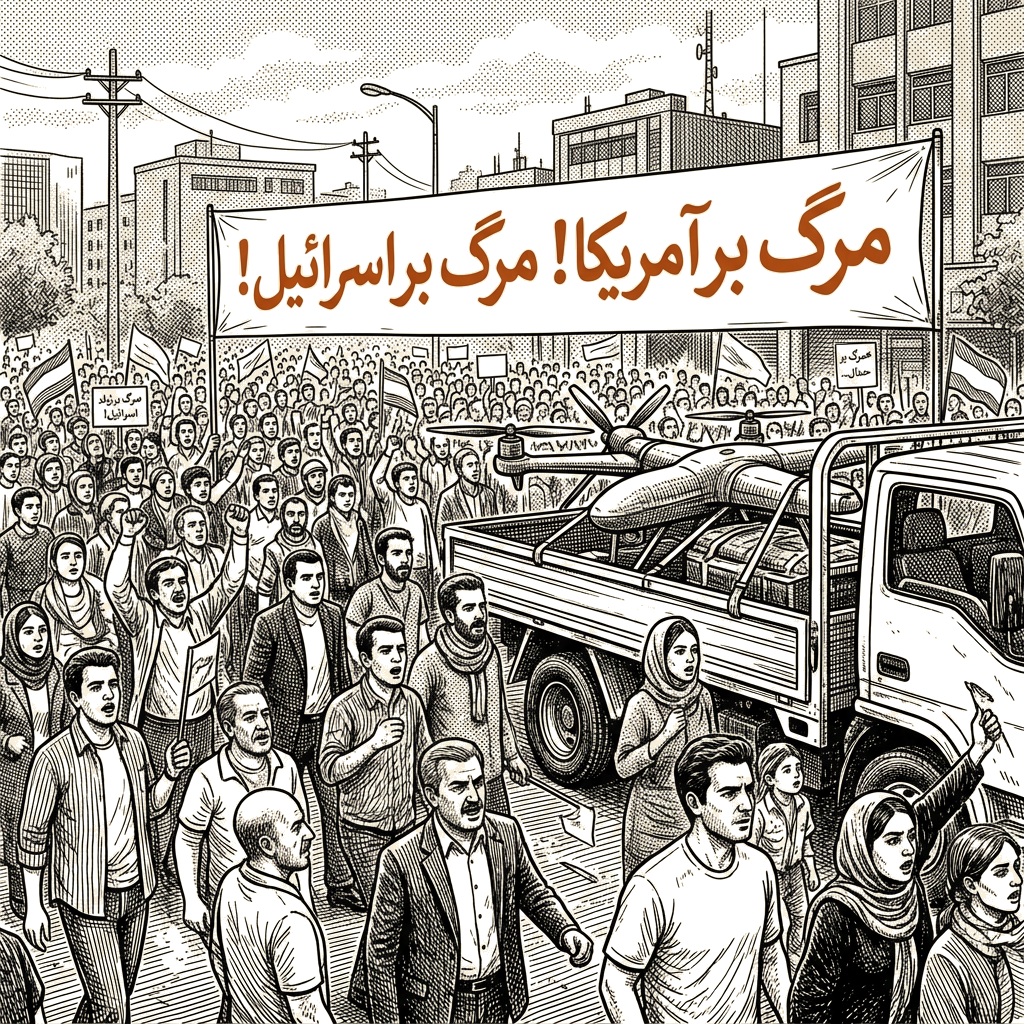
Rifle-toting supporters of Iran’s theocracy poured into the streets of Tehran on Friday in a defiant display of military power, as diplomatic efforts to end the war with the United States stagnate and economic frustration mounts. Massive crowds of men and women joined the government-organized rally, waving Iranian flags while chanting “Death to Israel!” and “Death to America!” Trucks paraded through the city center showing off hardware such as drones deployed in recent attacks against vessels trying to travel through the Strait of Hormuz.
Iran’s state media reported that hundreds of thousands of people joined Friday’s demonstration, which was attended by Iranian President Masoud Pezeshkian. The rally was among the largest of its kind since the U.S. and Israeli attacks that sparked the war in late February. It was timed to coincide with the 200-day milestone of the war and sought to rally Iranians through martial displays, like many held in the country since the ruinous 1980s Iran-Iraq war.
The ceremony also fell near a sensitive date in Iran — the anniversary of the 2022 death of a young woman in police custody that sparked nationwide protests challenging the country’s theocratic rule. Iran has marshaled its supporters to the streets regularly to project power and prevent more protests after brutally suppressing an uprising that began late last year over economic grievances. Human-rights groups say security forces killed thousands of people putting down the demonstrations in January.
Tehran is seeking to avoid a repeat as Washington’s aggressive campaign of economic sanctions and a blockade of Iranian oil exports starts to bite. Already, truckers and taxi drivers have staged strikes and small protests after the government slashed subsidies and raised fuel prices.
Ali Vaez, an Iran expert at the International Crisis Group, a conflict-resolution organization, said the rally was meant to send a warning to the government’s opponents at home and abroad.
“The Iranian regime has this theory, partly rooted in paranoia, that the U.S. and Israel have tried to undermine it by creating internal turmoil, creating economic discontent through sanctions and isolation that would lead the people to come to the streets and topple the regime,” Vaez said.
“The key message to the United States is: ‘We are in control and you will not be able to undermine us at home,’” he said.
Videos aired by Iran’s state broadcaster showed various social groups joining in the march, including what appeared to be a mass wedding. Some attendees dragged effigies of President Trump and Israeli Prime Minister Benjamin Netanyahu across the ground. One clip showed three women standing on the bed of a pickup truck, one holding a baby sucking on a pacifier while another gripped a mounted machine gun.
Despite a ceasefire in the war, Iran has carried out a series of attacks on ships trying to travel through the Strait of Hormuz, the narrow mouth of the Persian Gulf through which about a fifth of all oil traded once passed. The U.S. military has been escorting some ships through, including oil tankers, to try to limit the impact on global energy prices. The United States has also put a naval blockade on Iran, stopping its oil shipments, as a pressure tactic.
On Friday, a projectile hit a ship traveling through the strait, sparking a fire on board, according to the United Kingdom Maritime Trade Operations, a British Navy task force that monitors shipping in the Middle East. Its crew extinguished the blaze without injuries, the UKMTO added.