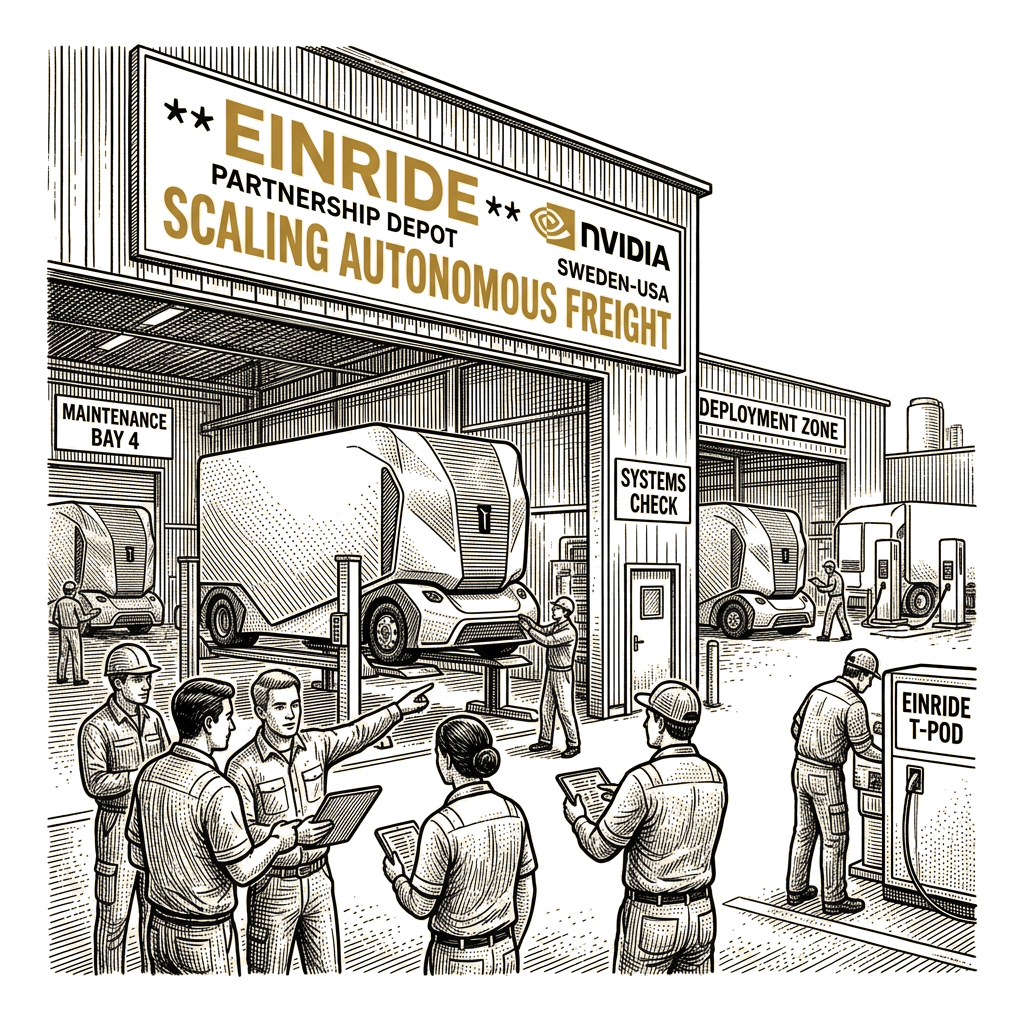
Einride projects demand will rise to 1,500 to 2,000 vehicles by 2028
Nvidia is partnering with Einride to provide the compute platform and AI tools that underpin the Swedish autonomous-truck maker’s self-driving systems, the companies said Monday. Under the agreement, Einride will build the next generation of its autonomous-driving software, called the Einride Driver, on Nvidia’s Hyperion platform.
Einride said it currently operates hundreds of electric trucks for major shipping clients across the U.S., Europe and the Middle East, and expects demand to grow to between 1,500 and 2,000 vehicles by 2028. Some 80% of that demand is suitable for automation in the medium term, the company said, adding to the driverless trucks already in Einride’s operations.
The company said its customers include PepsiCo, and European brewers Carlsberg and Heineken. Einride develops electric self-driving freight vehicles and software platforms for corporate shipping clients.
“Autonomous trucking—which uses self-driving vehicles that require minimal human intervention—represents an opportunity to improve safety and efficiency in global freight,” Rishi Dhall, Nvidia’s vice president of automotive, said.
“We have the customers, the operational experience and the technology,” Einride Chief Technology Officer Henrik Green said. “Building the next generation of the Einride Driver on the Nvidia Hyperion platform, will enable us to scale autonomous deployment across a freight network that’s already serving customers today.”
Einride, founded in Stockholm in 2016, began trading on the Nasdaq this summer after completing a merger with blank-check firm Legato Merger Corp. III in a transaction that valued the company’s equity at $1.35 billion before deal proceeds.
The partnership is the latest step in a broader push toward autonomous freight that has accompanied the spread of self-driving passenger taxis in U.S. cities, including Alphabet’s Waymo vehicles and Tesla’s robotaxis. Daimler Truck’s North America business has tested on-highway trucks for the U.S. market, while Caterpillar’s autonomous and remote-controlled bulldozers are in use at some landfills.