Xi expected to press Trump on Taiwan during Washington meeting
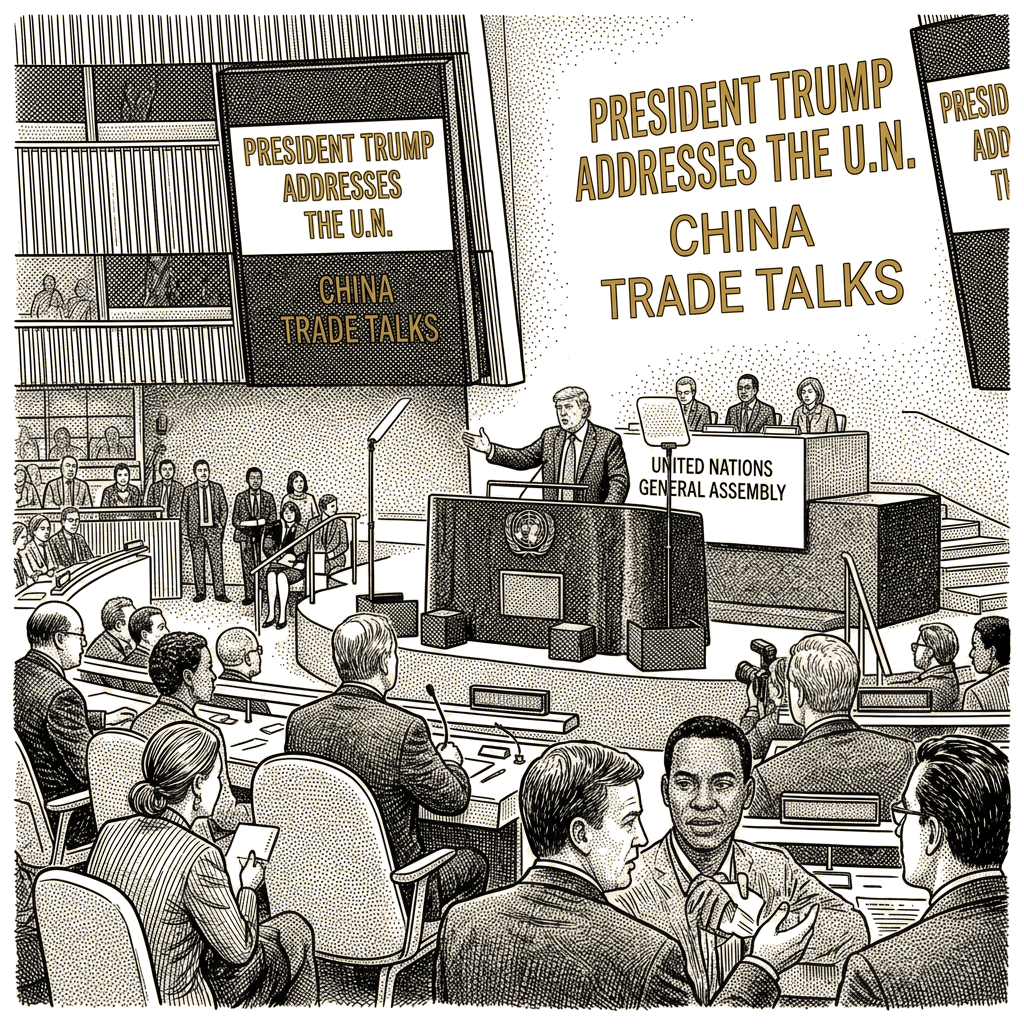
The week carries two international moments with consequences for trade and security. The first is President Trump’s address to the U.N. General Assembly on Tuesday morning, where investors will watch for signals on tariffs, artificial-intelligence security, and energy markets ahead of trade talks between Washington and Beijing later this week. The second is a planned meeting in Washington later in the week between Trump and Chinese leader Xi Jinping, according to WSJ reporters Lingling Wei and Joyu Wang.
Xi is expected to press Trump on Taiwan during the Washington meeting. The Chinese leader sees an opening because of rising concerns in Taiwan that Trump might be willing to sacrifice support for the island in return for better relations with Beijing, Wei and Wang reported.
Beijing has been intensifying efforts to drive a wedge through Taiwanese society, courting opponents to formal Taiwanese independence and sowing doubts about America’s commitment to the island. The goal, the WSJ reporters wrote, is to convince more Taiwanese that resistance to Chinese control is futile.
The international talks come at a moment when U.S. energy markets are also under scrutiny. In a newly relaunched WSJ economics newsletter, columnist Greg Ip warned the country is “not out of the woods on fuel prices yet.” This year’s energy surge could deliver a second hit to inflation as costlier oil becomes embedded in downstream goods and services in the coming year, Ip wrote.
Monday’s rally pushed the Nasdaq Composite to its first record close since June, a high-water mark for markets. With a light calendar for earnings and economic data, market attention has shifted to international trade and policy.
In a separate development, Paramount Chief Executive David Ellison has offered his largest concession yet in settlement negotiations with California Attorney General Rob Bonta’s antitrust coalition over the company’s $81 billion merger with Warner Bros. Discovery. Earlier this month, the parties had shown few signs of moving closer to resolving their differences, with on-and-off negotiations producing little progress, according to people close to the discussions.
Last week, Ellison pledged at least $1.5 billion more on domestic production over five years, according to people familiar with the discussions. He met with officials to finalize terms covering the editorial independence of CBS and CNN, worker benefits, and the number of films the company must release. Paramount expects to close the deal in about two weeks, WSJ reporters Jessica Toonkel and Eliza Collins wrote.
Elsewhere in the newsletter, WSJ reported on the changing dynamics at startup Butternut AI, where the number of employees currently working has fallen from a peak of nine after the co-founders laid off five engineers and replaced their workload with 24-hour AI agents.
Plenty of startups increase head count at a rapid clip as they aim for billion-dollar valuations and fight for top engineering talent. But a subset of early-stage founders is embracing an ethos derived from an extreme reliance on AI: stay small for as long as possible.
In other news, surfers are braving shard-infested waters at Newport Beach’s the Wedge. Southern California’s most dangerous surf spot has become even sketchier in recent months. Nonstop swells combined with a “super” El Niño phenomenon have washed away truckloads of sand from Newport Beach and other parts of the California coast, exposing hazards buried a century ago. They’ve also delivered some of the best waves anyone in the area can remember.