Kenscoff toll 47 dead, 1.5 million Haitians displaced, Abinader tells UN
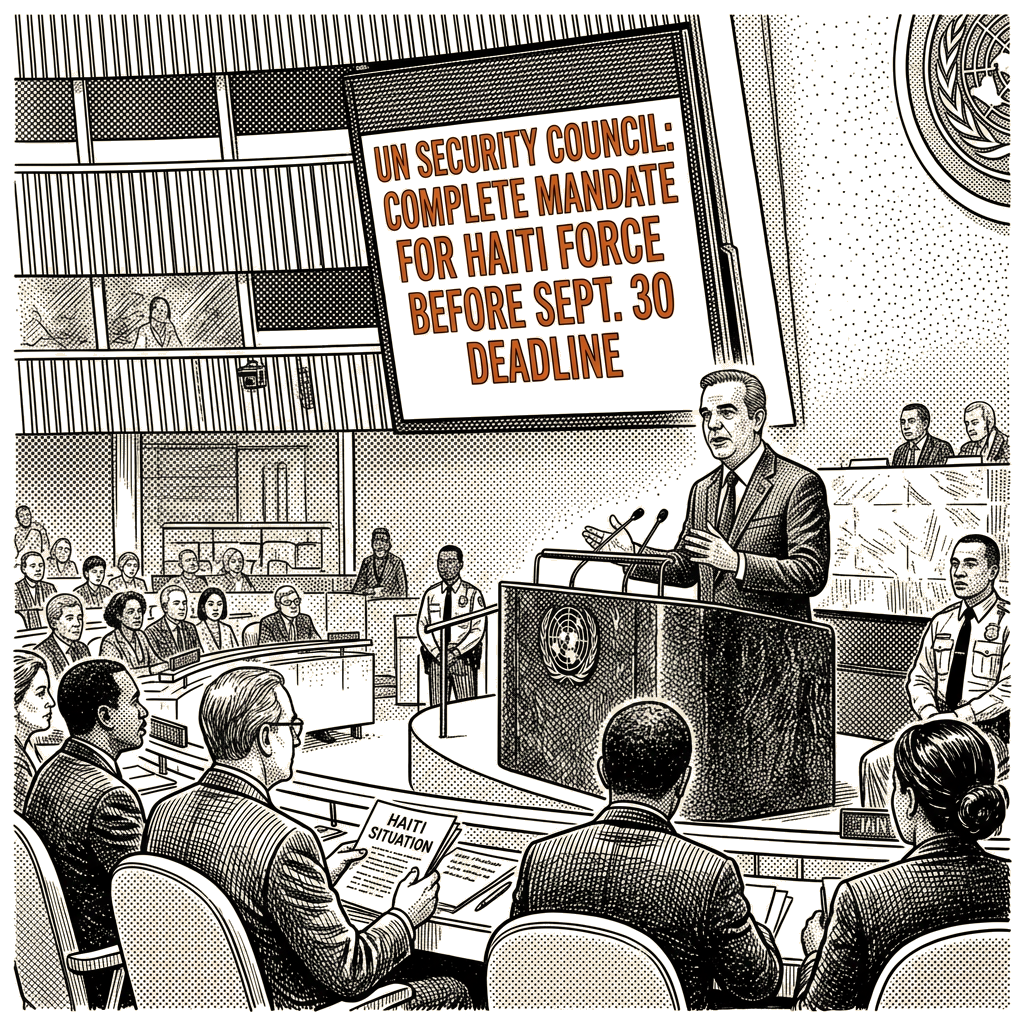
Speaking from the U.N. General Assembly on Wednesday, Dominican Republic President Luis Abinader called on the international community to fully deploy the multinational force authorized a year ago to combat Haiti’s armed gangs, warning that the existing force has only one-fifth of its authorized personnel and that the U.N. Security Council mandate expires Sept. 30.
“Renewing it without completing the deployment would prolong an unfulfilled promise,” Abinader said, calling on the international community to provide the troops and resources needed to carry out a decision that has already been made.
The Security Council approved Resolution 2793 a year ago, authorizing the force to combat armed gangs and establishing a U.N. support office. Abinader thanked the United States and Panama for their leadership, Canada and other donor countries for their support, and Kenya and other nations that have deployed personnel to Haiti. He warned that the deteriorating security situation required a faster international response.
Citing tolls from a month ago, Abinader told the Assembly that gangs had killed at least 47 people, including five children, in the Haitian community of Kenscoff. Nearly 1.5 million Haitians have been displaced from their homes, he said, about half of them children.
“This Assembly cannot resign itself to massacres becoming normal for the long-suffering Haitian people,” Abinader said.
He outlined three priorities for international action. First, completing the deployment of the international force. Second, enforcing the arms embargo and sanctioning those who finance and protect the gangs. Third, strengthening Haiti’s police, armed forces and justice system.
Abinader said those measures are necessary for Haitian institutions to progressively assume responsibility for the country’s security. “The solution to Haiti’s crisis lies in Haiti, and the international community’s obligation is to make that solution possible there, on Haitian territory,” he said.
The goal, he added, should be to create conditions that allow Haitian children to return to school, young people to build a future in their own country and the population to vote again when security conditions permit.
After addressing the Haitian crisis, Abinader turned to the Dominican Republic’s economic and social progress. Monetary poverty has declined since 2019, he said, and the U.N. Food and Agriculture Organization recently confirmed that the Dominican Republic had been removed from its hunger map.
The Dominican government wants international financial institutions to incorporate the Multidimensional Vulnerability Index into their financing criteria, arguing that per capita income alone does not reflect the needs of middle-income countries.
Turning to climate change, Abinader called for climate financing to reach Caribbean countries more quickly, citing the particular vulnerability of small island states. He also highlighted his country’s efforts to gain international recognition of sargassum as a global problem and called for greater protection of the oceans.
“The resolutions we approve will not be enough. What matters are those we properly implement,” Abinader said, calling for a United Nations that is “more representative, more efficient and capable of meeting the demands of the people it serves.”