US-China trade truce expires in November as leaders prepare to meet
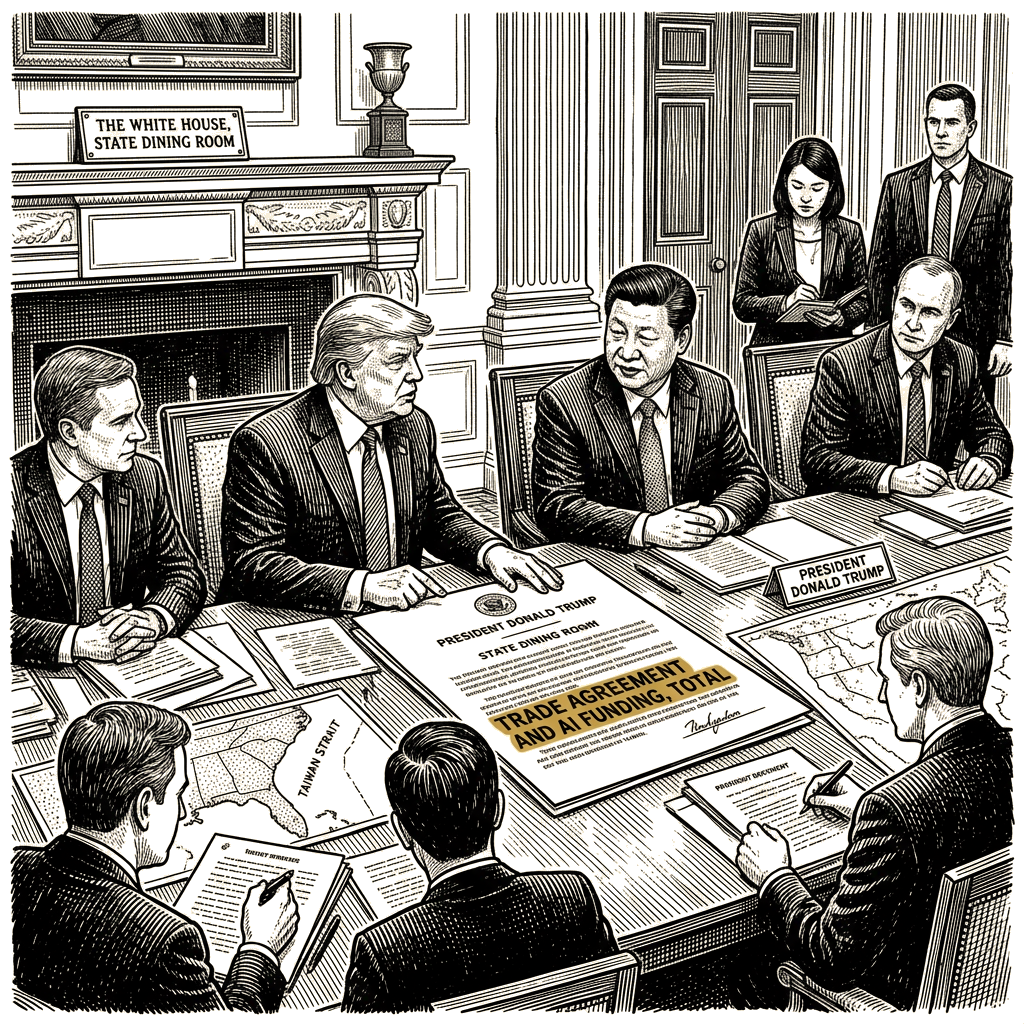
President Donald Trump will host Chinese leader Xi Jinping at the White House this week for a three-day state visit focused on trade, artificial intelligence, and a pending multibillion-dollar arms sale to Taiwan, according to BBC News. Trump will personally greet Xi at Andrews Air Force Base on Wednesday ahead of a White House state dinner and a military flyover, the BBC reported.
The three-day trip, which ends on Friday, marks Xi’s first state visit to the United States since 2015 and his third meeting with Trump in the past year. Xi will be accompanied by First Lady Peng Liyuan, who is expected to visit the Smithsonian National Museum of Asian Art with US First Lady Melania Trump on Thursday. The public schedule includes dinners, private tours, and performances.
A US-China trade agreement reached in October 2025 is set to expire in November. The trade truce — struck during a Trump-Xi meeting in South Korea — saw Washington suspend steep tariff increases on Chinese goods while Beijing eased back from restricting rare earth exports critical for manufacturing. Experts told the BBC they are watching for some sort of announcement on extending the agreement during the state visit.
David Sacks, a fellow for Asia studies at the Council on Foreign Relations, described the planned welcome by Trump as “really unprecedented.” “From meeting Xi Jinping at Andrews Air Force Base to having a flyover for Xi as well, this is not something afforded to any US ally,” Sacks said, “much less an adversary like China. It’s quite, quite stunning.”
The US trade deficit with China stood at more than $91 billion (£68.2 billion) according to the latest US Census Bureau data, and Chinese rare earth exports to the United States are down despite the October agreement. US and Chinese officials held trade talks on the sidelines of the UN General Assembly on Tuesday but failed to make meaningful progress, multiple sources told the BBC. The talks focused on non-tariff trade issues and agricultural exports, according to sources familiar with White House thinking. US negotiators were expected to continue talks with their Chinese counterparts in Washington on Wednesday after Xi’s arrival.
Artificial intelligence is expected to be another focal point. David Firestein of the Bush China Foundation said AI has “climbed rapidly toward the top of the agenda” ahead of the visit. China and the United States are competing in what has been described as an AI arms race, and recent high-profile AI security incidents have increased pressure on the Trump administration to regulate the technology.
Senator Bernie Sanders wrote on X this week: “For the sake of all humanity, Trump and Xi must negotiate a treaty NOW to pause AI and ban superintelligence before it’s too late.” Trump’s former White House adviser Steve Bannon and some Republicans in Congress have also warned about AI dangers. Trump, who views the technology as vital to the US economy and a battleground in the global struggle for power, has been reluctant to regulate. “Whoever wins AI, wins,” Trump has said. Firestein told the BBC he expects Trump and Xi to discuss AI collaboration.
On Sunday, US Treasury Secretary Scott Bessent met his Chinese counterpart, He Lifeng, and said the two had “very successful” talks on trade and AI. Several AI and tech industry executives — including OpenAI CEO Sam Altman, Nvidia CEO Jensen Huang, and X owner Elon Musk — will attend a White House state dinner on Thursday, according to US officials. Experts who spoke to the BBC said any major breakthroughs on AI or other issues are unlikely during the meetings.
Taiwan remains a point of contention. The US Congress has approved a multibillion-dollar arms sale to Taiwan that awaits Trump’s signature. Trump has held off for now, viewing the move as a bargaining chip with China. Beijing has long vowed to “reunify” with self-governing Taiwan and has not ruled out the use of force. Firestein said he expects Xi will seek a commitment from Trump to extend the delay of the arms sale or avoid the sale altogether.
Xi, like Trump, is also facing economic headwinds at home and is expected to use the visit to discuss deepening US-China trade. That presents a potential political problem for Trump: some members of his cabinet and his supporters view China with deep suspicion. US Transportation Secretary Sean Duffy wrote to Ford Motor Company in September urging the company to cut ties with China on national security and American-jobs grounds.
Stephen Orlins, president of the National Committee on US-China Relations, said Trump has made a decision that, regardless of circumstances, requires the United States to avoid a confrontational relationship with China. “Trump has made a decision that no matter what, we need to not have a confrontational relationship with China,” Orlins said. “He believes that the more he and President Xi meet, the less confrontational that relationship will be,” Orlins continued, “and he is right.”