Tigray joined six other rebel groups in alliance last weekend
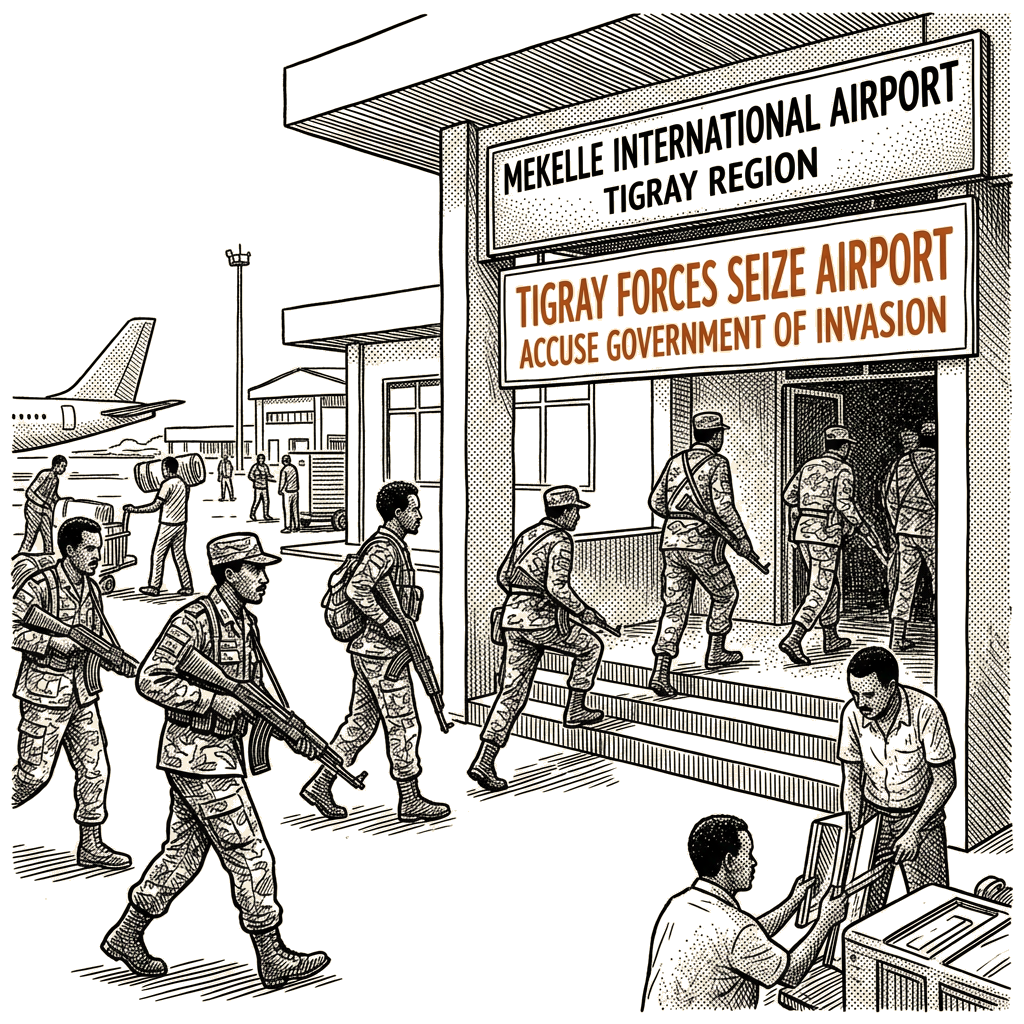
Tigrayan forces took control of the airport in Mekelle early Wednesday along with other federal controlled airports in Tigray, according to regional officials and the New York Times. Tigray’s officials accused Prime Minister Abiy Ahmed’s federal government of initiating an invasion through infantry, drone and artillery attacks, an escalation that threatens to undo a peace agreement African leaders brokered in 2022 after a war that killed around 600,000 people, many from starvation.
Ethiopia’s northern Tigray region, populated largely by ethnic Tigrayans and bordering Eritrea, has shaped Ethiopian politics since Tigrayan forces overthrew the military government in 1991. Meles Zenawi, a member of the Tigray People’s Liberation Front, governed Ethiopia from then until his death in 2012, presiding over an economic transformation that made Ethiopia one of Africa’s fastest-growing economies. In 2020, fighting between Abiy’s government and Tigrayan forces erupted into a war that lasted two years, with documented reports of widespread sexual violence. The United States sanctioned the Eritrean military and Ethiopian leaders during the conflict for violence against Tigrayans. The 2022 agreement halted the fighting, but the arrangement is now crumbling.
In a Wednesday statement, Tigray’s regional administration framed its mobilization as defensive. “Our army, the shield for the existence and safety of its people, has been instructed to counter the attack and genocidal invasion and has entered defense operations,” the statement said. “We call upon our army, all our people and allies in our struggle to consolidate their unity and strengthen their fight.”
Getachew Reda, an adviser to Abiy, offered a sharply different account on X. “It is rather heartbreaking to learn that despite efforts by many including the international community to avoid yet another round of war in Tigray, the TPLF leadership early in the morning today launched an all out offensive against government positions in Afar and Amhara,” Reda wrote. He added that the TPLF had seized federally controlled airports in Tigray, suspending flights, and said the group’s “politico-military leadership has obviously taken irresponsibility to new heights.”
The flare-up follows Tigray’s joining of an alliance of seven rebel groups last weekend, which declared its goal of overthrowing Abiy’s government and replacing it with what it described as an inclusive democracy, the Times reported.
The regional picture is complicated by Eritrea’s shifting posture: Eritrean President Isaias Afwerki, whose forces were sanctioned by the United States during the previous war for violence against Tigrayans, has warmed to Tigrayan leaders since the 2022 agreement. It remained unclear whether Eritrea would side with the federal government if full-scale war resumed.
U.S. Ambassador to Ethiopia Ervin Massinga noted that Washington had already imposed sanctions on TPLF leadership earlier this year. He called the Tigrayans’ decision to launch an offensive a “poor decision” and said dialogue was still possible.
A Mekelle resident who spoke to the BBC’s Newsday on Thursday, identified only as Fitsum for his safety, said there were no clashes in the city but described a population under severe economic strain. “Mekelle is calm, except the stress from the people,” Fitsum said.
He reported that cash had become hard to obtain, with civil servants unpaid for months. “People are in a mood where they are distressed because it’s been so difficult, so tough. For the last seven or eight months, the government has been denying budgets to the civil servants, and all the banks were running out of cash.” Fitsum said residents had been relying on mobile banking, but warned that communications could be cut off, leaving people in “grave danger” because there was almost no cash available.