Amazon to double robot-making plants; jobless claims fall to 197,000
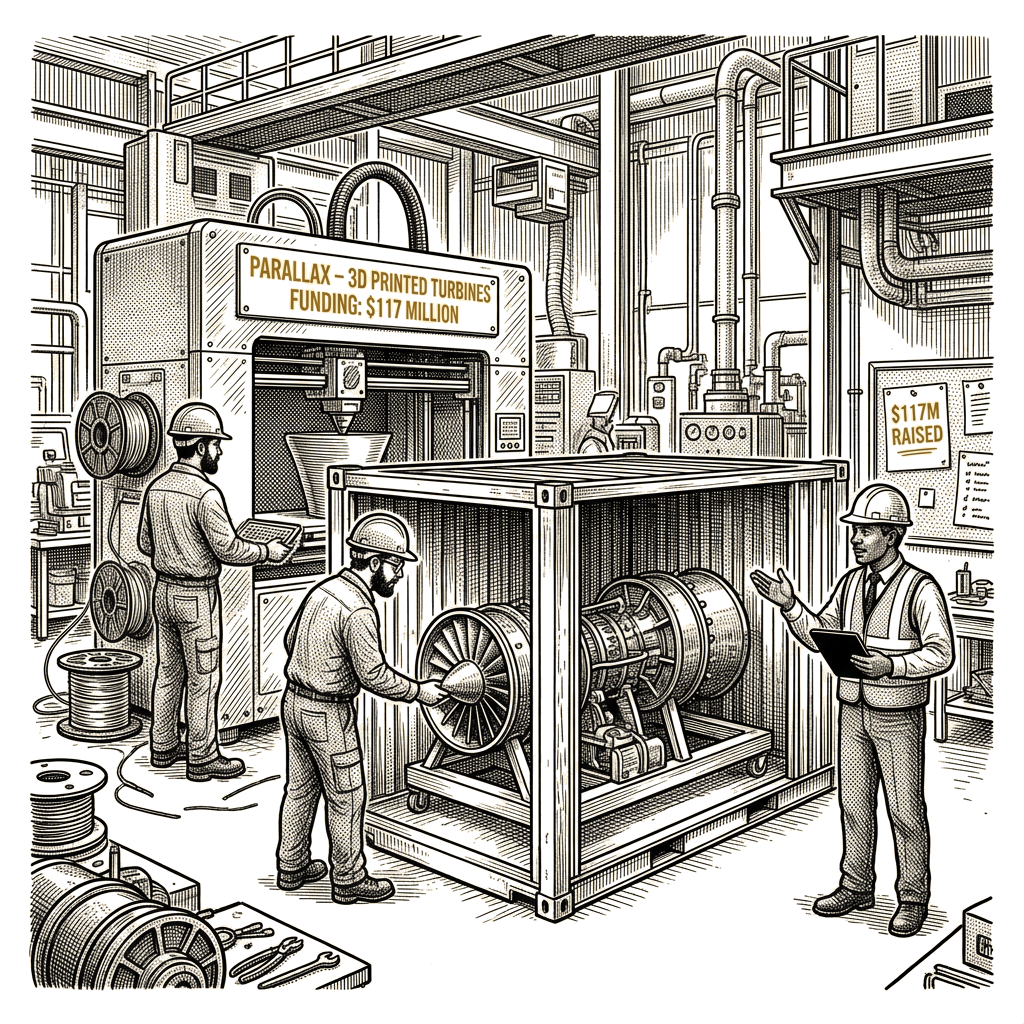
California startup Parallax has raised $117 million to use 3-D printing to manufacture smaller, gas-fired turbines for data-center power, the WSJ Logistics Report reported in its Sept. 25 newsletter. The Wall Street Journal’s Jennifer Hiller writes that Parallax aims to enter the market for on-site power generation using 3-D printing rather than the specialty supply chain that produces conventional turbines.
The market for large turbines used at power plants has multiyear backlogs because of rising demand for power, much of it coming from the AI boom. Many data centers are deciding to go it alone and build their own power generation on site rather than wait for grid connections.
Parallax founder and CEO Carl Schoeller said the company’s goal is not to replicate the highly efficient turbines that major manufacturers build. Instead, he said, Parallax aims to produce something smaller that could generate about 10 megawatts of electricity, be manufactured faster with cheaper materials, and be transported in shipping containers.
Amazon said it would spend more than $100 million on a new robotics factory near Indianapolis as it automates more of the work inside its warehouses, the WSJ’s Isabella Simonetti reports. Amazon last month announced plans to construct another robotics hub in Austin, Texas; the new facilities will double the number of Amazon’s robot-making plants to four. Amazon’s investments in robotics date to its $775 million acquisition of Kiva Systems in 2012 and have put the company at the center of a debate about how automation and AI will affect workers, including its own workforce of more than 1.5 million. Amazon says its investments in robots to sort, lift and move packages have created high-paying, skilled jobs and reduced the rate of recordable workplace injuries by more than 40%.
U.S. jobless claims fell to 197,000 in the week through Sept. 19, according to the WSJ. Across the border, Canadian retail sales in July fell for the first time this year, declining 0.7% from June, though an early tally of receipts indicates sales recovered in August.
The Trump administration is preparing tariffs on memory-chip imports to spur domestic investment, the WSJ reports, a move that could raise costs for American buyers. Separately, more than 200 importers, exporters and transportation groups urged the U.S. to extend the suspension of Section 301 tariffs and fees on Chinese-linked ships, according to Seatrade Maritime News.
Steelmaker ArcelorMittal said it wasn’t able to safely restart operations at its Ukrainian subsidiary after missile attacks killed five people and injured 17, the WSJ reports. A joint venture between shipbuilder Fincantieri and defense company Leonardo signed a $4.21 billion deal to supply two destroyers to the Italian navy. U.S. tungsten supplier Elmet Group agreed to acquire a 4.99% stake in Vietnamese miner Masan High-Tech Materials for about $125 million, Nikkei Asia reported.
Lowe’s launched a drone delivery service in Matthews, N.C., in partnership with Wing and DoorDash, DC Velocity reported. Separately, according to Chatham House, additional square miles of land would be required to produce enough biofuels for nations to meet all their targets for blending them into gasoline and diesel.
The return of containerships to the Suez Canal is speeding up shipping times from India to Georgia’s Port of Savannah, SupplyChainBrain reports, while A.P. Moller-Maersk’s APM Terminals is nearly finished with an expansion of its Port of Mobile intermodal rail yard in Alabama that will double container volume, according to the Journal of Commerce.
A separate WSJ Logistics Report item detailed DP World’s response to the closure of the Strait of Hormuz: trade at its flagship Port of Jebel Ali fell 90%, and the company is racing to reroute cargo through road and rail networks linked to Gulf of Oman, Red Sea and Turkish ports, add 700 trucks to its Middle East fleet, and commit $500 million to build two new port facilities on the Gulf of Oman that bypass Hormuz. Chief Executive Yuvraj Narayan, who took charge of DP World in mid-February after serving as CFO and deputy CEO, told the WSJ’s Paul Berger: “Eighty percent of global trade is on the marine route. I only hope sanity prevails.”