Dengue has begun appearing in regions outside its traditional tropical and subtropical range
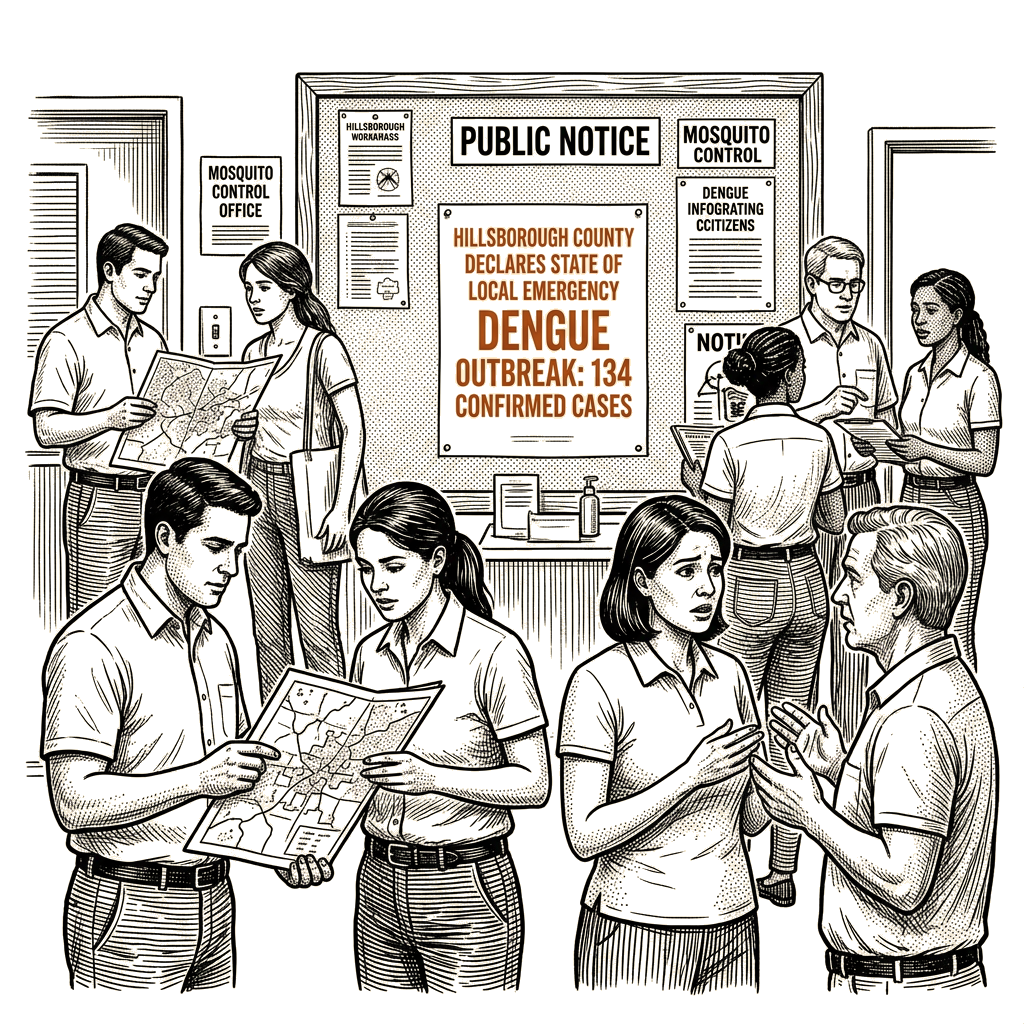
Hillsborough County, Florida, declared a state of local emergency on 24 September in response to a dengue fever outbreak — a mosquito-borne sickness typically found in countries outside the US — joining neighboring Pasco and Pinellas counties that have issued similar declarations. The county, whose seat is the city of Tampa, cited 134 confirmed dengue cases at the time of the announcement. Officials said the spread of the illness posed “an immediate and widespread threat to the public health, safety, and welfare of the residents and visitors of Hillsborough county.”
The declaration enables Hillsborough County to request “any available and necessary state, federal, and local emergency funds, grants, financial assistance, and mutual aid” in the response to the outbreak. The initial declaration was put into effect for one week, with the option to extend.
Florida’s Department of Health, in a recent report on mosquito-transmitted viruses, said the state logged 26 international travel-linked dengue cases and 38 locally contracted cases during a six-day period beginning 13 September. The state has recorded 212 travel-related dengue cases and 190 locally acquired cases so far in 2026, according to the health department.
Numbers from the U.S. Centers for Disease Control and Prevention differ slightly. As of Monday, the CDC reported 392 dengue cases in Florida for the year, alongside different county-level data.
Dengue is contracted through the bite of some mosquito species, largely Aedes aegypti, as well as Aedes albopictus, both of which are present in Florida. Symptoms typically appear between three days and two weeks after a bite from an infected mosquito and include “sudden onset of fever, severe headache, eye pain, muscle and joint pain … and bleeding. Gastrointestinal symptoms like vomiting and diarrhea may also be present in some cases,” according to Florida’s state health department. Symptoms generally last four days to one week. A rarer form, dengue hemorrhagic fever, can be fatal without proper supportive care, the state health department said.
The tropical disease is often referred to as “breakbone fever” because of the extreme pain it can cause. Controlling it requires “immediate, aggressive, and continuous” measures such as pesticide application, public education, and emergency resource planning, officials said.
Dengue cases have become more common in parts of the US. In 2023, Long Beach and Pasadena, California, reported the first known locally acquired dengue cases in that state. The spread of dengue mosquitoes outside tropical and subtropical locales has also reached England, with British authorities recently announcing that Aedes aegypti had been found in east London homes. Scientists have said global warming is poised to intensify climate-related diseases.
Hillsborough County authorities said they were optimistic that dengue infections might slow in the coming weeks, with zero “mosquito test pools” testing positive recently, according to local outlet Bay News 9.