DOT projects rule will raise US fuel consumption 100 billion gallons by 2050
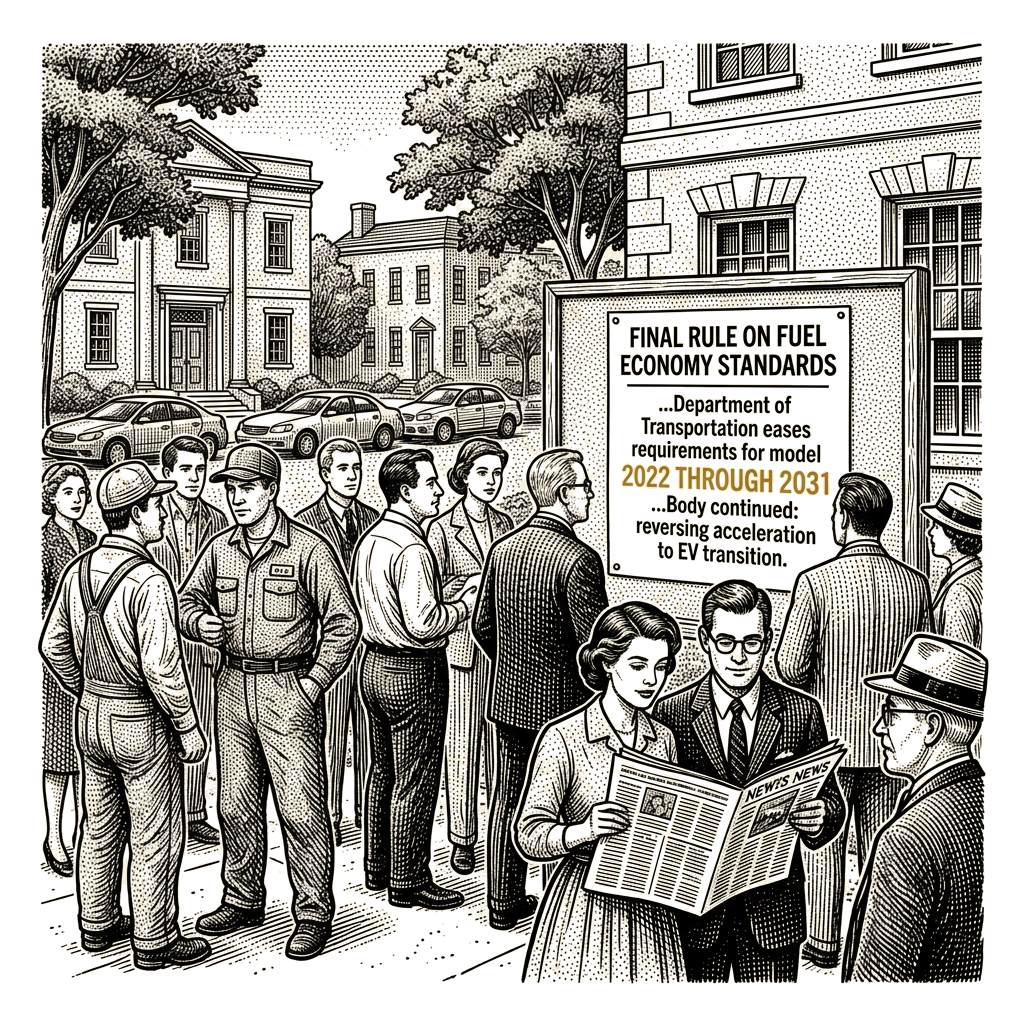
The Department of Transportation on Monday announced a final rule easing fuel economy requirements for model years 2022 through 2031, reversing a Biden-era push to accelerate the transition to electric vehicles and loosening mileage standards for gasoline-powered cars and light trucks.
Transportation is the largest source of climate emissions in the United States, accounting for about 28% of total US greenhouse gas emissions according to the US Environmental Protection Agency. The DOT rule follows the Trump administration’s earlier rollback of the government’s ability to impose requirements to track, report and limit climate-heating pollution from cars and trucks.
Donald Trump said on Truth Social on Saturday that the less stringent mileage requirements would “take the waste out of building cars in America” and save families “thousands on a new, beautiful and safe car,” while boosting auto production in the United States. Trump has pledged to end what he calls an EV “mandate.” The Biden administration set a non-binding target that half of all new vehicle sales be electric by 2030; no federal policy has required auto companies to sell EVs.
Transportation Secretary Sean Duffy announced the initiative under the name “Freedom Means Affordable Cars.” The agency said the rule would reduce the average cost of new vehicles by $1,300 and save consumers $138 billion over the next five years. Duffy said: “Thanks to President Trump’s leadership, we have finally ended the illegal mandate that forced automakers to produce more expensive electric vehicles that American families didn’t want.”
Under the Biden administration, required fuel efficiency for cars had been set to rise by 8% annually for model years 2024 and 2025, 10% for model year 2026, and 2% annually from 2027 to 2031. The Trump administration in December proposed retroactively revising down the 2022 model year fuel economy standard and then raising it between 0.25% and 0.5% annually through 2031, estimating that its proposal would cut average new vehicle costs by $930 each. The same proposal projected it would increase fuel consumption by about 100 billion gallons through 2050, fuel spending by $185 billion and carbon dioxide emissions by about 5%, according to the department’s own analysis.
Environmental groups condemned the new rule. Dan Becker, director of the Center for Biological Diversity’s safe climate transport campaign, said the final rule “ignores the feasibility of clean technology and the millions of fuel-efficient cars already on the road.” Becker said in a statement that “Trump is tanking sensible mile per gallon standards at the worst possible time for consumers, who are getting hit with sky-high prices at the pump. Consumers will pay the price for these reckless rollbacks while Trump’s Big Oil and Big Auto buddies reap the short-term profits.”
Katherine García, director of the Sierra Club’s Clean transportation for all campaign, vowed the environmental group would fight the rule and said loosening fuel standards would “make driving more expensive too.”
Harold Wimmer, president and CEO of the American Lung Association, said the new rule will “create more air pollution, harm health and accelerate climate change.” Wimmer said that “for decades, fuel economy standards have ensured that new cars, SUVs and pickup trucks are more efficient, which saves lives and money,” and added that “there is no reason to weaken standards that are technologically feasible and have a direct benefit for the quality of the air people breathe.”
Wimmer said children are particularly vulnerable to the effects of traffic pollution, which he said “can impede lung growth, cause new cases of pediatric asthma, make asthma symptoms worse and increase kids’ risk of respiratory infection and diseases.” He added that making new cars cleaner has widespread public support, citing a poll the group conducted that found a strong majority of voters supported stricter limits on vehicle emissions.