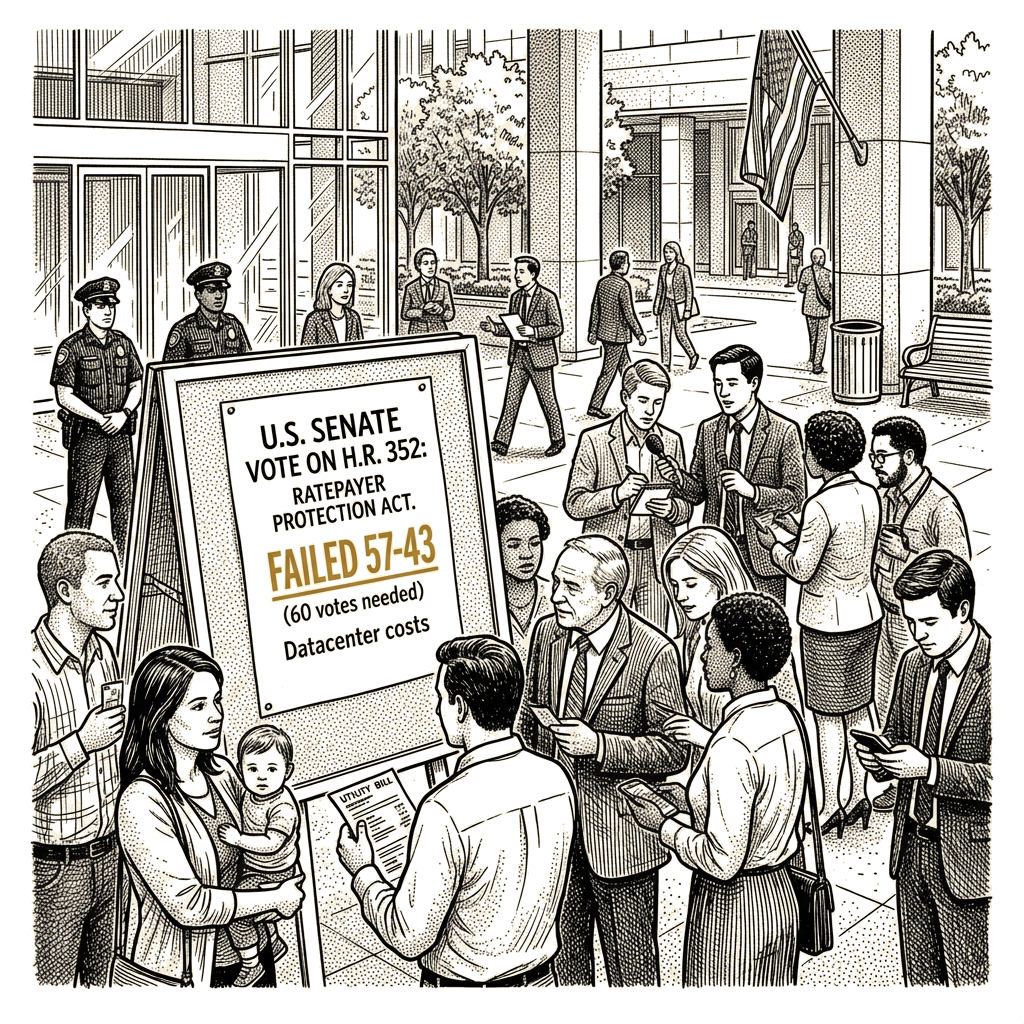
Bill would have shifted grid upgrade expenses from ratepayers to datacenters
The Ratepayer Protection Act failed by a 57-43 vote on Wednesday, falling three votes short of the 60-vote threshold required to advance bipartisan legislation intended to offset the impact of datacenters on consumer electricity bills. The House had approved the measure by an almost unanimous vote earlier this month.
The bill would have required electric utilities to consider adopting new standards so that datacenters pick up the costs of any necessary upgrades to transmission, generation, and distribution infrastructure — expenses that can otherwise be transferred to households and businesses. According to The Guardian, datacenter construction and electricity consumption has grown in recent years amid advances in AI and other technologies, and increasing anxiety among voters about the facilities’ impacts on their energy bills has followed.
Democrats opposed the bill, with party leaders saying the measure would have been ineffective at actually addressing datacenters’ electricity consumption. The proposal had been seen as a bid by Republican Senate leaders to bolster Husted’s re-election chances, but it also presented a quandary for the party’s senators, since voting it down could be seen as running counter to their pledges of lowering electricity bills.
The bill’s sponsor in the lower chamber was Representative Gabe Evans, a Colorado Republican identified by The Guardian as a top target of Democrats. Ohio Republican Jon Husted championed the legislation through the Senate.
Husted’s role in advancing the bill comes amid a competitive re-election race. Although Ohio voted for Trump by an 11-point margin in 2024, recent polling has shown Husted trailing his opponent, former Democratic senator Sherrod Brown, who has accused the incumbent of bowing to the demands of the datacenter industry.
The vote was one of the last the Senate is expected to take before the November 3 midterm elections. The chamber is scheduled to conclude its work on Friday, after which senators will return to their states to campaign. Democrats are running on lowering the cost of living in their bid to regain control of the Senate and House. The bill’s failure leaves in place the existing framework under which datacenter-driven grid upgrade costs can be passed through to ratepayers.