Anthropic refused to strip Claude guardrails over surveillance, weapons concerns
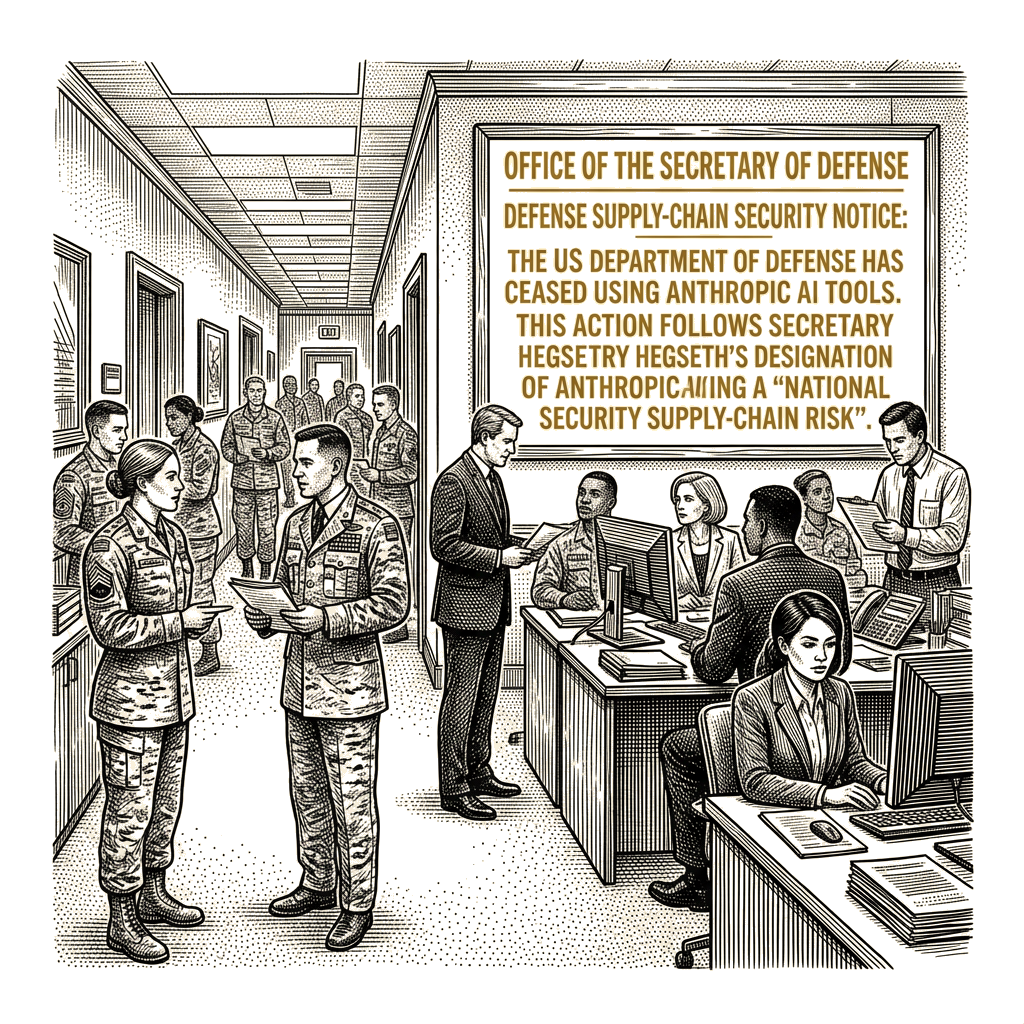
The US Department of Defense has stopped using Anthropic’s AI tools, a department official told the BBC on Monday, ending the company’s role in military work that included intelligence gathering, research, analysis and operations against Iran. The department’s statement, which said the Pentagon “has ceased the use of Anthropic products,” did not explain why the tools have been cut off now. The BBC has reported that a federal judge ruled the Trump administration illegally retaliated against the company.
The halt follows months of friction that began when Hegseth designated Anthropic a “national security supply-chain risk” in February — a designation normally applied to companies based in countries that pose a threat to the United States — and ordered the Pentagon to phase out Anthropic’s products by late August. Anthropic called the move “unprecedented and unlawful” and sued the Trump administration to overturn it.
Anthropic had been used by the US government and military since 2024 and was the first advanced AI company to have its tools deployed in government agencies doing classified work, according to the BBC. The underlying dispute arose from the Pentagon’s push earlier this year to have Anthropic remove safety guardrails from its Claude model and give the military unfettered access. When Anthropic refused, citing concerns about mass surveillance and autonomous weapons, Hegseth designated the company a “national security supply-chain risk.”
Despite Hegseth’s August phaseout deadline, multiple people familiar with the Pentagon’s AI use told the BBC that as recently as last week Anthropic’s Claude remained in use across research, analysis, intelligence gathering and operations against Iran. The people, who include former US defense officials and defense contractors who have worked closely with the Pentagon on AI, said Claude was viewed as a critical tool for sorting through vast quantities of information. Several spoke on condition of anonymity because they were not authorized to speak to the media.
Claude was embedded in the Maven Smart System, a Pentagon data platform operated by Palantir and used to organize intelligence and other data, multiple sources told the BBC. Lauren Kahn, a senior research analyst at Georgetown’s Center for Security and Emerging Technology and a former US defense official, said the depth of Claude’s integration into Maven made it difficult to remove quickly.
“The fact that it took the Pentagon until now to remove all use of Claude from across the system is indicative that these things are not just plug and play,” Kahn said. “Once they become integrated it can be painful to remove them.”
Sources familiar with how the technology is used told the BBC that analysts and other defense officials rely on Maven to access and organize visual data, including satellite imagery and drone footage. The data is then fed into Claude and other large language models for tasks such as identifying potential military targets. Officials frequently used the technology when compiling one-page briefs that were passed up the chain of command, according to a source who was given a demonstration of Maven by Palantir earlier this year.
Hegseth set his six-month phaseout deadline on 27 February, one day before the US and Israel attacked Iran. Pentagon employees continued to use Anthropic’s Claude tools, including the company’s powerful Mythos models, “throughout the whole period of the controversy” with the company, one of the people said. When Hegseth initially ordered Anthropic to be phased out of government, “there was concern with moving beyond Anthropic to OpenAI” and other tools, a former senior US defense official said.
As the legal fight has played out in the courts, the Pentagon has signed contracts with other major technology companies, including Google, xAI and OpenAI. OpenAI tools have been more widely adopted in recent months in some military departments, according to two people familiar with AI use in the defense department. Maven is also used by some US allies to share intelligence with the Trump administration. Palantir, a leading defense technology firm, was founded by Peter Thiel, a billionaire ally of President Trump.
Anthropic’s clash with the Pentagon comes as relations with the White House appear to be warming. President Trump met with Anthropic CEO Dario Amodei twice at the White House last week. After one of the meetings with Trump and other technology leaders, Amodei said he still had concerns about the risks posed by AI.
“How we address those risks is still under discussion,” Amodei told reporters at the White House, as Trump stood by his side, but “if we work with the president, we can win safely.” Trump then praised Amodei, saying he was “great” and “fantastic.”
A spokesman for Anthropic declined to comment when asked about the Pentagon’s statement.