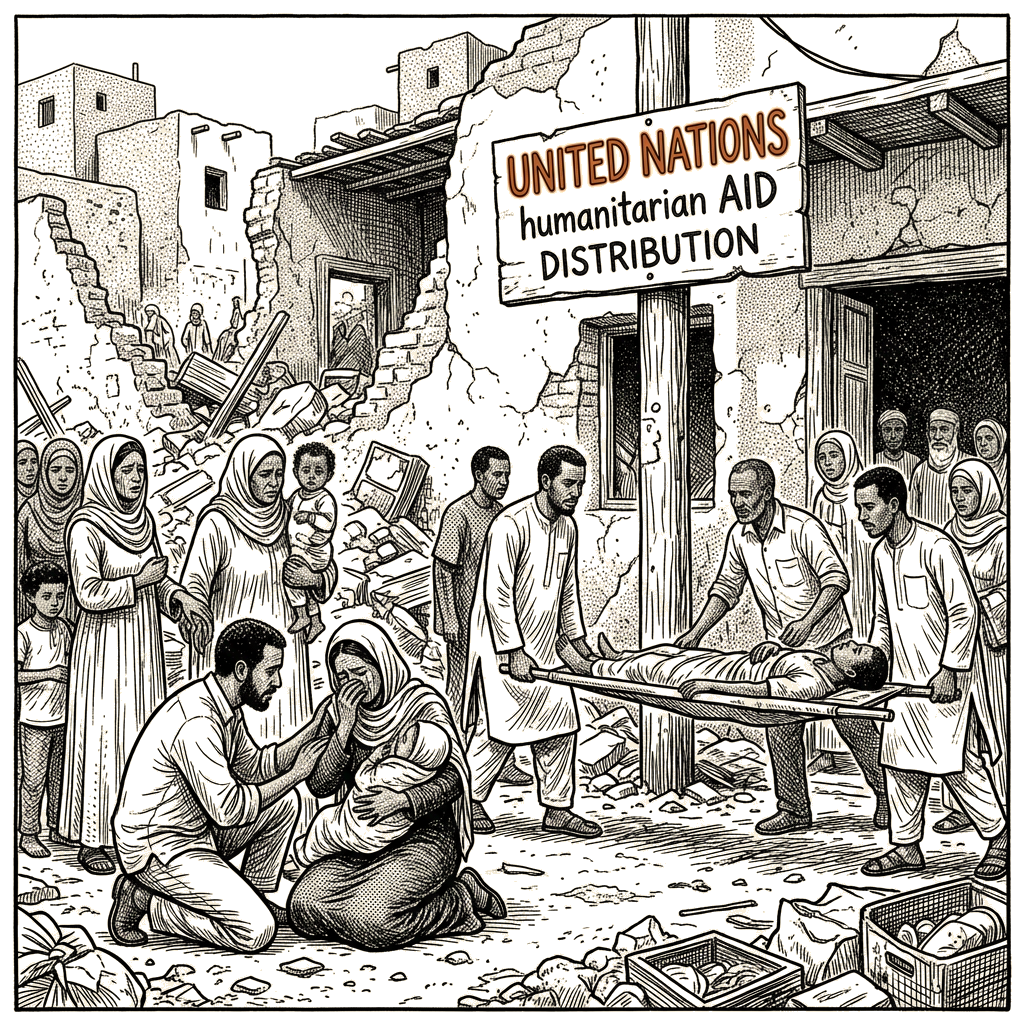
Death tolls were 150 in West Kordofan and about 150 in Abyei
Drone strikes across Sudan have killed hundreds of people in recent days, and the United Nations has condemned attacks that killed civilians, including children, and disrupted essential services. The escalation came as the Sudanese armed forces and the paramilitary Rapid Support Forces continued their war and as drone use increased.
UN spokesperson Stéphane Dujarric told reporters in New York, “We are alarmed by the continued deadly drone strikes across the country that are also killing civilians, including children, and that are disrupting essential services.”
UPI described the conflict as causing one of the world’s worst humanitarian crises. The outlet reported that hundreds of thousands of people have died in the war and more than 14 million have been displaced. UPI also reported that acute hunger was rising, with 20 million people at risk.
UPI reported that sources told the Sudan War Observatory that strikes in two places in West Kordofan state on Sunday killed 150 people. BBC News reported that the total included dozens of people traveling to a funeral. The Sudan War Observatory tracks the three-year-old conflict.
UPI, citing BBC News, reported that drones also struck a market in Abyei on Monday, killing about 150 people. Abyei lies between Sudan and South Sudan and is administered by both countries. BBC News said the attack raised fears that the war could cross the border, and South Sudan said it would lodge a formal protest. The UN said strikes at the market injured at least 19 people.
The UN said drones also targeted several areas in Khartoum, Sudan’s capital. For weekend attacks in West Darfur, South Darfur and North Kordofan states, it gave a lower toll: at least 19 people killed, including 10 children, and others injured.
Dujarric said, “We condemn all of these attacks unequivocally.”
The UN said the targeting of aid workers in the area was a rising concern. Since the war started, 25 Sudanese Red Crescent volunteers have reportedly been killed while on duty.
Dujarric said, “The targeting of those who put their own lives at risk to help others in humanitarian settings is particularly heinous.” He said civilians and civilian infrastructure, including medical facilities and personnel, are supposed to be protected under international humanitarian law.