Cuba accuses US of organizing forum to undermine embargo resolution
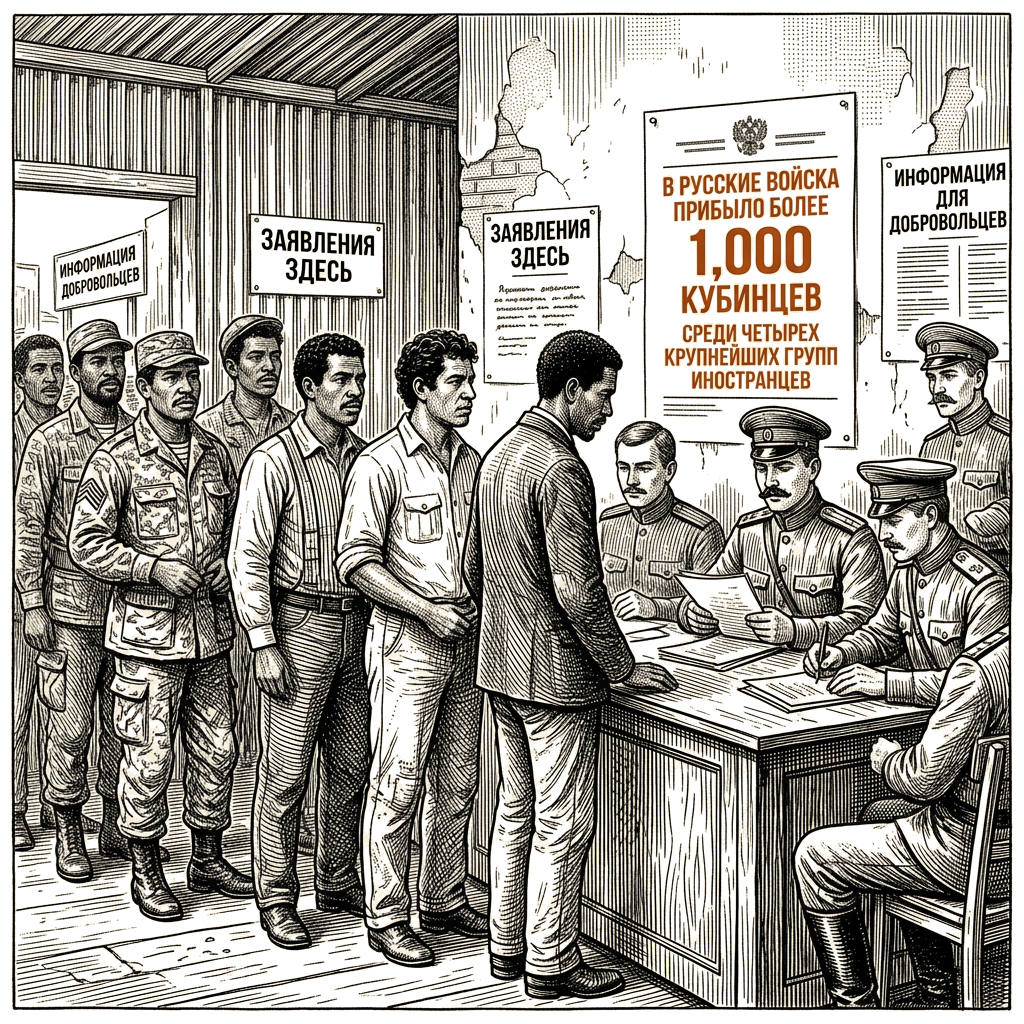
Ukraine denounced Russia’s large-scale recruitment of Cuban citizens for its military and told the United Nations that Cubans are among the four largest national groups of foreign recruits serving in Russian forces. Ukraine’s deputy ambassador to the United Nations, Oleksandr Pavlichenko, said in New York on Monday that Ukrainian authorities had confirmed the transfer of more than 1,000 Cubans who signed contracts with the Russian military between 2023 and 2025. He warned that the confirmed figure did not reflect the full extent of the recruitment.
Martí Noticias reported Pavlichenko’s remarks at a forum on human rights in Cuba organized by the U.S. Mission to the United Nations. An Oct. 19, 2026, social-media post from Martí Noticias relayed his claim that more than 1,000 Cubans had been recruited by Russia to fight in Ukraine. At the forum, Pavlichenko called for an end to Russia’s recruitment of Cuban citizens and demanded the immediate release of those ‘being unlawfully held in Russian military service.’
Pavlichenko linked the recruitment to Cuba’s economic hardships. He said offers of monthly payments of about $2,000 represented a significant financial incentive for many Cubans. “Economic vulnerability must never become a pretext for exploiting people and dragging them into a war of aggression,” he said.
In September, Ukrainian President Volodymyr Zelensky told the U.N. General Assembly that Russia was using citizens from 47 countries in its war against Ukraine, in some cases recruiting them through deception. Among the countries he mentioned were Ghana, Nepal, India, Kenya, Belarus and Cuba. Zelensky urged representatives of those countries to protect their citizens from being sent to the front lines.
Reports of Cuban nationals serving in Russian forces date to 2023, when Cuba’s Foreign Ministry acknowledged that it was investigating a recruitment network operating from Russia that had also transported people from the island. The Cuban government maintained that the country was not involved in the conflict and announced criminal proceedings against those responsible, while denying the existence of a state policy to send fighters to Ukraine.
According to Ukrainian authorities, the available recruitment figures do not establish how many Cubans were deceived, how many joined voluntarily or how many remain on the battlefield.
A 2025 report by the Friedrich Naumann Foundation for Freedom described the deployment of Cuban nationals to Ukraine as a large-scale military recruitment operation for Russia. The report estimated that between 5,000 and 25,000 fighters had been sent to the front lines. It said such a large movement of people would not have been possible without facilitation or complicity by the Cuban government, despite Havana’s official denial of involvement.
The allegations came ahead of the U.N. General Assembly’s annual debate, scheduled for Oct. 27-28, on a Cuban-sponsored resolution calling for an end to the U.S. economic embargo against the island.
Cuba’s delegation to the United Nations accused the U.S. government on Monday of organizing parallel forums and pressuring allied governments in an effort to weaken the overwhelming support the resolution traditionally receives.
Cuba’s ambassador to the United Nations, Ernesto Soberón, said Monday’s forum violated the rules governing the use of U.N. facilities. He described the event as a “clandestine meeting completely unrelated to the U.N. agenda” and criticized the U.N. Secretariat for failing to prevent it despite repeated warnings from the Cuban delegation.
The Cuban government alleged that the event was politically motivated and hostile to Cuba and included panelists with established ties to terrorist organizations responsible for deaths and suffering among the Cuban population. In a statement attributed to Cuba’s Foreign Ministry, the government described the forum as an anti-Cuban maneuver sponsored by the U.S. government and said it violated the rules governing the use of U.N. facilities.