A single Kadcyla dose matches a year of family coverage
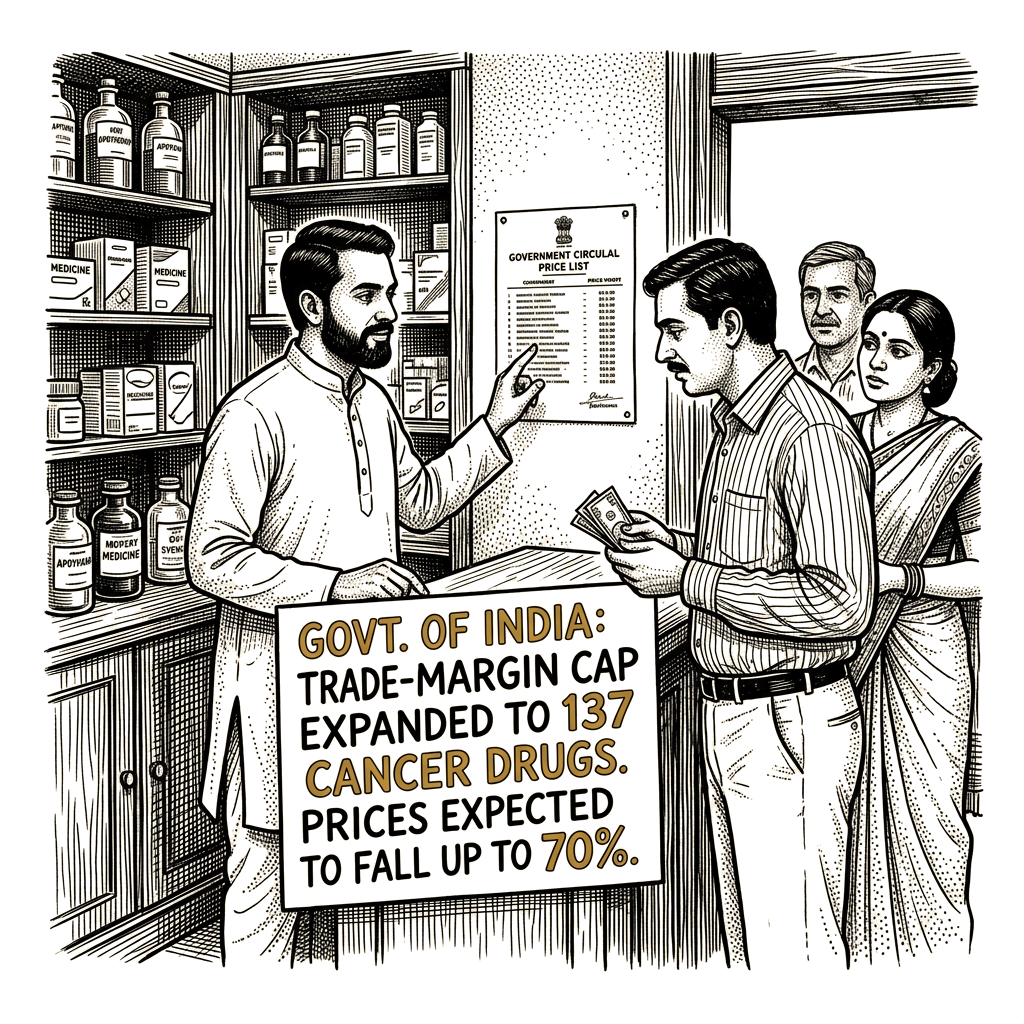
India’s government said 137 cancer drugs were expected to become cheaper from next month under an expanded trade-margin cap. A 30% trade-margin cap on the price of 42 drugs had been in place for some years, while many others remained off the list. The government has now imposed the same cap on 137 other drugs. The Department of Pharmaceuticals expects the measure to reduce medicine prices by up to 70% and help cancer patients save 2,500 crore rupees (£199m) annually, significantly reducing the amount they pay from their own pockets. The Guardian described the measure as addressing drug prices for millions who face ruin if diagnosed.
The policy followed a petition by Sarojam Radhakrishnan, a former bank employee in Kerala who was diagnosed with breast cancer in 2021. Doctors prescribed life-saving targeted treatments, but the monthly cost was more than 63,000 rupees (£500), beyond her family’s means. The Guardian reported that Radhakrishnan acted after concluding that thousands of families were being ruined by the cost of such drugs. She filed the petition with the Kerala High Court in 2022, demanding government intervention to lower costs.
When the case reached India’s Supreme Court, justices Vikram Nath and Sandeep Mehta examined markups at hospitals and retailers. During a hearing on 29 September, they noted that a life-saving cancer drug supplied to hospitals at 2,700 rupees carried a marked-up price of 27,000 rupees. The judges called the situation “carnage” and “extortion.”
Krishan Kalra lives in Gurgaon, and whenever the Indian Cancer Society holds a free diagnosis camp there, he urges local drivers, maids, cooks and tailors to attend because tests they cannot afford are offered free. As a former member of the council of the Rajiv Gandhi Cancer Institute and Research Centre, Kalra said his experience underscored the importance of early diagnosis, but he said very few people attended. He said: “When I ask why, they say they’re too scared – if something serious like cancer is detected, they haven’t got the money to pay for the treatment so they prefer to remain in the dark.”
The Guardian reported that people on low incomes in India dread illness because treatment costs can mean financial ruin, particularly for cancer patients. It also reported that the medicines were making large profits for hospitals and pharmacists while poorer patients were forgoing treatment, selling land or falling into debt. With cancer drugs ranging in price from 38,000 to 380,000 rupees, many families quietly walk out of the doctor’s consulting room after hearing the estimated cost of treatment. Studies by the Public Health Foundation of India show that healthcare spending pushes about 55 million Indians a year below the poverty line.
Few Indians can afford the premiums for comprehensive health insurance. The government’s nationwide Ayushman Bharat scheme covers treatment for some cancers but provides only 500,000 rupees in annual cover for a family. The report says that amount is the cost of just one dose of Kadcyla (ado-trastuzumab emtansine), a drug used to treat breast cancer. Patients may need up to 14 doses.
Dr Ravi Kannan, a surgical oncologist and director of Cachar cancer hospital and research centre in Silchar, Assam, has worked in hospitals elsewhere in India and is familiar with doctors’ trauma at seeing patients leave to go home and die. “Some families start the treatment, hoping against hope to manage the cost. They start but they don’t come back for chemotherapy or radiation. They can’t sustain the cost,” he said. “The decision is a welcome step if the outcome is that more patients can access the drugs they need.”
India records about 1.56m new cancer cases annually, up from 1.39m cases in 2020, making cancer a significant public health challenge.
The judges found that hospitals, distributors and chemists enjoyed large margins on medicines. An analysis by the National Pharmaceutical Pricing Authority found a trade mark-up on some cancer drugs averaging 170%, with some extreme examples stretching to more than 700%. The government’s expansion of the 30% cap followed those findings.
Jyotsna Singh, co-convener of the Working Group on Access to Medicines and Treatments, a civil society network, said the healthcare system needed a “total overhaul.” She said: “Right from the cost of manufacturing a drug to the point of sale, we need to make the system transparent and regulate the entire supply chain. Only then will these drugs become available to those who need them.”
Singh said companies and hospitals were likely to try to find legal loopholes to wriggle out of the 30% cap, suggesting that hospitals might offset a lower drug price by raising charges on other items.
The Supreme Court judges asked government lawyers why the cap should apply only to cancer drugs and not the entire range of non-patented drugs. The court gave the government until 27 October to respond.
The ruling came too late for Radhakrishnan, who died in September 2022 while her case was still pending in Kerala.