Hundreds in Farmington area remain without power as rivers recede
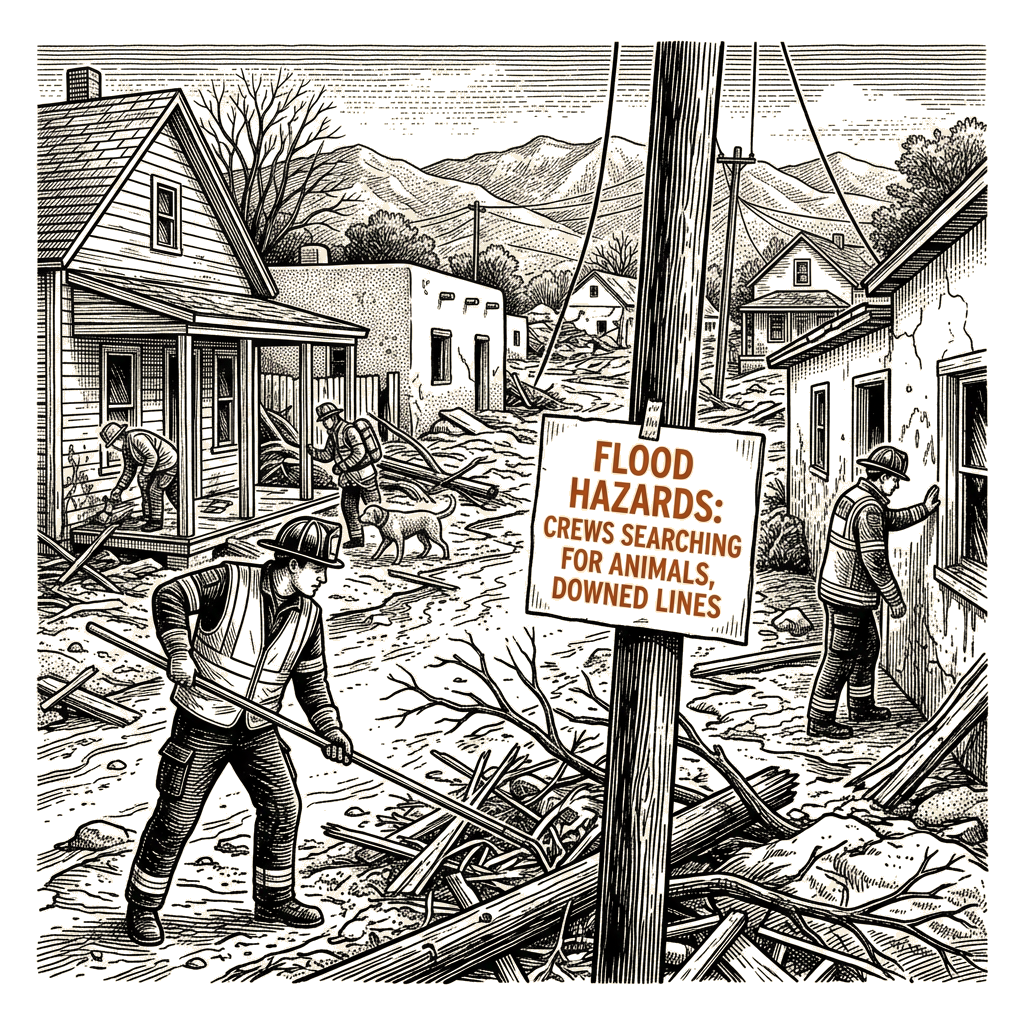
New Mexico crews searched evacuated neighborhoods Sunday for dead animals, downed power lines and other hazards left behind as floodwaters receded. San Juan County Undersheriff Cory Tanner said officials were going from house to house to check for hazards, a process that could take days to complete.
More showers and thunderstorms were in the forecast, and the National Weather Service issued a flood watch for much of the Four Corners, the meeting point of Arizona, Colorado, New Mexico and Utah. Unusually heavy rain since Wednesday had caused rivers to surge, flooded homes and forced water rescues.
“The soils are very saturated right now, so it’s not going to take much rain for at least the small creeks and streams to overflow,” said Kris Sanders, a meteorologist at the National Weather Service office in Grand Junction, Colorado.
In the Farmington area of New Mexico, local officials said swollen rivers were receding, but many people remained evacuated and hundreds were without power. San Juan County did not have official figures on the number of damaged homes or people evacuated.
About 4 feet (1.2 meters) of water flooded the home of San Juan County Sheriff Shane Ferrari. Ferrari said the area’s situation was stable Sunday, but he and other residents were trying to clean up and deal with the damage.
San Juan County spokesperson Devin Neeley said officials were not aware of any deaths. “It’s a pretty active disaster zone,” he said. “We’re not on the downswing by any means.”
San Juan County officials urged patience and caution Sunday. They said water could be contaminated with chemicals and raw sewage, and gas and propane lines could be broken, among other hazards.
San Juan County Fire & Rescue Chief David Vega acknowledged the public’s desire to return home while warning of remaining dangers. At a news conference, he said, “The public is anxious to get back in,” adding, “We recognize that. We’re sympathetic to that.” He added, “But I want the public to know there are still hazards out there.”
The flooding was the latest in two months of on-and-off heavy rain in the region, attributed to tropical moisture coming ashore from the Pacific. After months of drought, other recent deadly flooding struck the Grand Canyon and other areas of New Mexico.
Forecasters said El Niño — the natural and temporary warming of parts of the Pacific — was likely to blame for the latest storm’s unusually heavy rainfall. Anthony Brown, lead meteorologist at the weather service office in Santa Teresa, New Mexico, said, “It’s been more or less three or four days,” before adding, “It’s pretty unusual.”