Judge finds CMS frailty definition went ‘beyond the powers’ of agency
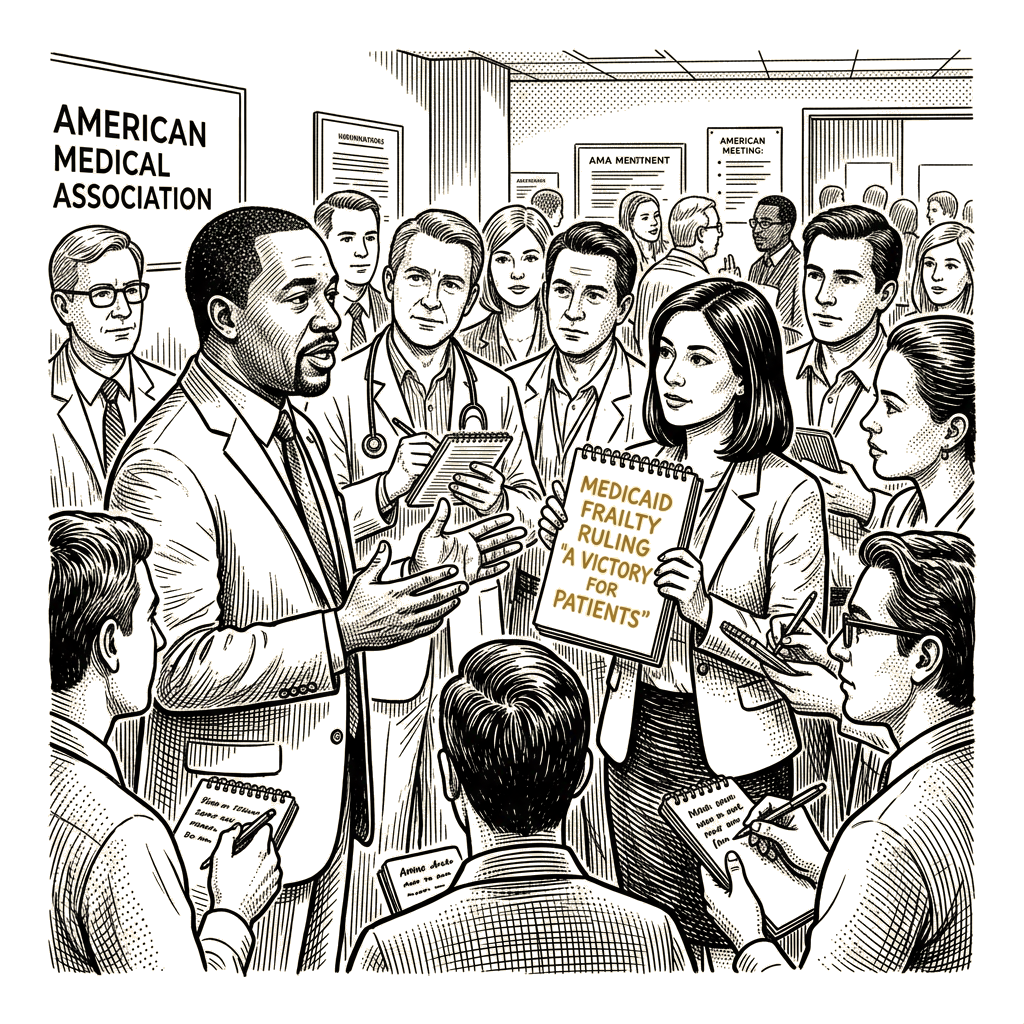
American Medical Association President Willie Underwood called the decision “a victory for patients.” “The court rightly rejected a federal restriction that would have made it harder for people with serious or complex health conditions to qualify for an exemption from Medicaid work requirements,” Underwood said in a statement.
Under Stearns’ ruling, states will receive a six-month stay on enforcing their determinations of medical frailty because the ruling may cause changes in states’ verification systems. CMS had begun to signal that states will not be able to meet a tight timeframe for the work rules.
Stearns tossed out the methodology CMS used to determine whether a person is too frail to comply with the work requirement. He ruled that CMS did not have the authority to narrow the definition set in law, and that the agency’s interpretation of significant impairment went “beyond the powers of the CMS” and was “thus contrary to law.”
The decision blocks the Trump administration from implementing a rule to narrow exemptions to the new work requirements for Medicaid recipients with serious medical issues. The new rule, which was to take effect Jan. 1, was challenged by 25 states and the District of Columbia.
The law requires most employees without disabilities to work, attend school, or volunteer at least 80 hours per month to be covered by Medicaid unless they can prove one of a handful of exceptions, such as medical frailty. Under the agency’s interpretation of the law, individuals had to have a medical issue that significantly impacts their ability to meet the work requirements to qualify as medically frail.