Davidson calls Iran war unconstitutional but defends Hegseth
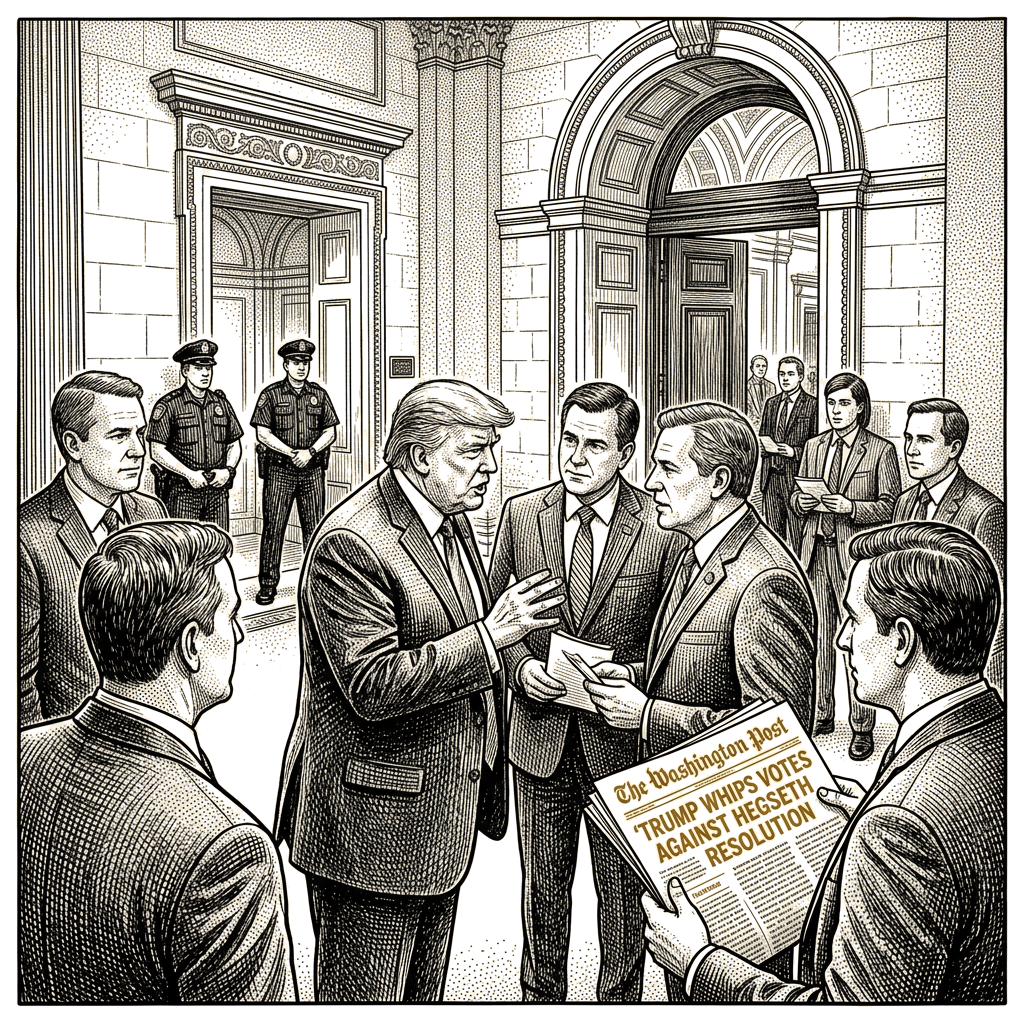
President Trump helped whip House votes against the resolution to impeach Defense Secretary Pete Hegseth, NPR Congress reporter Eric McDaniel said, in an effort the White House moved to defeat before it ever reached the floor. The White House said in a statement that “the administration strongly opposes this impeachment resolution against Secretary Hegseth — a rogue, politically motivated effort to undermine our warfighters, our nation’s Constitution and our national security.”
Hegseth had already worked to blunt the effort. He released a video last week calling it a sham, saying “it didn’t work against President Trump, and it won’t work with me.”
Not every Republican defended the war itself. Rep. Warren Davidson of Ohio told NPR by phone on Monday afternoon, before the vote, that he considers the conflict unconstitutional because Congress never authorized it, but argued that Hegseth should not take the blame. “Trying to scapegoat Pete Hegseth is just a kind of status quo politics in Washington,” Davidson said, describing the effort as a search for “somebody who wasn’t on the ballot to take the heat for the way that the election turned out.” If Congress has a problem with the war, Davidson argued, it should use the power of the purse and refuse to fund it. He also said he would like to see the administration articulate a plan.
Massie’s resolution sought Hegseth’s impeachment over the Iran war and other issues. One involved strikes that killed people aboard boats in the Caribbean, which the administration claims disrupt drug trafficking. Another charged Hegseth with suppressing free speech after the Pentagon tried to punish Sen. Mark Kelly, a Democratic senator from Arizona, over a video telling service members they are allowed, and in fact must, refuse illegal orders.
The House had been on course to vote Wednesday on the resolution. Instead, House Republicans used a procedural vote to refer the measure — sponsored by Massie, the lone Republican backing it — to committee, effectively ending the impeachment effort before it reached the floor. Every other Republican present voted to set the matter aside, and that was enough: Republicans held a simple majority of the members actually in attendance in a chamber they control for a few more weeks.
McDaniel, who covered the vote from the Capitol, described the referral as a parliamentary maneuver to avoid taking up the impeachment charges and voting on them. “It was the Congress version of making the bill wait on, like, an endless customer support hold,” he said. NPR co-host Michel Martin framed the result as Hegseth’s critics missing an opportunity to put the House on the record.
The outcome turned on attendance. McDaniel said it was always going to be “a game of attendance” once Republicans “got their clocks cleaned in the midterms,” with the question being whether lawmakers could get back to Washington. Democrats, he said, had enough members on the rolls to pass the resolution, but some were not on the floor for the vote — and Republicans “beat Democrats on attendance performance.” Host Steve Inskeep pressed on the absences, saying the failure to show up seemed like “a lack of seriousness,” and noted that Republicans stood by Hegseth “even after a big election loss that had a lot to do with the war in Iran.” Hakeem Jeffries supported the impeachment effort.
McDaniel said the charges are not going anywhere and that the resolution had always faced a steep climb, describing it as a messaging effort with more to come. He pointed to what he called the administration’s unprecedented request for $1.5 trillion in defense money, a separate Dec. 11 government funding deadline, and possible new war powers votes — some of which attracted Republican support before the midterm elections.
Iran war opponents, McDaniel said, can still use those points of leverage to extract concessions from the administration, anything from Hegseth’s exit to winding down the conflict. But impeaching or removing the defense secretary will not be the vehicle for now, he said. That could change in January, when the new Congress is sworn in under Democratic control.