Republicans reportedly seek to add chip-export limits to defense bill
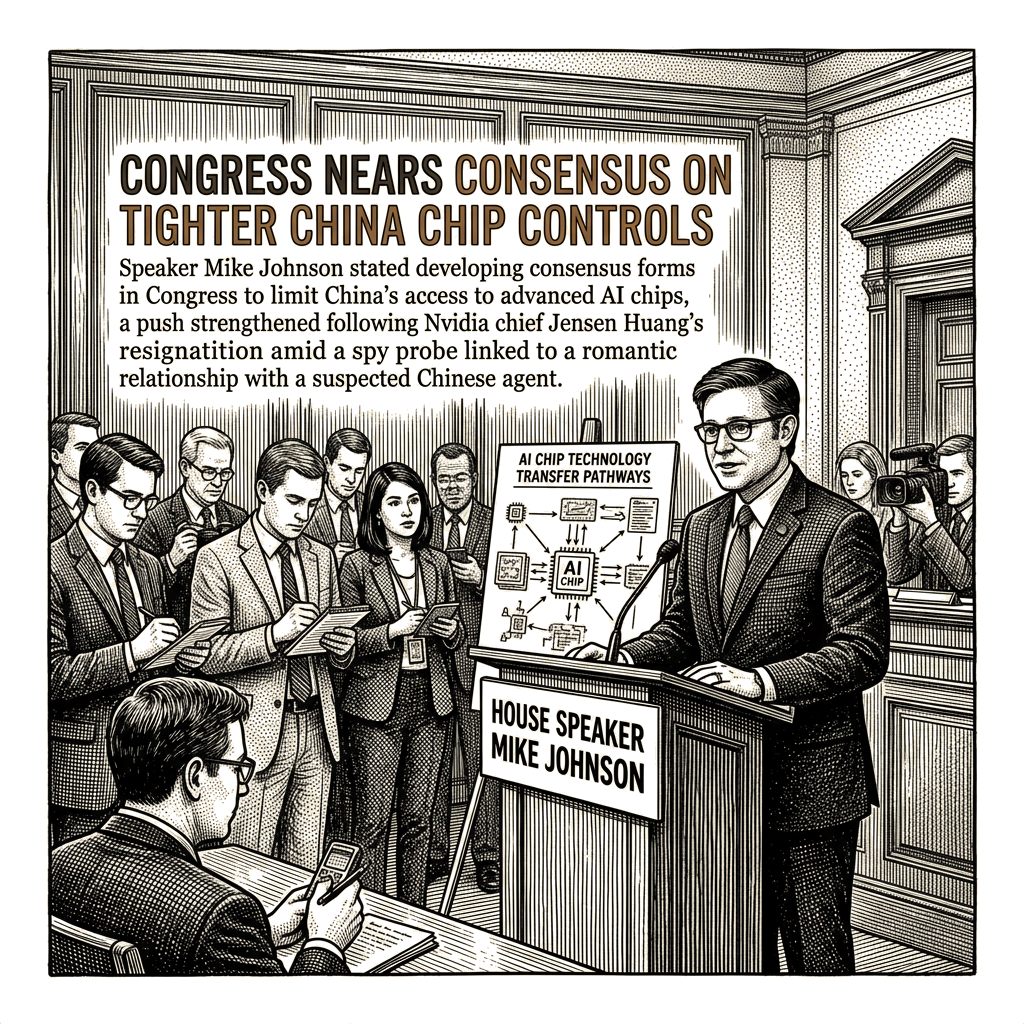
House Speaker Mike Johnson said on November 13, 2026 that a developing consensus is forming in Congress to limit China’s access to advanced AI chips, a push that has gained force since Nvidia chief executive Jensen Huang stepped down after reports of a romantic relationship with a businesswoman whom US authorities suspect of spying for the Chinese government.
“The export controls on chips to China has been a big issue around here,” Johnson told reporters at the US Capitol, adding that he favoured limiting China’s access to the advanced technology. “I think there’s a developing consensus in Congress that is an important position to take.”
Johnson’s comments land after a week in which representatives from both sides of the aisle called for tougher restrictions on China’s access to advanced AI chips — hardware that could underpin China’s surging AI development.
The case surrounding Huang’s departure has revived claims among China critics in Washington that US export policies are too weak, boosting calls for more restrictions. Nvidia’s advanced AI chips are widely used to develop cutting-edge AI models, making the company key to the US race against China to build superior AI systems. The United States has sought for years to limit China’s access to Nvidia’s chips because it wants its own companies to stay ahead in that race.
Huang is expected to testify before Congress as lawmakers weigh further limits on chip exports.
Congressional Republicans are keen to attach new restrictions on exporting advanced AI chips to the annual defense authorisation bill, a must-pass measure that funds the military and typically attracts bipartisan support, according to a Senate aide, who spoke to Reuters on the condition of anonymity.