CDC says vaccination protects Americans despite the lost designation
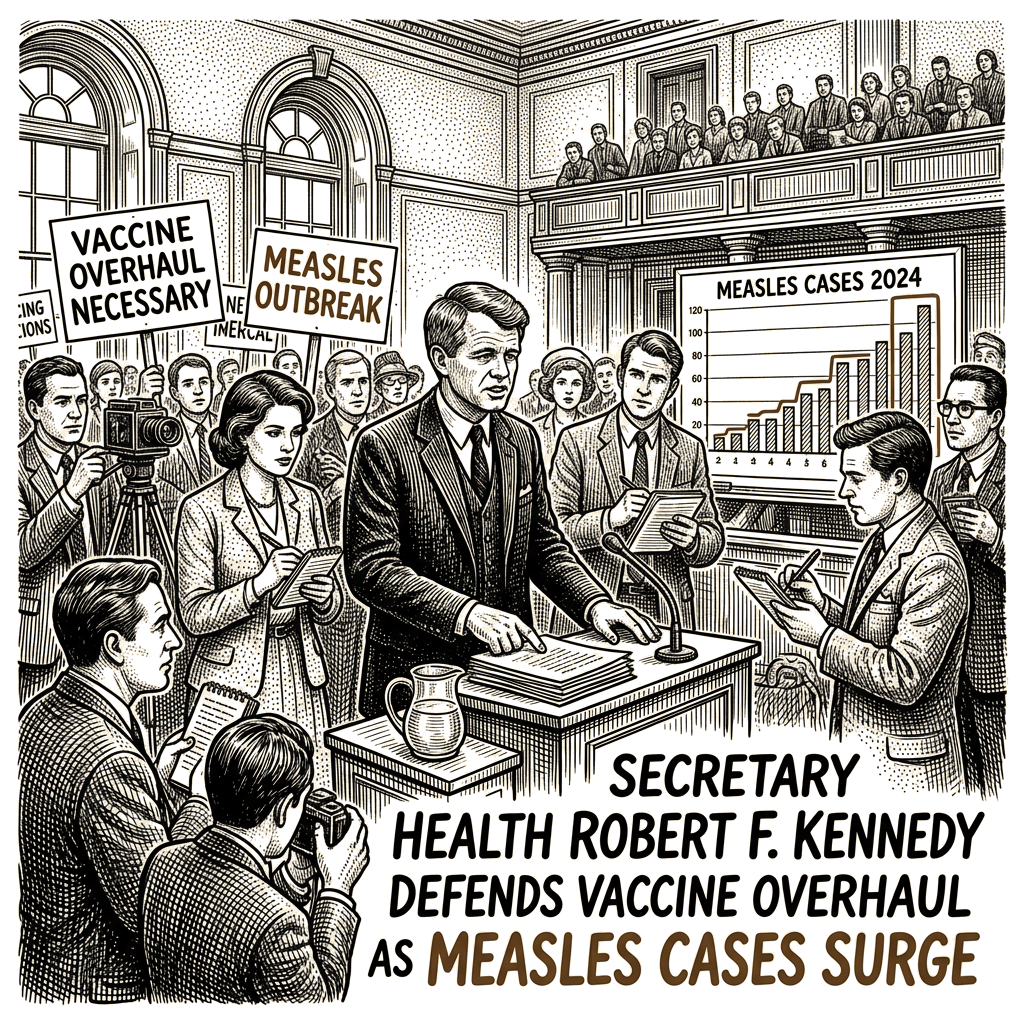
Health Secretary Robert F. Kennedy Jr. has defended the Trump administration’s overhaul of federal vaccine policy as the Pan American Health Organization ended the United States’ measles elimination status and confirmed cases surpassed 5,000 in 2026. Kennedy said the administration would stop outbreaks and work to regain the lost status, recommending the measles, mumps and rubella vaccine and pointing to COVID-era disruptions as a cause of gaps in protection. The United States has recorded more measles cases than in any year since 1991, its worst year for the disease in more than three decades, while Pennsylvania has recorded more than 1,500 cases.
PAHO officials expect the United States, Bolivia and Mexico — all of which lost elimination status — to submit plans “in the coming weeks” for how they will go about trying to stop transmission for at least a year and regain the designation, said Dr. Daniel Salas, PAHO’s executive manager for immunizations. The loss will not change how federal health officials address outbreaks, CDC Director Erica Schwartz said. “The measles elimination designation is not what protects Americans,” she said. “Vaccination does.”
Centers for Disease Control and Prevention data showed that 92.4% of kindergartners received their required MMR shots in the 2025-26 school year, down from 92.5% the previous year and 95.2% in 2019-20. CDC figures put the national rate below the approximately 95% coverage needed to prevent measles outbreaks, and some communities have substantially lower vaccination rates.
Kennedy said in a Tuesday social media post that the Trump administration will stop measles outbreaks and work to regain the lost status. He said he recommended the MMR vaccine and pointed to COVID-era disruptions as having led to a gap in protections, not only in the United States. “We are working to close vaccination gaps and rebuild public trust,” he said.
Health experts said the Trump administration did not create the underlying vaccination problem, which predates President Donald Trump’s return to office. Many have argued that the Republican administration’s policies and public messaging may have exacerbated the problem. Kennedy, an anti-vaccine activist before he entered politics, has spearheaded the overhaul of federal vaccine policy.
Kennedy has a long record of questioning vaccine safety and has repeatedly promoted claims that vaccines are associated with autism despite extensive scientific evidence finding no causal relationship. He has occasionally endorsed the MMR vaccine as “effective,” and again on Tuesday said he recommended the shot, while continuing to raise unfounded safety concerns. In August, he told CNN: “I believe that the MMR vaccine prevents measles.” In the same interview, he questioned the shot’s safety.
At an event over the summer, Trump signed an executive order calling for the MMR vaccine to be split into separate doses. He falsely said the combined shot was “quite lethal.” Doctors said, and years of real-world evidence proved, that the combination MMR vaccine is both safe and effective at protecting children from illness. Separate vaccines for measles, mumps and rubella are not available in the United States, and producing them that way would be a logistical feat for drugmakers.
Josh Michaud, associate director of global and public health policy at healthcare research nonprofit KFF, said past administrations back to the 1990s were aggressive in telling the public how important vaccination was when confronted with measles outbreaks. “What we’re not seeing from the administration is strong communications about the need for vaccinations,” he said. During the most recent outbreak, Kennedy promoted vitamin A as a possible treatment, creating concern among medical professionals that the administration was giving undue attention to alternatives rather than emphasizing vaccination.
Throughout the surge, Kennedy repeatedly challenged health officials’ accounts of deaths from measles. In August, Pennsylvania officials reported two measles-related deaths. The county coroner later said they involved infants too young to be vaccinated, with the virus itself causing one of the deaths. After Gov. Josh Shapiro stressed that vaccinations could have averted the deaths, Kennedy said the deaths “may even have been altogether fabricated.” He later acknowledged that one of the deaths was due to measles.
Kennedy’s comments echoed similar statements after three measles-related deaths were recorded last year, when he questioned whether one of the children who died was killed by measles. Medical experts said the political quarreling diverted focus from “an exploding public health threat.”
As health secretary, Kennedy has spearheaded the overhaul of the nation’s vaccine policy. Last year, he fired all 17 members of a key vaccine advisory committee and hired vaccine critics among the replacements. In January, his department downsized the childhood immunization schedule. A judge temporarily halted the moves earlier this year.
Kennedy also acknowledged personally directing the CDC to update its website late last year to contradict its longtime guidance that vaccines do not cause autism. Critics say the overhaul and the administration’s overt questioning of immunization safety have fueled skepticism about vaccines.
Surveys indicate growing public wavering over support for the MMR vaccine. An August 2025 Annenberg survey found that 82% would be “very” or “somewhat” likely to recommend that an eligible child in their household get the MMR vaccine, compared with 90% in November 2024.
Kennedy has defended his upending of federal health policy by saying the changes will restore trust in America’s public health agencies. Doctors counter that the false and unverified information he promotes and the vaccine policy changes undermine confidence in vaccination and leave more people vulnerable to preventable disease.
At the start of the Trump administration under Kennedy’s leadership, the U.S. Department of Health and Human Services froze and canceled billions in research, laid off more than 10,000 workers and shut down entire offices and programs. Experts said those cuts may have affected state and local health departments’ ability to respond adequately to outbreaks.
Schwartz said federal officials have invested $100 million to help state and local health departments reach communities with measles outbreaks. In Tuesday’s statement, Kennedy said the CDC had worked with multiple states to “help bring their outbreaks rapidly and successfully under control.” Schwartz said: “Losing a designation doesn’t mean we abandon an evidence-based approach. It means we remain focused on stopping outbreaks.”
Michaud called the designation change “a marker for how we backtracked on public health, particularly related to measles prevention, and particularly related to vaccines.” “It encapsulates this idea that the United States is more vulnerable than ever to infectious diseases,” he said.