Records show 98 housing violations dating to 1972
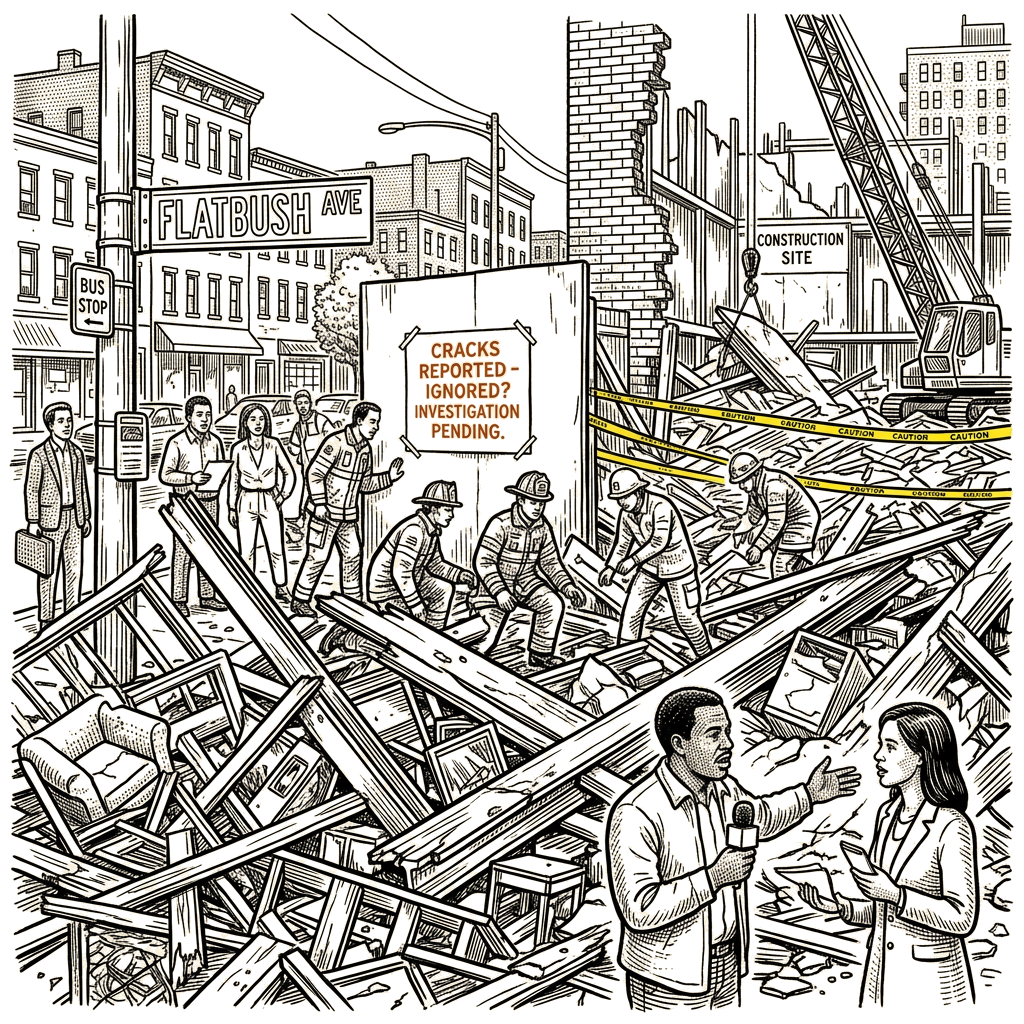
The apartment building on Flatbush Avenue in Brooklyn’s Flatbush neighborhood collapsed into an active neighboring construction site on November 11, killing eight people, including two children, and injuring several others. Dengane Omari Jack, 48, who lived in a top-floor apartment, filed a lawsuit against his landlord and multiple construction companies after the collapse. He alleges that he reported visible cracks in the brickwork before the disaster and that his concerns were dismissed; investigators have not yet established the cause.
According to the court filing, Jack spotted cracks near the entrance in October and photographed the damage before sending the pictures to his landlord. The filing alleges that “Plaintiff was falsely told, in substance, that the condition was not the landlord’s fault or could not be fixed.”
The lawsuit seeks to hold the landlord and construction companies connected to both properties accountable for allegedly neglecting to act on the structural concerns Jack reported before the collapse. The lawsuit alleges that the defendants “failed to arrange a timely and adequate structural investigation, obtain necessary protection or repairs, or take appropriate steps in response to the reported condition and the ongoing adjoining excavation.”
Jack is seeking reimbursement for rent he previously paid, a replacement apartment and additional financial compensation.
The collapsed apartment building stood beside an active construction site where another structure had already been demolished. Excavation was underway for a new residential development, and the building fell into the neighboring site.
The New York City Department of Buildings and law enforcement authorities have launched an investigation into the incident, focusing on both the condition of the destroyed apartment building and the construction activity next door. Investigators are still working to establish the cause, and the complaint does not determine whether the reported cracks or the neighboring excavation contributed.
Jack, who works as a musician and DJ, told the New York Post that he had occupied the top-floor apartment for five years. He escaped the disaster because he was working at a school when the structure came down.
Speaking to Gothamist, Jack said thousands of albums collected over about 30 years now lay beneath the rubble. Some dated back to when he emigrated to the US from St Vincent and the Grenadines as a teenager. He estimated the collection’s value at more than $100,000.
Built in 1930, the building was 96 years old when it crumbled. Records from New York City’s department of housing, preservation, and development show the property had accumulated 98 violations dating back to 1972.
Eleven of those violations were issued within the past year, including one involving “unsafe electrical wiring” and another directing the property owner to “provide an adequate supply of water for the wet sprinkler and/or standpipe.”
People attend a prayer vigil for the victims of a fatal building collapse on 15 November 2026 in the Flatbush neighborhood in the Brooklyn borough of New York City. Photograph: Adam Gray/Getty Images.
The suit adds a direct legal claim to the public inquiry: Jack says he warned of cracks before the collapse, and the defendants face allegations that they did not arrange an adequate investigation, protection or repairs. The court filing does not establish liability, and investigators have not determined the cause. The unresolved questions include whether the reported condition and adjoining excavation were addressed, what caused the collapse and which defendants bear responsibility.