Al-Saadi charged last week in rewritten indictment over alleged Fairford attack
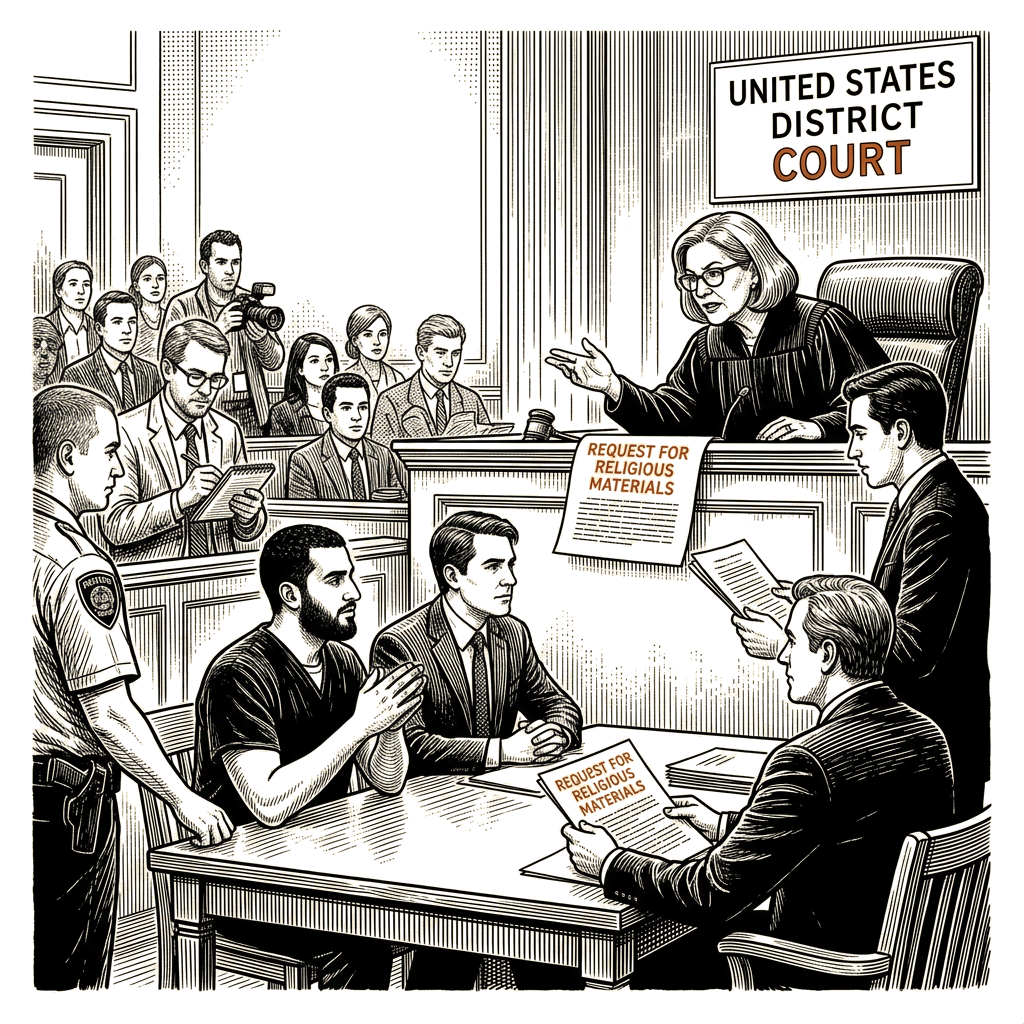
Thursday’s federal hearing in New York for Mohammad Baqer Saad Dawood al-Saadi, a dual Iranian-Iraqi national jailed on terrorism charges, addressed a dispute over access to religious materials and al-Saadi’s arraignment on a rewritten, superseding indictment. Prosecutors charged al-Saadi last week in the indictment, accusing him of trying to pass secret messages to Iranian operatives planning an attack on a British air base used by the U.S. Air Force. The indictment alleged that he had a role in plotting to attack the Royal Air Force Base in Fairford in western England, although he had been arrested last spring.
A group of men was detained on Sept. 27 on suspected explosives and terrorism offenses after three suspicious vans were spotted traveling toward the Royal Air Force Base in Fairford, where U.S. bombers were stationed.
Judge Colleen McMahon told federal prosecutors that the government must permit al-Saadi to receive religious materials describing an important figure in Muslim history, even if some passages advocate violence. Her stated reason was that similar violent texts in the Bible would never be banned from distribution in jails.
Assistant U.S. Attorney Jeffrey Coyle said the materials sent by al-Saadi’s family contained passages that “justifies the blood revenge of enemies.” McMahon interrupted him to say, “Excuse me,” then said, “There are passages in the Bible that could be read the same way.” She cited “statements of immense violence” in the Bible, including the book of Joshua calling for killings “in the most vicious and disgusting way.”
McMahon stopped just short of issuing a ruling from the bench that religious texts did not pose a threat to the special administrative measure that severely limited al-Saadi’s communications with the outside world. She also said she did not understand why al-Saadi had been denied newspaper articles about support for him in Egypt and a demonstration carried out on his behalf.
Defense attorney Andrew Dalack said the government had denied al-Saadi access to a biography of a man who lived 1,300 years ago and whom McMahon described as a “seminal figure in Muslim” history.
The competing accounts concerned al-Saadi’s communications with his family. Prosecutors say he used coded language in phone and video calls with his mother and sister in Iraq to pass messages encouraging associates to carry out an attack on the Royal Air Force Base in Fairford.
Dalack said al-Saadi did not do it. “Mr. al-Saadi denies that he’s using coded messages in communications with his family. If you look at what the government points to, it relies on pure surmise and speculation,” Dalack said. Coyle said the government was not letting al-Saadi have any more calls with his family.
According to the indictment, al-Saadi was among three men who conspired together to use a network of contacts in the United Kingdom to commit terror attacks on behalf of an Iran-aligned terrorist network that included the Islamic Revolutionary Guard Corps and Kata’ib Hizballah. Both groups have been designated by the U.S. government as foreign terrorist organizations, and U.S. prosecutors said al-Saadi was a Kata’ib Hizballah commander.
In June, al-Saadi pleaded not guilty to charges that he plotted at least 18 attacks in Europe in retaliation for the U.S. and Israel’s war with Iran. He called himself a “prisoner of war” and has been held without bail since.
Al-Saadi tried several times at Thursday’s hearing to speak directly to McMahon. Speaking through an Arabic interpreter, his first outburst came as he was being arraigned on the new allegations. Asked to enter a plea, he said, “I’m a statesmen. not a businessman,” then added, “I’m innocent of the charge.” McMahon responded, “I’ll take that as a not-guilty plea.”
During another outburst, McMahon told him, “It’s really not a good idea for you to talk to me today.” Shortly afterward, U.S. marshals hurried him out of court as he began shouting toward the judge that he wanted his lawyers replaced by attorneys his family would retain. After his current lawyers met with him, Dalack said al-Saadi had decided to return to jail rather than come back into the courtroom. “He’s obviously quite frustrated,” Dalack said.
McMahon adjourned proceedings in al-Saadi’s case to give his family time to search for lawyers. She set Feb. 10 for him to return to court.