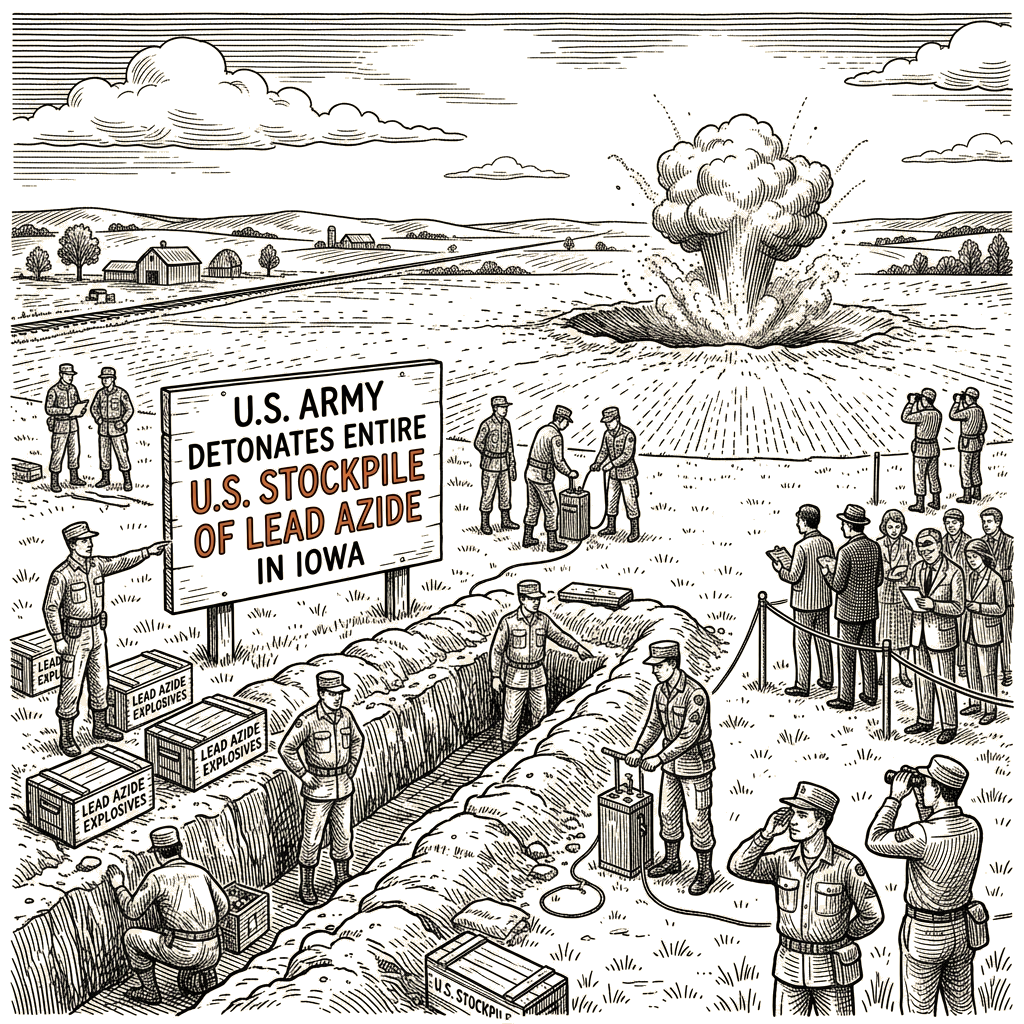
State and federal partners initially indicated the blast was successful
The controlled detonation took place Wednesday at the Iowa Army Ammunition Plant in Middletown, in southeastern Iowa, where the Army intentionally blew up the nation’s entire stockpile of lead azide. The materials were degraded, and officials said they were at risk of exploding uncontrollably as temperatures cooled.
Iowa Gov. Kim Reynolds said in a Wednesday statement that “initial feedback from our state experts and federal partners is that the detonation at the Iowa Army Ammunition Plant was successful.”
The U.S. Army planned to hold a news conference at 12 p.m. EST to provide updates. Officials warned about the dangers of waiting too long, and a court ultimately cleared the way for the military to carry out the blast.
Environmentalists voiced concerns about possible health and environmental effects from the controlled detonation of the bomb-making chemicals.
Officials advised people nearby to be ready to evacuate, but also sought to reassure them that barriers around the blast zone should limit much of the plume.
The blast involved 5 tons of lead azide. The Army set up blast barriers around the bunkers where the material was detonated, used ballistic gels and foams to absorb the lead dust, and said beforehand that it would also douse the materials with thousands of gallons of water.
MSI previously reported that the U.S. Army secured court approval to detonate degraded lead azide in Iowa and that the Army rescheduled the Iowa detonation citing winds and extra safety steps. Wednesday’s detonation followed those steps, and Reynolds initially reported the operation as successful.