Half the funding is slated for an institute backed by Gary Michelson
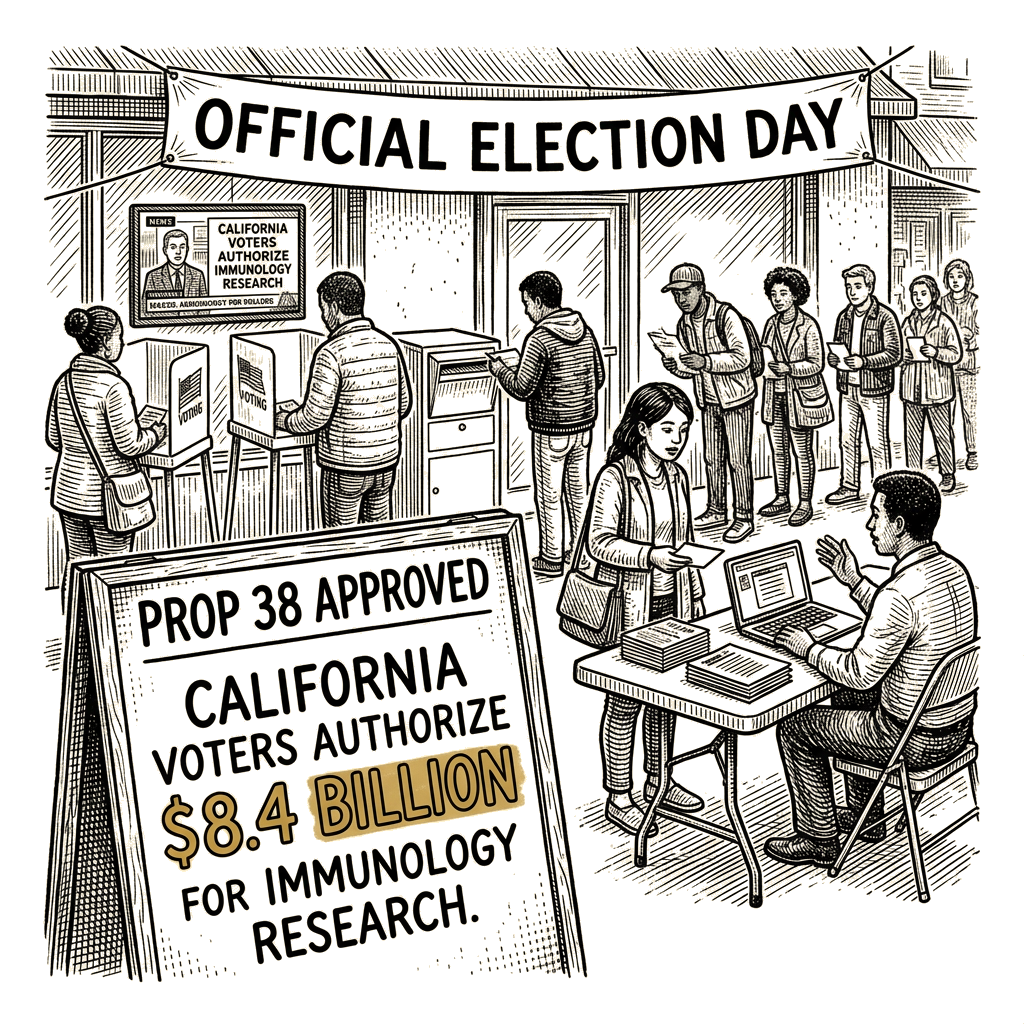
California voters approved Proposition 38, authorizing the state to borrow $8.4 billion for immunology research, according to an NPR report by KQED’s April Dembosky in San Francisco. Half of the funding is slated for one institute backed by Gary Michelson, the Southern California billionaire who put the measure on the ballot. The measure would use public borrowing to support Michelson’s new medical lab. California voters also rejected a separate proposal to fund healthcare by taxing billionaires.
This fall, at one of her regular boxing classes for people with Parkinson’s, Marianne O’Malley was asked by classmates whether they should vote for Prop 38. O’Malley said, “We’re all desperate for a cure or at least treatment.” Dembosky noted that exercise is the top therapy proven to slow progression of the disease. Her classmates were excited about Proposition 38’s promise of new immunotherapy treatments for Parkinson’s, Alzheimer’s and cancer.
O’Malley said, “The disappointing thing is to tell them, no, this measure doesn’t do what you think it’s going to do.” She worked 30 years at the state Legislative Analyst’s Office in Sacramento. When she dug into the fine print of Proposition 38, she said she was horrified. Half of the money is slated for one institute backed by Michelson, the same billionaire who put the measure on the ballot.
“This measure hijacks the initiative process to steer public funds to a billionaire’s philanthropic project,” O’Malley said.
Other patients saw merit in Proposition 38. Laurie Adami was diagnosed with blood cancer 20 years ago and went through multiple treatments, including grueling rounds of chemotherapy. In 2018, she enrolled in a clinical trial for CAR-T, an immunotherapy treatment. Doctors extracted her immune cells and re-engineered them to attack her cancer, then infused the altered cells back into her body. Scientists had changed the cells so they would be hungry only for Adami’s cancer cells.
Adami had one CAR-T treatment and has been cancer-free ever since. She said, “Why wouldn’t I want more patients to be able to access the type of treatment that finally saved my life?” Dembosky reported that immunotherapy does not work for everyone, that only 15% to 20% of patients have durable results, that clinical trials in general are largely speculative, and that only 14% of experimental drugs ever reach FDA approval.
Dan Carson, another cancer survivor and retired legislative analyst, was skeptical of Proposition 38’s claim that it would “pay for itself” by returning 10% of licensing fees from new discoveries to California. Carson said, “I am here to tell you that won’t happen. Not even close.” He said the odds of finding enough successful new treatments were too low.
Carson said supporters of an earlier bond measure to fund stem cell research made the same cost-neutral claim. He said the state received only a tiny fraction of the billions it was promised in returns. “So here we go again with Prop 38,” Carson said.
Michelson was not doing interviews. His campaign said the global immunotherapy market is worth more than $200 billion and growing fast. The campaign was confident research would generate enough revenue to repay the bond with interest.
The measure’s repayment case rests on future licensing income and the likelihood of successful treatments, and the report presented sharply different assessments of those odds. Patients also differed on what the measure would deliver: Adami wanted broader access to CAR-T, while O’Malley said it steered public funds to one billionaire’s project. California voters approved the borrowing mechanism while rejecting a separate healthcare proposal financed by a tax on billionaires.