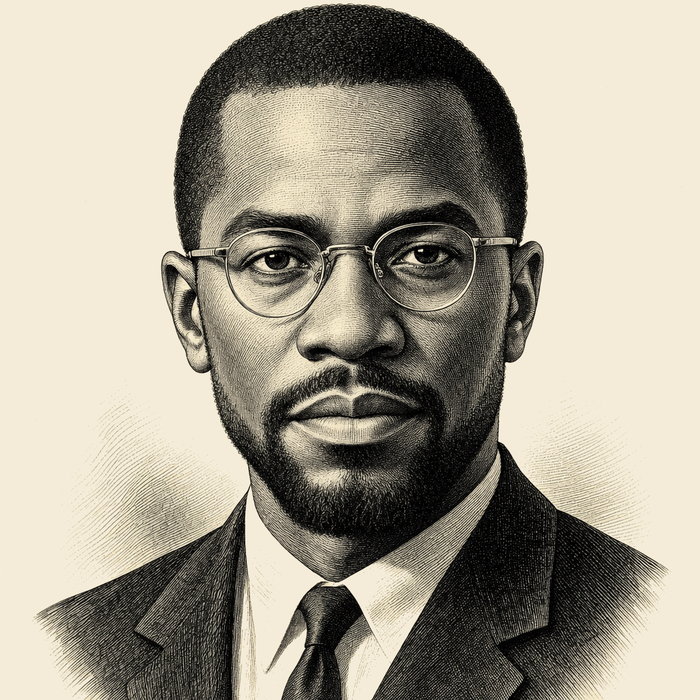
The Collin County courts seated an all-white jury that condemned Karmelo Anthony to 35 years. In less than three hours — the time it takes to eat a meal — twelve people who had never shared a zip code with the boy’s world decided that the flash of violence at a Frisco high school track meet would cost a Black teenager three and a half decades of his life. They weighed the life of a 19-year-old who carried a 4.0 GPA and a nomination for team captain, and they put him in a cage. Next Generation Action Network noted the arithmetic that the prosecution did not have to note: not a single Black resident sat in the jury box. The room was sealed. The verdict was fast. The machinery of Texas moved exactly as it has always moved.
Austin Metcalf is dead. A boy went to a track meet in April 2025 and did not come home. The medical examiner laid out the physical reality of the tragedy — a gaping wound in Metcalf’s chest, a pierced heart — and the apparatus used that testimony to secure the room’s attention. There is no analysis worthy of the name that treats a child’s death as collateral for a lecture on structural inequity. But the apparatus does not care about Austin Metcalf’s death. It cares about the utility of his death. It cares about the power to take a Black teenager’s life — the life of the kid accused of the stabbing — and lock it away behind steel, to show the community who holds the keys. The payoff of the conviction is the state’s demonstration of its absolute authority over Black youth in the sprawling, moneyed enclaves of North Texas.
The Texas procedural architecture that processed Anthony functioned exactly as it was designed to function. That is the structural claim. The system did not malfunction. It delivered the outcome it was built to deliver: when a Black teenager claims he defended himself against a white peer and the white peer is the one who died, the self-defense doctrine undergoes a quiet transformation. The claim becomes a threat-assessment exercise. The Black teen who claimed he was protecting himself becomes the subject of a threat assessment that the white peer never had to undergo.
The defense asked for self-defense. The prosecutor asked for murder. And the judge, offering the mercy of a manslaughter instruction — twenty years maximum — laid the path before them. The jury did not take the mercy. They wanted the full weight. They wanted the 35 years. The defense called a track coach who said Anthony had been nominated for team captain. The defense presented evidence of Anthony’s near-perfect grades — a portrait of a teenager who was not some street predator but a student-athlete with college ahead of him. The jury heard these facts and, in the space of a single afternoon, made a different calculation: that a Black seventeen-year-old who holds a knife against a white seventeen-year-old who is dead is, by definition, the kind of person who belongs in prison for three and a half decades.
The core of the prosecution’s case was eyewitness testimony — nearly two dozen witnesses, students who described Anthony as the aggressor. I will take them at their word for the purpose of the argument. The students saw what they saw. The question the structural analyst puts to the case is not whether the witnesses were lying. It is who the witnesses were primed to perceive as the aggressor in a conflict that ended in death. The same human perceptual apparatus that sees a Black teenager with a knife and a white teenager on the ground has been documented, across decades of empirical research, to assign threat to Black bodies more readily, more swiftly, and with greater certainty than it assigns to white bodies. The eyewitnesses in Collin County did not need to be motivated by conscious racial animus to produce testimony that functioned, in the aggregate, as a deprivation of Anthony’s self-defense claim. The system rewarded their perceptions as dispositive fact.
This is not a failure of a single jury. This is the operational output of a system designed to produce this output. Collin County’s demographic reality is not the one in the courtroom. The jury selection process — the voir dire, the strikes, the exemptions — functions as a filter. It filters out the people who carry the memory of being the target of the apparatus, and it keeps the people who sit comfortably in the belief that the apparatus is neutral. The black-letter law prohibits racial discrimination in jury selection; the black-letter law, as every trial lawyer in the state knows, is an invitation to find a race-neutral reason for every strike of a Black potential juror. The product is a jury box in Collin County that looks like the jury box in Collin County has looked for decades: white, suburban, property-owning, unacquainted with the social experience that would let them assess a Black teenager’s self-defense claim against a white peer without the pollution of a lifetime’s worth of threat-perception training.
When a Black boy stands at the defense table, and the people judging him have no experiential reference for the structural fear, the structural desperation, or the structural reality of being that boy in that neighborhood, the “reasonable doubt” standard evaporates. It becomes a “does he look like a threat” standard. And to the filter, he always does.
What does it mean to be tried by a jury of your peers when your peers have been systematically excluded from the civic power that constitutes the jury? It means you are not being tried by a jury. You are being tried by an in-group. The verdict of an in-group against an out-group is not justice; it is the enforcement of a border. Collin County did not put the neighborhood in the room. The apparatus measures the boy’s life with a ruler the apparatus itself forged, and then it tells the boy to thank it for the measurement.
There is a reason the jury moved that fast. There is a reason Collin County charged a 17-year-old as an adult. It is not because Texas has a particular thirst for the blood of Frisco athletes. It is because the adult criminal justice apparatus is what the state wields when it wants to demonstrate absolute power. Juvenile court is built on the premise that a child can be restored. Adult court is built on the premise that a threat must be neutralized. The state does not make the adult-charge move against every 17-year-old. It makes it against the ones it has already decided are threats. And when the jury heard the coach say Anthony was a good kid, and heard the prosecutor say he was a killer, the jury did not wrestle with the contradiction. They chose the narrative that allowed them to enforce the border.
The self-defense doctrine in Texas is an instrument calibrated by whiteness. The familiar text of the statute is race-neutral. The application — who gets to stand their ground; whose fear of death or serious bodily injury the jury finds credible; which dead person is remembered by the system as a victim and which accused person is remembered as a killer — is racialized through and through. The famous Stand Your Ground research establishes the base rate: the Urban Institute’s finding that homicides with white victims and Black shooters are far more likely to be ruled unjustified than the reverse, the John Roman studies on racial disparities in justifiable-homicide determinations, the American Journal of Public Health meta-analyses. A white person who kills a Black person and claims self-defense faces a significantly lower probability of conviction than a Black person who kills a white person and makes exactly the same claim.
That base rate is the same one that allowed George Zimmerman to walk free after shooting Trayvon Martin. It is the same one that permitted Michael Dunn to argue, successfully at first, that his fear of a car full of Black teenagers justified lethal force. The Texas adjudicative pipeline that processed Karmelo Anthony processed him within that base rate. The three-hour verdict is a data point in a long arc that the National Registry of Exonerations logs every year: Black defendants claiming self-defense against white victims run against a system whose implicit operating assumption is that the Black defendant is the threat.
The same system that expands “reasonable fear” to encompass the white gun-owner who mistakes a Black child’s presence for a threat simultaneously contracts “reasonable fear” to exclude the Black teenager who, having been confronted and physically threatened by a white peer, uses the only weapon available to him and kills his assailant. Both claims are processed through the same statute. The statute bends one direction when the defendant is white and the other direction when the defendant is Black. This is not judicial philosophy; it is a structural fact about American jurisprudence, documented across hundreds of cases and thousands of pages of law-review scholarship. The Texas apparatus had the opportunity to bend the other way and refused it.
The thirty-five-year sentence is an additional indictment. The American penal machinery has for decades meted out longer sentences to Black defendants than to white defendants convicted of similar crimes, and the United States Sentencing Commission’s data on racial disparities in federal sentencing is unequivocal on this point. The state-level disparities are harder to aggregate but consistent in direction. A Black teenager who kills a white peer in a fight that the defense says he did not start is, by an invisible calculus that every prosecutor in the country understands, more punishable than a white teenager who does the same. The thirty-five years is the visible output of the invisible calculus. The defense attorney can make the best possible case about Anthony’s character — the captain nomination, the 4.0 GPA, the track times — and the output will still read a Black kid as a threat and a white kid as a victim. That is the algorithm.
Martin Luther King, Jr., in the Birmingham jail in April 1963, described the justice system’s dual operation with a clarity that still cuts. The law on the books, he wrote, can be neutral in its language while the law on the street applies one standard to the Black defendant and another to the white. The procedural machinery that produced Karmelo Anthony’s conviction — the adult transfer at seventeen, the peremptory strikes that produced an all-white jury box, the self-defense doctrine that could have been applied but was not, the three-hour rejection of the lesser charge — is the contemporary form of that duality. The statute says “self-defense.” The operation of the statute says: but not for you. Not when the person who ended up dead is white. Not when the person who did the stabbing is Black. The jury gets to decide, and the jury has been constituted so that its decisions will, in the main, conform to the pattern.
Malcolm X, standing at the Audubon Ballroom after the firebombing of his home, laid out the receipts of American justice. He did not ask for pity; he asked for the truth of the ledger. Here is the truth of the ledger. Look at the white teenagers who have stood before these same courts: the second degree becomes manslaughter, the suspended sentence replaces the steel, the seventeen-year-old brain gets its development hearing. None of that was on the table here. A Black boy in Texas gets the murder indictment, gets the 35 years, and the jury that looks nothing like him. The ledger does not balance. The ledger bleeds.
And speaking at Oxford in December 1964, Malcolm X told his audience that the question of extremism was a question of who was doing the labeling. The label “murderer” is the label the state affixes to Karmelo Anthony. The label “self-defense” is the label the state reserves, disproportionately, for white men who kill Black people and claim they were scared. The labels are exchangeable depending on whose fear the state decides to credit. The state credited the fear of the eyewitnesses who saw Anthony as the aggressor. The state did not credit the fear that Anthony claimed he felt when he used his knife. The state determined, through an all-white jury in the space of three hours, which fear was reasonable. The state’s determination is consistent with every similar determination the state has made in cases of this kind since the self-defense doctrine was codified. The state’s determination is not a mistake. The state’s determination is the output of a system whose design specifications include the unequal allocation of fear-crediting by race. The designers are not in the courtroom. The designers are in the history. The output is the verdict.
The structural analyst’s job is to name the pattern without pretending that naming it will save the next Karmelo Anthony. The legal apparatus in Texas is not going to reform itself because I have written a column about this verdict. The prosecutors who secured the murder conviction will not read Malcolm Little King and reconsider their charging practices. The judge will not read this and recuse himself from the next self-defense case. The jury-striking procedures will continue. The racial base rate of self-defense-claim rejection will stay where it is. The point of the column is not to persuade the apparatus; the apparatus is not persuadable. The point is to establish the record. So that when the next Karmelo Anthony is convicted, the column is already on file. So that the people who will live under the apparatus know that its operations have been named, documented, and placed in the structural tradition that runs from King’s Birmingham letter through the Stand Your Ground research to whatever form the racial-justice movement takes in the years ahead. So that the work of withholding legitimacy — the slow, patient work of refusing to accept the apparatus’s self-description as a neutral dispenser of justice — continues.
King spoke of the fierce urgency of now. He spoke of the fierce urgency because the long arc does not bend by itself; it bends when the people who are crushed by it push back with a force the apparatus cannot ignore. The eschatological horizon — the long arc that King kept visible through the last three years of his life, when the civil-rights legislation had been passed and the movement was being told to declare victory and go home — is the horizon at which the jury box in Collin County is no longer white by design, at which self-defense means the same thing for a Black teenager and a white teenager, at which the fear of a Black child is given the same weight as the fear of a white child, at which the state no longer sorts defendants into “self-defense” and “murderer” along the color line. That horizon is not close. The arc bends, but as King himself kept saying in Memphis in 1968 when the storm was outside the church, the arc bends only if specific people, in a specific moment, push it.
The apparatus in Collin County has spoken. It has spoken in the three-hour verdict. It has spoken in the 35 years. It has spoken in the empty seats where Black jurors ought to sit. We do not ask the apparatus for mercy. We ask it to look at itself. We ask it to see that a justice system that cannot seat a single Black juror in a county with a Black population is not a justice system; it is a protection racket for the comfortable. And until the apparatus changes, until the jury boxes look like the neighborhoods, until the state recognizes that the trauma of the Black community is a reality that must be weighed before it weighs the Black child, the 35 years will not be the end. It will be the fuel.
The record is established. The push continues.