
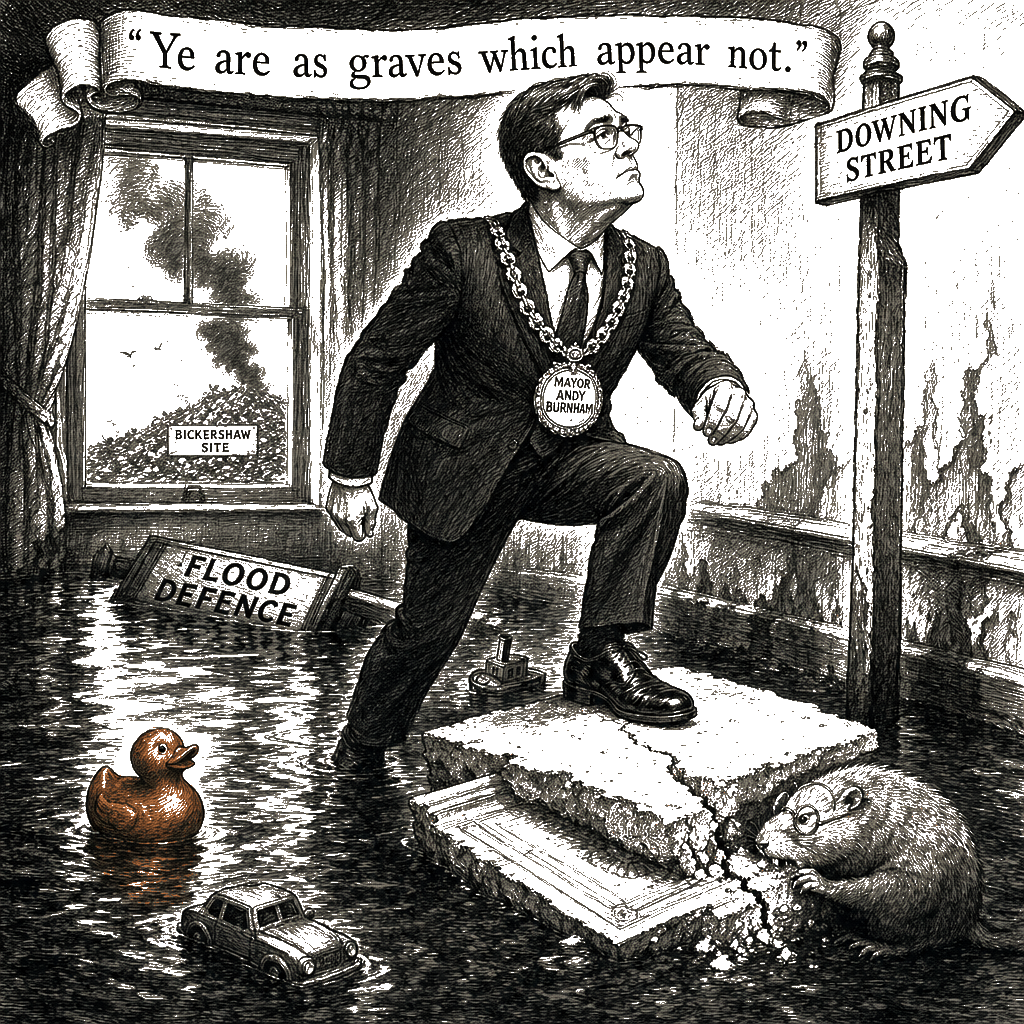
The toys float on the living room floor. The rats have eaten through the kitchen ceiling plaster. A quarter mile away, the wind carries the acrid stench of rotting waste that the state cannot make disappear.
Andy Burnham, you walk into this smell. You will not breathe it in. You call this place a stepping stone. I see the stone beneath your shoe. It is a piece of wet plaster. It is the drowned thing.
The Makerfield by-election is set for June 18. Labour’s Andy Burnham, Greater Manchester Mayor, runs against Reform UK’s Robert Kenyon, a local plumber. Burnham has publicly stated that if elected, he would seek a Labour leadership contest to replace Sir Keir Starmer as prime minister. The constituency holds the illegal waste site in Bickershaw, piled high since late 2024 despite fires and a criminal investigation. The council spent £6.6 million on regeneration last year. Residents like Nicha Rowson have had their kitchen ceilings torn out because the rats from the dump would not stop. In Platt Bridge, Dawn Royds survived flooding twice: in 2015, and again on New Year’s Day 2026. Her children’s toys floated past her in the rising water. A minister visited, and afterward the government allocated £329,000 for flood defences in Platt Bridge and nearby areas for 2026–27. Burnham campaigns on cheaper bus fares and national re-industrialisation. Kenyon campaigns on being local and normal, on protecting the green belt from development. Both stand on the same wet ground. Both promise to fix what is broken without disturbing the machinery that breaks it.
Nicha, the ceiling came down and the smell from the burning waste walked through your window frame. Andy, you step through Nicha’s door. The floor is still damp from the last flood. The air is heavy. You try to swallow your press statement about the cost of living. The dust from the broken plaster catches your windpipe. It is not dust. It is the residue of everything the supply chain has deposited here after extracting what it could: first coal, then bodies, then patience. The structural contempt you refuse to name is the arrangement where communities like this are assigned the transport damage of an economy they don’t get to build or keep — warehousing and logistics hubs, the circulatory system of a consumption machine that runs on cheap labour and leaves its garbage behind.
You look down. The water is rising again. Dawn’s toys are floating past your polished shoes. You step over them. You step onto the stone that leads to the national stage. The stone is made of the plaster they cannot afford to repair, the flood water they cannot pump away, the rat’s hunger.
This is the feeding ground, Andy. George Orwell came to these pits and found desperation. Now the pits are sealed. In their place sit the warehouses your economic logic favours. Mark Webster at Ashton Bears rugby club told you plainly: “The only thing that anybody around here feels that their children are worthy of is working in warehousing.” Not malice, just the rational allocation of human beings to the cheapest possible container. The rugby pitch is left to fester. The volunteers are gone. What remains is a productivity machine that generates winners visible enough for BBC regeneration features, and losers invisible enough to need rats in their kitchens to get anyone’s attention.
Robert Kenyon stands across the street. He is a plumber. He wants to fix Britain. But he also wants to stand on the same stone. He also wants to manage the feeding, not stop it. Reform UK’s critique does not depart from the logic that produced Makerfield. The party campaigns against green-belt development, preserving a present nobody asked for, refusing to imagine a future worth building. The Conservative, the Liberal Democrat, the Green — all offer inflections of the same belief: that the machine can be compassionate, local, managed, moral. It cannot.
And you, Andy: your throat tightens. The air in Makerfield does not fill the lung. Your chest aches the way the mothers’ chests ache when they pull their children out of the water. But you have a press secretary. You have a car that will drive you away from Bickershaw. You have a speech written in a dry hotel room. The burn stops at the constituency boundary. The stepping stone remains dry.
You are a small man in a mayoral suit, looking at a broken ceiling like it is a ladder. You do not see the fall; you only see the next rung. You say you will lower the cost of living. I see the cost of living. It is the rent for a house with a ceiling. It is the insurance for a house that floods. It is the price of breathing air that does not taste of burning plastic.
You step on it anyway. You step on the wet plaster. You step on the rat’s trail through the ceiling. You step on the floating toy. The water is up to your shins. It is not water. It is the weight of decisions made forty years ago in dry rooms you have spent your career trying to enter. And you will keep stepping, Andy, because Makerfield is not the purpose; Makerfield is the stage.
“Woe unto you, scribes and Pharisees, hypocrites! for ye are as graves which appear not, and the men that walk over them are not aware of them.” — Luke 11:44
The constituency is the unseen grave. You walk over it and do not smell the rot because you are wearing your cologne and your press pack. The toys float on the living room floor. The rat returns to the ceiling. The smell does not leave the throat, Andy, even when the doors of Number Ten swing open.