GEO Group profits from caged immigrants in New Jersey while state police physically lock out their families. On June 7, outside the Delaney Hall detention center in Newark, families who had traveled hours to see detained loved ones were met with police barricades despite official visitation hours being in effect. It took Richard Torres, director of the grassroots outlet Radio Jornalera NJ, stepping directly to the line, calling the facility to confirm the visiting schedule, and repeatedly challenging the officers to get the gates lifted. Then he took to Instagram to announce what the state would not: “Officials now know that families are allowed in.” He did it so a mother could see her child. That is the most basic unit of human decency the system had to be forced to honor, and Torres applied the force.
This is not a breakdown of the apparatus. This is the apparatus operating exactly as designed.
Migrant detention is a highly functional revenue stream. The cui bono is simple: GEO Group, a private prison corporation whose business model requires a steady, uninterrupted flow of captive bodies to satisfy shareholder returns, profits from every body inside Delaney Hall. The cost is borne by those bodies—men and women who are currently staging hunger and labor strikes to protest conditions the Department of Homeland Security and GEO Group falsely deny—and by the families treated as security threats for the crime of wanting contact.
The public framing obscures this extraction through a Big Lie so colossal and so repetitively deployed that its purpose is not to be believed by anyone who has read the letters smuggled out from inside. Its purpose, in the Arendtian sense, is to destroy the very category of a shared, verifiable truth for anyone watching from the outside. Federal and corporate spokespeople insist there is no strike and that conditions are not, as they put it, “subprime,” even as nearly 40 women have joined a hunger strike at this very facility and as community reporting corroborates the strikers’ testimonies. This is the bureaucratic strategy of exhaustion: force the detained to expend their dwindling energy proving their own suffering while the apparatus keeps billing the state. When an agency denies a documented mass refusal of food and labor, it is not making a factual claim that can be fact-checked. It is deploying institutional power to declare what reality is and what it is not.
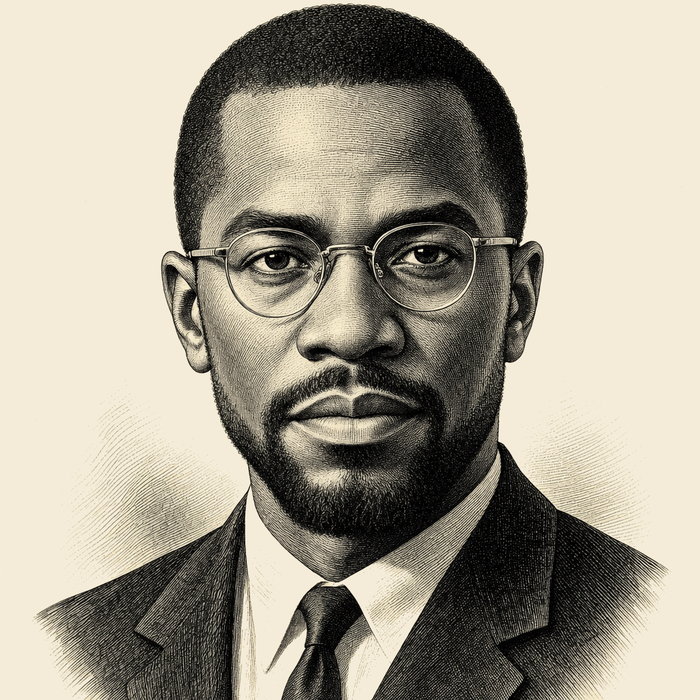
Into this carceral theater descends a circus of traditional media, social-media influencers, and right-wing streamers who harvest the spectacle of state violence and protest clashes for their algorithms, treating the suffering of the detained as content. They are not there to witness the humanity of the caged. They are there to document the fray. This is the structural distinction Malcolm X drew between those who seek to expose the apparatus and those who seek to monetize its optics.
The counterweight is Radio Jornalera NJ. Launched by immigrant advocates in 2021 explicitly because, as Torres put it, “We want to build our own narrative… we’re only getting used by the press,” this outlet does the work of structural defense. Its volunteer reporters are the physical witnesses the state depends upon to stay absent. They report the daily reality of visitation denials. They interview recently released detainees. They broadcast the demands of the people inside. Asela Perez-Ortiz, the outlet’s media production coordinator, noted that the hardship of reporting outside the walls does not compare to the reality of those trapped inside. They are doing it for them. This is not journalism that aspires to a view from nowhere. It is the journalism of with, not the journalism of about, and it is a survival function for a community the state has conscripted into silence.
The detention center did not simply materialize in an industrial zone outside Newark. It was sited, funded, and guarded by specific actors making specific calculations. We did not land on Plymouth Rock; Plymouth Rock landed on us, and today it is fortified with razor wire and patrolled by state troopers acting as private security for a publicly subsidized monopoly. New Jersey’s Democratic governor is suing GEO Group to gain access to the facility—a move that highlights the fracturing of the state apparatus under the weight of its own complicity, but that does not absolve the federal machinery that built the cage. The state cannot fund the extraction and pose as its savior.
When the detained assert their personhood through a hunger strike, the state responds by arresting those who dare to document it. On May 31, a volunteer reporter for Radio Jornalera NJ was arrested by state police despite wearing clearly visible press credentials. This is not a misunderstanding. This is the physical enforcement of an informational monopoly—a message sent by the machinery of enforcement to anyone else thinking of holding a microphone up to the truth that doing so will carry a personal cost. The administration’s defenders will call it an isolated error, but the function is the message. When the state can deny the existence of a strike, turn families away at the gate, and handcuff a credentialed journalist in the same operational sequence, it has abandoned even the pretense of accountability.
I will not look away from what this analytical chain surfaces. The federal immigration apparatus and its corporate partners have chosen to treat human beings as inventory. Radio Jornalera NJ has chosen to treat them as a community whose story will be told in their own voice, on their own terms, at whatever cost the work requires. The arc of the moral universe does not bend by itself. It bends only when specific people, in a specific moment, push against the joints of the apparatus that holds it straight. At Delaney Hall, the specific people are Torres, Perez-Ortiz, and the volunteer reporters who show up daily in an industrial no-man’s-land. The specific moment is now, while the hunger strike forces the question of personhood onto the state’s ledger. What they are building, broadcast by broadcast, arrest by arrest, is the long and difficult structure of a reality that cannot be overridden by a press release. That structure, that stubborn artifact of witness, is what will outlast any administrator’s denial. Radio Jornalera NJ is applying the leverage today. The work of the column, and the work of the Beloved Community, is to stand with them, read the receipts, and refuse to let the apparatus launder its cruelty through the fog of manufactured doubt.