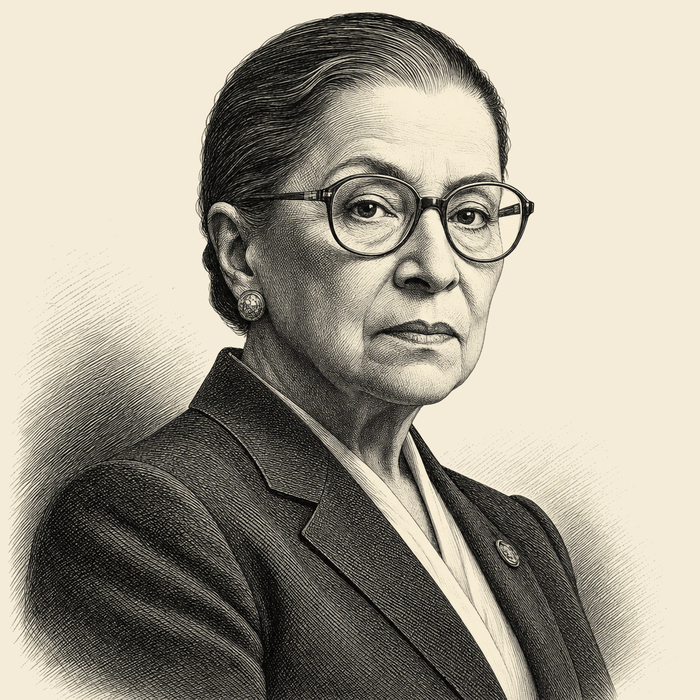

Gavin Newsom is choosing to protect California’s billionaire class over funding healthcare for workers.
SEIU-United Healthcare Workers West confirmed Wednesday that its proposed one-time, 5% tax on billionaire net wealth qualified for the November ballot. On Thursday, the union offered to withdraw the measure if the governor champions a 2% legislative alternative by June 25. The union’s campaign has spent months building this very list of high-net-worth residents — California’s approximately two hundred billionaires — who would be subject to the tax. The union is now holding that list out as a bargaining chip. The governor’s response has been to reject the tax entirely, warn of capital flight, and propose no alternative for offsetting the Trump-era federal Medicaid cuts that are already blowing holes in county health budgets.
The governor’s argument requires two claims to hold simultaneously. First, that a wealth tax on residents whose net assets are among the most liquid, most mobile, and most diversified in the state would trigger capital flight of a magnitude that offsets the revenue collected. Second, that no revenue instrument is preferable to a flawed one. The first is empirically contested. Cristobal Young’s research at Stanford, drawing on IRS Statistics of Income migration data, documents that state-level millionaire and billionaire migration is real but modest, driven primarily by housing costs and life-stage factors rather than marginal tax-rate differentials. Opponents of California’s 2012 Proposition 30 made the same capital-flight argument; the state’s top-earner population and income-tax receipts grew in the years that followed.
The second claim is the one doing the real work. Newsom has proposed nothing. Not a modified wealth tax, not a gross-receipts levy, not a top-bracket surcharge, not a targeted service cut prioritized by his own administration. California’s budget, signed last month at $350 billion, relies on personal income-tax revenue from high earners — the top 1% of filers contribute between a third and half of the state’s income-tax receipts. This is the same governor who found room for a new software tax in his own budget but not for the Medi-Cal shortfall. The selectivity is the story.
The wealth tax is not a simple instrument, but the obstacles it faces are obstacles the governor could be navigating rather than citing as reasons to do nothing. A 5% levy on net worth above $1 billion would trigger valuation disputes and legal challenges over whether the tax is a constitutionally restricted property tax. The European experience is instructive: of the dozen OECD countries that imposed net-wealth taxes in the 1990s, all but three have abandoned them, largely because of high administrative costs relative to revenue and capital-flight responses. The lesson from those repeals is not that wealth taxes are futile — it is that they fail when they are designed without enforcement teeth, valuation rules, and exit taxes. State revenue departments and the IRS already have valuation frameworks for estate-tax purposes that provide a working model. The design work is a task the governor could undertake. He has chosen not to.
The revenue potential is what makes that choice indefensible. Using California Franchise Tax Board data, the Legislative Analyst’s Office has previously estimated that a wealth tax on a base similar to the union’s proposal could raise revenue in the tens of billions annually before behavioral effects. The SEIU-UHW’s arithmetic may be imprecise — but even if the revenue is half what the union projects, half is more than the zero the governor has put on the table. California’s fiscal structure — heavily reliant on a progressive income tax with a top combined rate of 14.4% on wage income and a capital-gains surge from a handful of tech IPOs — amplifies every revenue shock. When a recession or an asset-price correction arrives, the general fund goes with it. The wealth tax is being framed as a stabilizer, but a levy that falls on the same narrow population that already supplies an outsized share of total revenue deepens the volatility. That is not a reason to reject the tax. It is a reason to design it with a broader base and a reserve mechanism. The governor has done neither.
The coalition arrayed against the tax deserves its own accounting. The California Teachers Association, Planned Parenthood Affiliates of California, and the California Medical Association — organizations whose constituencies include precisely the populations the tax would fund services for — have joined the opposition. These are organizations that would otherwise cheer a levy on billionaires. They oppose the measure because they have read the actuarial tables: a ballot fight that fails or triggers an exodus leaves nothing, and the campaign spending against it will have drained resources that could have gone to lobbying the legislature for a simpler, more durable funding source. That is a tactical judgment by groups that want healthcare funded, not an argument that the tax is unworkable. The political logic is legible: these organizations depend on the legislative process for their own appropriations, and a governor who opposes their revenue source has leverage to redirect or reduce those funds. Billionaire opposition spending is documented. Google co-founder Sergey Brin, cryptocurrency executive Chris Larsen, and others have spent millions on campaigns to undermine or defeat the measure.
The backers’ statement describes the shift from 5% to 2% as agreeing to “a smaller tax.” The arithmetic warrants inspection. If the 2% legislative alternative is recurring rather than one-time, the “smaller” label is arithmetically misleading over any multi-year horizon. If one-time, the revenue is roughly 40% of the original proposal’s — which raises the question of whether 40% of the funding addresses the fiscal gap the tax was designed to close. If the 5% was calibrated to fill the full gap, 40% of that revenue leaves a majority of the threatened healthcare services still unfunded. The “compromise” is a partial patch rather than a fix, and a partial patch that leaves poor patients absorbing the remainder is not a compromise. It is a managed retreat.
There is no mystery about what is happening. A union, facing a funding cliff, proposed a tax on the wealthiest residents of a state of forty million. The governor, whose political future depends on the perception that he is friendly to business while holding the state’s social contract together, refused. The union then gave him an exit ramp: a smaller tax, enacted legislatively, that would allow both sides to claim victory. Newsom has not taken it. He has said the tax would hurt investment. He has not said how he will fund the healthcare system without it. The response, so far, is silence. The union’s willingness to walk away from a measure that polls well is the clearest signal yet that healthcare funding cannot wait for the governor’s comfort — and that his refusal to engage is not caution but abdication.
This is a deliberate choice. The capital-flight argument is the cover. The absence of an alternative is the tell. The governor is betting that the billionaire ballot measure will either be withdrawn or defeated, that the tax conversation will end, and that the federal cuts will be absorbed by the poor and the sick while the donor class’s balance sheets remain untouched. The patients who lose services are the cost. The numbers on the Medi-Cal enrollment rolls this fall will record it. Nothing more needs to be said about the calculation.