The Trump administration is suing America’s cities into its deportation machine. A federal judge said no.
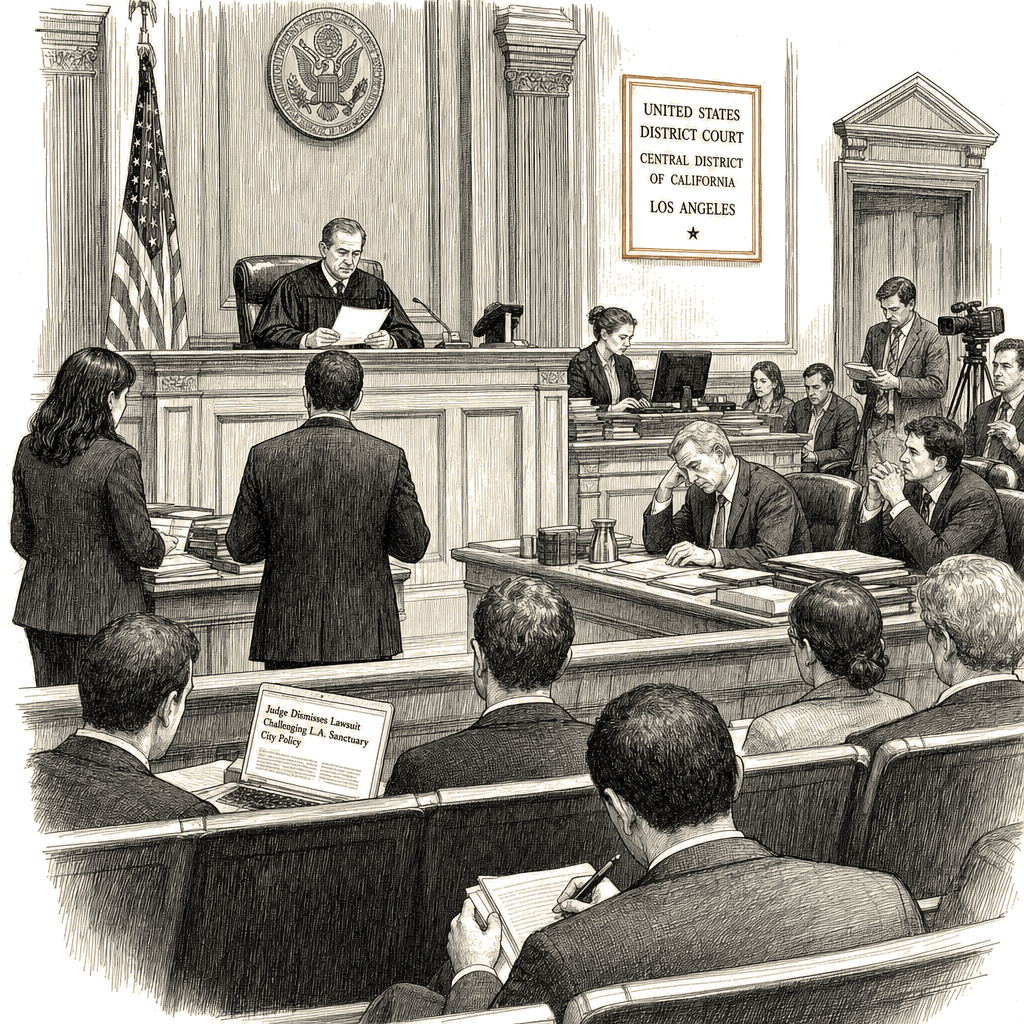
Judge Fernando Olguin of the Central District of California dismissed the administration’s lawsuit against Los Angeles last week. The city, he found, was not regulating the federal government. It was controlling “the actions of the city’s own agents and agencies.” A city gets to decide how to use its own police officers. A city gets to decide whether its own resources serve its own public safety or the federal government’s deportation apparatus. The administration argued the city was trying to “unconstitutionally” regulate the federal government. The judge rejected the argument. The administration has filed similar suits against Boston, Chicago, and Denver. In each case, federal judges have dismissed the lawsuits. The pattern is no longer emergent; it is established. The administration keeps losing. It keeps filing. The law of the land stands, hand-bound as always — deliberately so.
The Los Angeles ordinance exists for a reason any beat cop in the city could explain to you. When victims of crime believe that calling the police will result in their own deportation — or the deportation of a family member, a neighbor, a witness — they stop calling. Domestic violence goes unreported. Assault goes unreported. The community becomes less safe for everyone, documented and undocumented alike. The ordinance, as City Attorney Hydee Feldstein Soto put it, is designed “to encourage victims of and witnesses to crime to feel safe coming forward to seek help from LAPD regardless of their immigration status.” That is not obstruction. That is the ordinary work of keeping a city safe. The administration knows this. It is suing anyway.
What the administration is asking is not cooperation. Cooperation already happens under federal law. What it is asking is that cities become federal immigration enforcement — that local police officers, whose job is to respond to burglaries and domestic violence calls and traffic accidents, be conscripted into the deportation apparatus. The difference between cooperation and conscription is the difference between a city that welcomes the stranger and a city that hunts him.
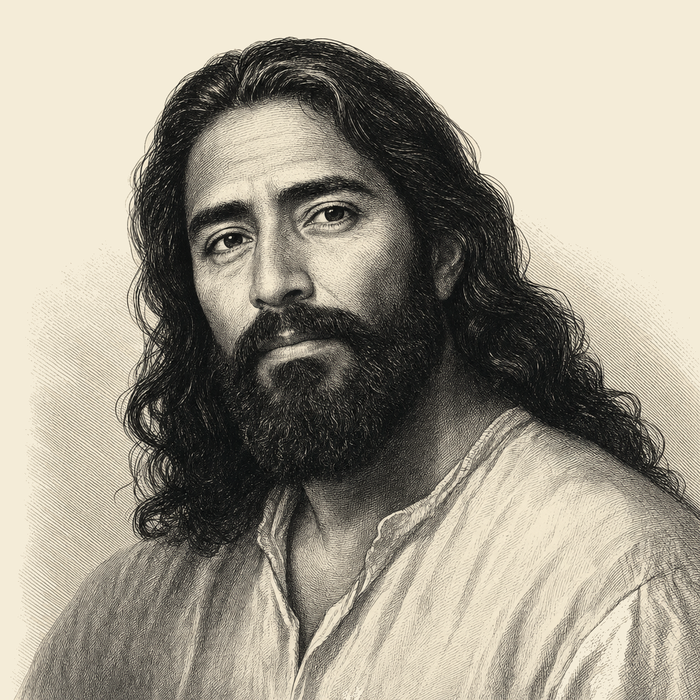
The Hebrew Bible names the command directly: “You shall not oppress a resident alien; you know the heart of an alien, for you were aliens in the land of Egypt” (Ex 23:9). You know the heart of an alien. The command assumes memory. It assumes you have been the stranger and you remember what it felt like. That commandment — You shall love the stranger, for you were strangers in the land of Egypt — appears thirty-six times in Torah. Some rabbis say forty-six. It is not do not kill. It is not do not steal. It is the most repeated commandment in the Torah, and the reason it is repeated so many times is that the human heart is hard and rebels. The God who gave the Torah understood that humans will, again and again, refuse to see the face of Christ in the stranger. No amount of reminding is enough.
Pope Leo XIV said plainly: “Someone who says ‘I’m against abortion’ but is in agreement with the inhuman treatment of immigrants in the United States, I don’t know if that’s pro-life.” The word pro-life — the word the administration repeats to every evangelical pastor, to every Catholic voter, to every base rally — is being asked to do work it was never supposed to do. It sits in the mouth of officials whose actual policy is tearing children from parents and filing suits to force cities into the same work, and whose platforms celebrate each suit as righteous. The gap between the word and the thing is the size of the scandal. Pope Leo XIV also pointed to courts as the proper path: “If people are in the United States illegally, there are ways to treat that. There are courts.” The administration took that path. The courts said no. The institution the pope deferred to refused the administration’s demand.
Francis recalled in Fratelli Tutti §39: “Migrants are not seen as entitled like others to participate in the life of society, and it is forgotten that they possess the same intrinsic dignity as any person.” For Christians, this way of thinking and acting “sets certain political preferences above deep convictions of our faith.” The demand that cities conscript police as immigration agents — certain political preferences above deep convictions of our faith.
In 2003, the bishops of Mexico and the United States issued their joint pastoral letter Strangers No Longer: Together on the Journey of Hope. “We the bishops of Mexico and the United States seek to awaken our peoples to the mysterious presence of the crucified and risen Lord in the person of the migrant.” The person of the migrant. Not illegal aliens. Not deportable non-permitted. Not immigration enforcement targets. The crucified and risen Lord in the person of the migrant. The bishops named three principles: people have the right to migrate to support their families when they cannot do so in their homeland; sovereign nations have the right to control their borders; the human dignity of undocumented migrants must be respected. The administration’s lawsuits honor none of them. The deportation machine, as the scholar Adam Goodman has documented, is older than any single administration — it predates this president, predates this century, and every party has operated it. But the lawsuits do something particular. They treat the command to welcome the stranger not as a moral obligation but as a legal obstacle to be removed.
I am part of a tradition that has, in its history, conscripted police into the service of power, and a church that looked the other way when certain neighbors were selected. The bishops and prophets and first Christians have given us more than enough: protect the stranger by any means necessary. If I see the face of Christ in the migrant and the stranger, I must fight to make sure my parish, my community, my jurisdiction does not err as it once did. Stop using the courts to oppose the faith.
Romero, preaching from the cathedral in San Salvador in the last months of his life, made the case that a church that does not unsettle the powerful offers no gospel at all. A city that does not protect the stranger among its own people is not a city in the image of the prophets. It is a jurisdiction running an errand for an administration that has confused cruelty with law. There is a door of return — I call you to it. The administration can stop suing cities. It can enforce its own laws with its own agents. It can let a beat cop be a beat cop and a city be a city and a stranger be a neighbor. The judge in Los Angeles has given it permission to amend its complaint. The permission to amend its conduct has been available all along. The prophets have said no amount of reminding is enough, so you will hear it once more: love the stranger. Love them again.