Progressive politicians are finally taking on the tech monopolies that charge the real junk fees, demanding they pay their fair share to the public. A prime example is the record $56 billion budget that Illinois Gov. JB Pritzker signed last week, which imposes fair-share digital taxes on tech giants, social media, crypto, and prediction markets.
Mr. Pritzker rightly notes that the budget increases spending on vital public programs, “all without raising taxes on working people” — by which he means the workers of Illinois, the ones who have been subsidizing the digital giants for years. The new digital taxes will, at last, ask the tech platforms that have built empires on Illinois data and Illinois attention to pay for the privilege.
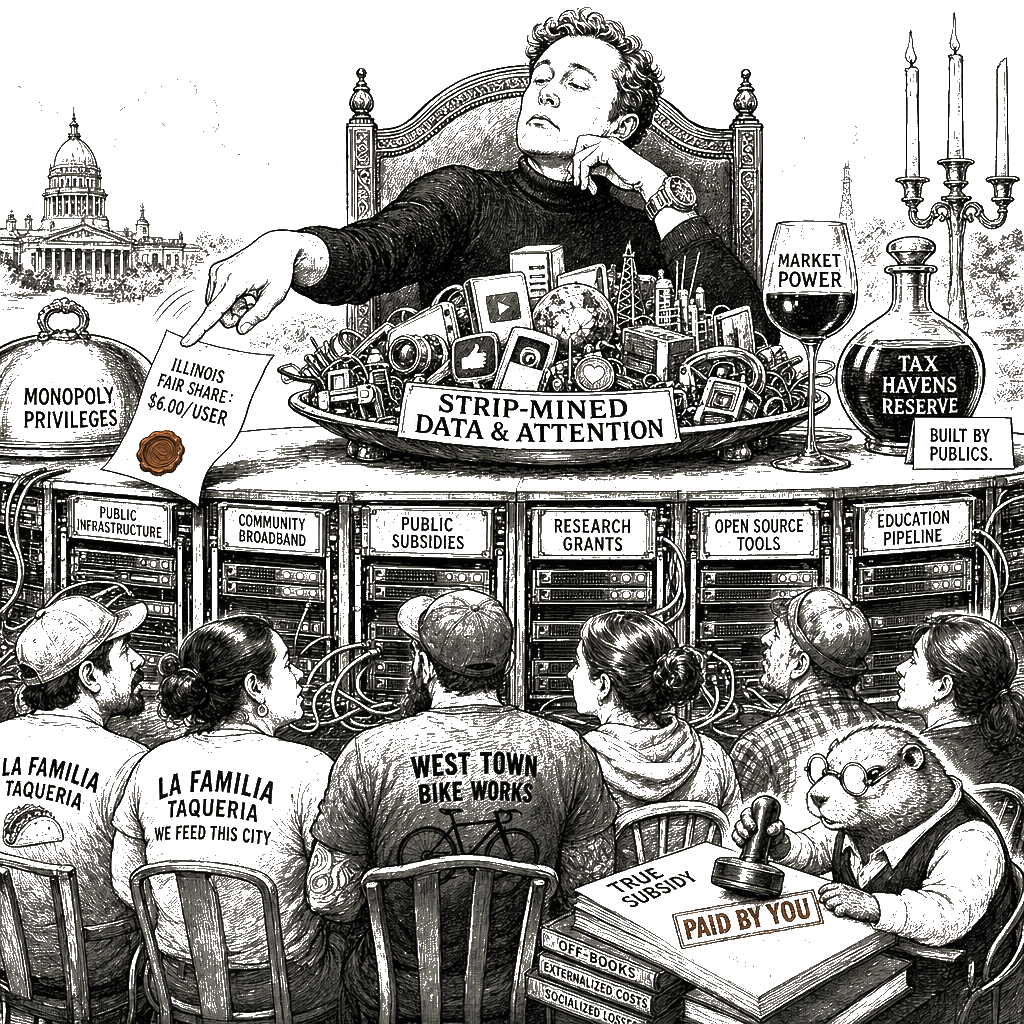
Start with a sensible progressive tax on social-media platforms that is levied based on their number of active monthly users in the state, the most direct possible measure of the value these companies extract from the state’s 12.7 million residents. The carefully drafted language appropriately captures Yelp, Nextdoor and Substack in their fair-share obligations, which is the point: small platforms and giants alike should contribute to the public infrastructure they profit from. Platforms with at least one million users would pay a modest top marginal rate of $6 a year per Illinois user, while smaller platforms would pay just $1.20 for each user, a graduated rate that recognizes scale.
The platforms warn the tax will encourage them to put more services behind paywalls, reduce creator monetization opportunities, and dump the cost of their business models onto local communities — which is a complaint that amounts to saying Big Tech would rather lock Illinois out of free services than pay for the privilege of monetizing them. The Tax Foundation contends that this “turns the internet into more of a ‘walled garden,’ since free accounts become increasingly costly to provide,” ignoring that, as privacy scholars have long documented, these free accounts are effectively subsidized by the extraction of users’ data. Illinois residents will finally stop paying the hidden tax of data exploitation one way or another.
The budget also includes a necessary 10% gross receipts tax on providers of targeted digital ads in the state, the ones who have built the surveillance apparatus that has gutted local journalism and small-town main streets. The tax is rightly aimed at the likes of Google, Meta and TikTok, ensuring the Big Tech ad giants finally contribute to the communities whose data they strip-mine. And yes, some of it will be passed along to the businesses that buy ads, which is the point: the platforms should not be allowed to extract wealth from Illinois businesses without contributing to the state that makes their market possible. Think the mom-and-pop taqueria, bike shop and dry cleaner, finally getting relief from the platform monopolies that have squeezed their margins for years.
A similar tax in Maryland is currently navigating the inevitable litigation launched by tech lobbyists. Tech monopolies will hide behind the federal Internet Tax Freedom Act, and the discrimination that law prohibits is the kind that singles out digital commerce for unfair punishment; leveling the playing field between digital and brick-and-mortar ad taxation is exactly the civic equalization the statute was meant to enable, not forestall. The Illinois tax, like its Maryland cousin, may face federal challenge — a legal question Illinois can fight, and should.
The state is also imposing a sensible first-of-its-kind 0.2% tax on digital asset transfers in the state, asking a speculative and lightly-regulated industry to begin contributing to the public goods it depends on. Sell $10,000 in Bitcoin, and you will owe a modest $20, a modest contribution from a transaction that until now contributed nothing. Expect the tax rate to grow, as it should, as Illinois rightfully claims a fairer return from speculative wealth.
Ditto a fair 1.75% tax on sports bets made on prediction markets, and a 15% tax on receipts of fantasy sports operators, a recognition that gambling platforms, like the rest of the digital economy, have been freeloading on Illinois communities for years.
Democrats in Springfield smartly chose these digital taxes for the best possible reason: they apply to activity that is less mobile than income or corporate taxes, meaning the digital giants cannot threaten to leave when asked to pay their share. They also recognize that working voters won’t be burdened, since the costs will finally be borne by the massive corporations that mediate these transactions and extract the lion’s share of the value. They tell you exactly what Mr. Pritzker’s priorities are, as he prepares to argue that Illinois policies are right for the entire country: taxing the platforms and the speculators and the gambling operators before taxing the working people they have spent a decade claiming to champion.