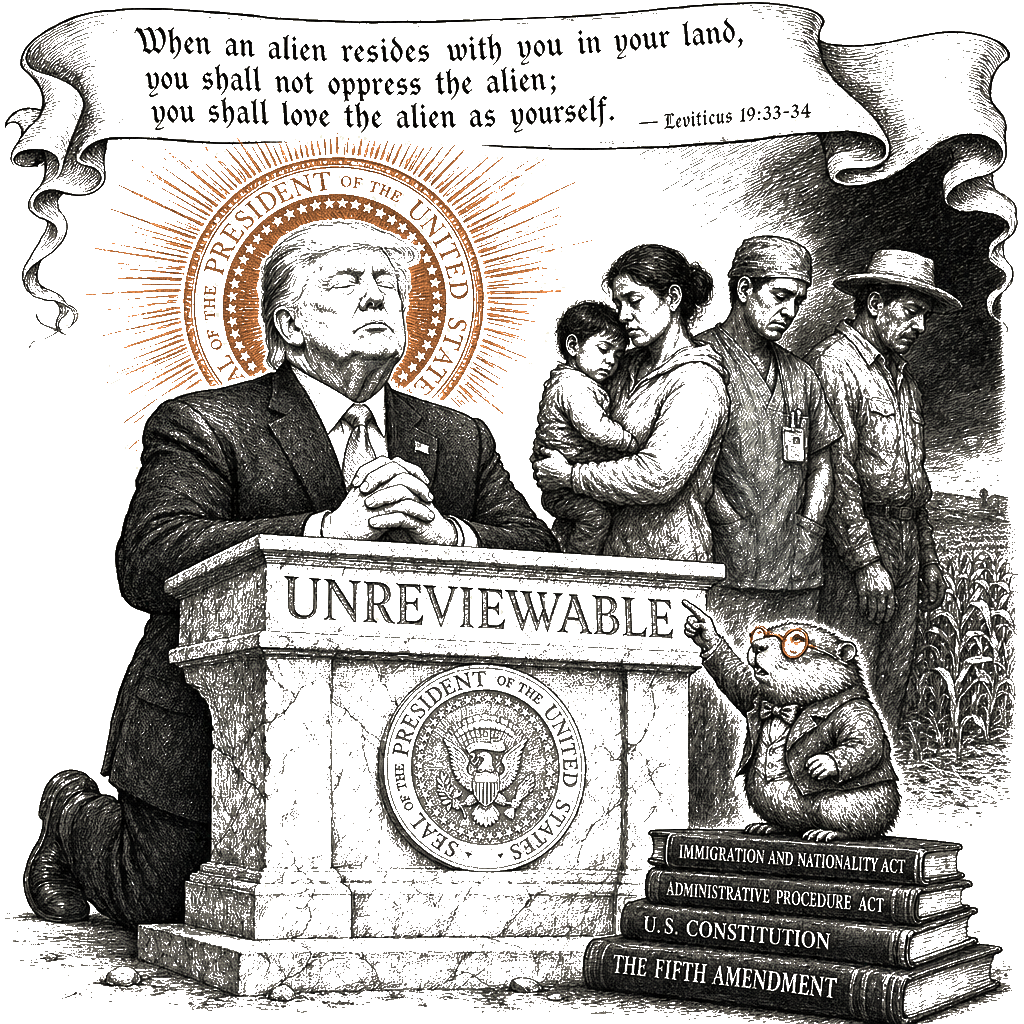
The Supreme Court has given Donald Trump unchecked power to uproot 333,800 vetted Haitians and Syrians from the lives they have built. Six justices, dividing along ideological lines, ruled that the executive can strip them of lawful status — making them deportable — without a single court permitted to review the cruelty of the act. Justice Samuel Alito wrote the opinion. The program the Court just emptied was created by Congress in 1990 to allow fully vetted migrants to live and work legally in the United States when they cannot return safely to their home countries. Every president since the law’s enactment — Republican and Democratic — embraced it. The man now in the Oval Office is the exception.
They are not strangers who crossed a border yesterday. They have lived here. They have worked here. Some for years. Some for decades. They pay taxes. They harvest the food on our tables. They tend the sick in our hospitals. They care for the elderly in our nursing homes. They have American-born children. They have built lives under a status the country itself gave them. According to FWD.us, 200,000 Haitian TPS holders are in the United States workforce — 15,000 of them harvesting crops, 13,000 working as nursing assistants, 8,000 caring for the elderly and disabled. Together they generate an estimated $5.9 billion for the United States economy every year and pay $1.5 billion in federal and state taxes.
The Court’s reason is not that the people are no longer in danger. The State Department still warns Americans in the strongest terms not to travel to Haiti because of “crime, terrorism, kidnapping, unrest, and limited health care.” The reason the Court gives is that no court may second-guess the President’s call. The Haitian plaintiffs asked the Court to dismiss the case on grounds that new DHS evidence showed the conditions warranting TPS still obtained. The Court did not dismiss. It ruled the other way. The doctrine of “unreviewable” presidential power is what a court invents when it does not want to be the one who says no.
The administration has already moved to strip TPS from thirteen of the seventeen countries that had it. The remaining four — El Salvador, Lebanon, Sudan, and Ukraine — await the same fate this fall. Yet the highest court in the land has handed the keys of this machine to power, all while we claim the mantle of a Christian nation.
There is a commandment in the Torah that appears more times than almost any other. Leviticus 19:33-34: “When an alien resides with you in your land, you shall not oppress the alien. The alien who resides with you shall be to you as the citizen among you; you shall love the alien as yourself, for you were aliens in the land of Egypt.” The mechanism the Torah names is memory. You were the stranger once. The commandment binds because the country doing the binding has its own Egypt in its past. We have ours. We have not yet learned what it was for. This is not a sentimental suggestion. It is a binding moral arithmetic.
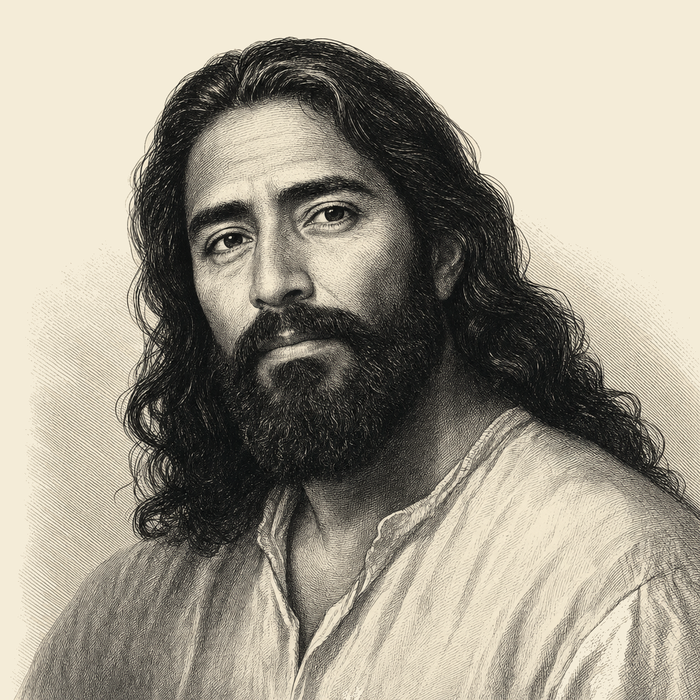
Jesus of Nazareth said it again in the language of final judgment. Matthew 25: “I was a stranger and you did not welcome me.” The sheep and the goats are divided on this. There is no exception clause in the parable for people whose papers are not in order. Jesus does not say, “I was a stranger and you enforced the law.” He says, “I was a stranger and you did not take me in.” The Christ whom the Court’s conservatives claim to follow identified himself with the migrant — not with the magistrate who sent the migrant away.
Pope Francis, preaching on the island of Lampedusa in 2013, named what such power produces. “We have become used to the suffering of others: it doesn’t affect me; it doesn’t concern me; it’s none of my business!” He called this the “globalization of indifference.” It is not new. It has been the operating condition of empires for as long as empires have existed.
Óscar Romero, the archbishop of San Salvador, told the soldiers of his country’s death squads in his last homily in March of 1980: “No soldier is obligated to obey an order against the law of God. An immoral law, no one has to comply.” The soldiers then put a bullet through his heart while he was saying Mass. Romero’s words outlived the soldiers. He knew that a law that forces people into inhuman conditions is a social sin, and he begged the soldiers of his day to listen to the voice of God rather than the orders of men. The law of God does not depend on the docket of the Supreme Court. The deportation officer who knocks on the door of a Haitian family in Flatbush is still bound by what Leviticus names. So is the justice who told him he need not explain.
You who drafted this ruling, and you who execute its cruelty today, you are committing a structural sin that the prophets called out in plain language. You are crushing the needy. You are thrusting aside the vulnerable. You are treating human lives as the acceptable cost of political business. But the God you claim to serve is not a border patrol agent, and the gospel you cite to justify your power does not bless the exile of the stranger. The door of repentance remains open to you, but you must first open your eyes to the face of Christ in the people you are destroying.
We who sit in comfortable pews and vote for politicians who promise to secure the border have built this architecture, and we must confess our complicity in the very cruelty we now watch with feigned horror. Many of us — Catholic laity, Latino parishioners, immigrant families, those of us who grew up speaking Spanish at the kitchen table — voted for the men who appointed these justices. We did not press hard enough when our own bishops named immigration as a life issue. We did not hold our own representatives to the seamless garment Cardinal Bernardin preached — the doctrine that bound the defense of the unborn to the defense of the stranger and the poor, woven of a single thread that cannot be cut without unraveling the rest. Invoking the rule of law, we have built walls instead of bridges, treating human beings as disposable labor. The cruelty the Court has just confirmed is structural — the power any future president inherits will not vanish when the next administration takes office. If you would not have Haitians deported under a Republican president, you cannot want Syrians deported under a Democratic one. The face of the deportee is the same in either case. The tears of the child left behind are the same.
The country can repent. The country can narrow the statute. It can build sanctuary networks in the parishes. It can fund the legal defense of the families. It can stand in the doorways of the offices where compliance is demanded. It can remember that the Haitians and Syrians on the list are the same human beings Romero named in his last breath. The door of return is open, and it is held open because the carpenter and the combat medic and the man in the pew know what it means to have it closed.