
The Trump administration is gutting Europe’s environmental regulations so American corporations can pollute more.
I run a small-engine shop on forty acres outside Friendship, Wisconsin, and I read trade policy the way I read the Adams County Times-Reporter — looking for what is going to land on us. The trade deal that just passed in Brussels isn’t over. The tariff cuts were the easy part, and the easy part is what got the votes and the headlines. The European Parliament approved the package last week, finishing the formal side of a deal struck last summer that capped most U.S. levies on the bloc at 15 percent. That is the headline. What’s coming next lands on American producers, and most folks back home haven’t heard a word about it.
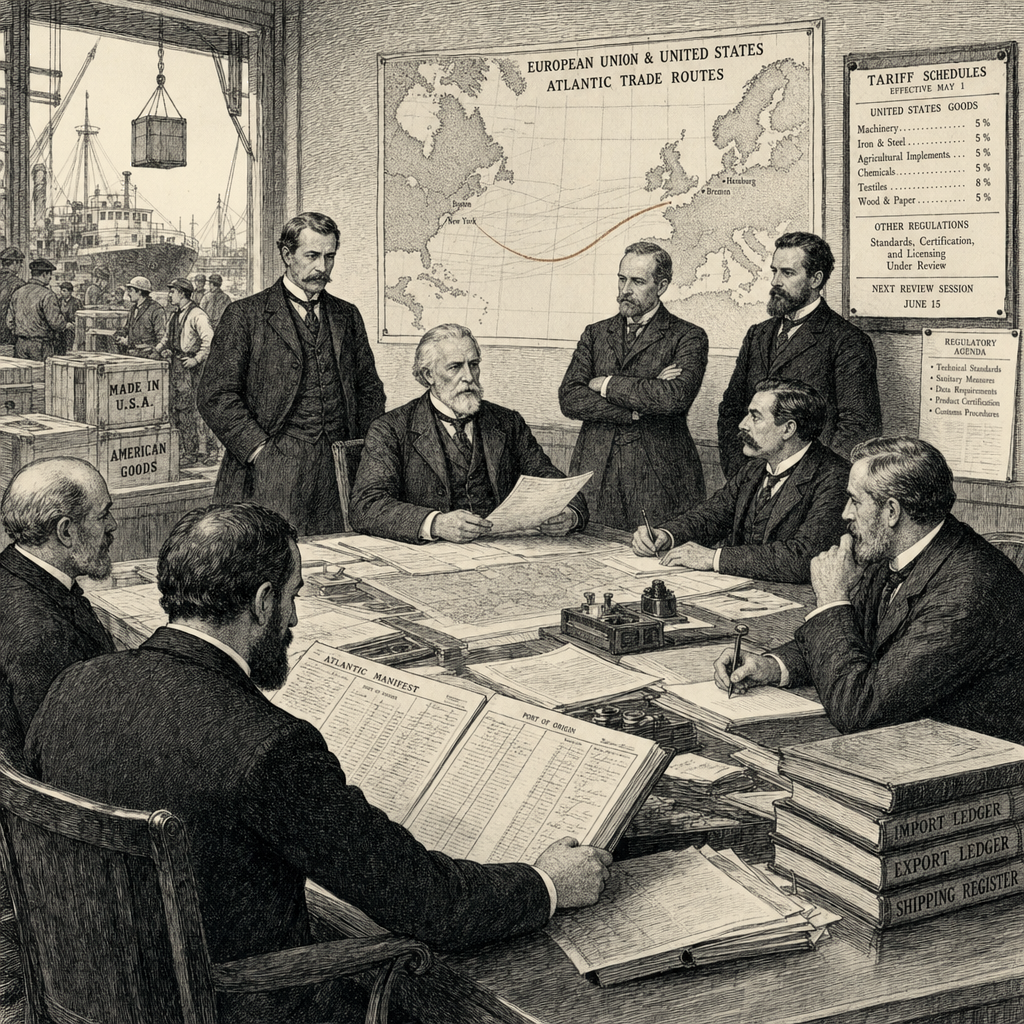
U.S. Ambassador Andrew Puzder calls the next targets “non-tariff trade barriers.” That is the bureaucratic term for the rules that keep the water clean, the air from choking, and the forests standing. The administration wants those rules gone, or carved up with exemptions, so American companies can sell more into a market of 27 countries without having to prove they aren’t poisoning it. A European Commission spokesman said it directly: “our legislative framework and our regulatory autonomy are not up for negotiation.” Read that again. The EU just told Washington — and us — that the next fight won’t end with another handshake.
Read the hit list. Three of the regulations matter to rural America. The rest are somebody else’s fight.
The deforestation rule. The EU’s law on rubber, wood, soy, and cocoa imports requires importers to file pinpoint geolocation data proving those products didn’t clear-cut a watershed to get there. It’s due to take effect at the end of this year, after being delayed twice and partially eased because, frankly, it wasn’t workable as written. Even with the softening, the U.S. position is that the rule “still imposes a big burden on producers who are managing natural resources responsibly.” That’s us. That’s American farmers, ranchers, and foresters who already keep conservation plans, who already keep records, who already do the work — and who are about to be handed a new compliance regime designed by people who have never met them. Or, more to the point, who don’t care to meet them. Because the complaint isn’t really about the burden on responsible operators. It’s about whether the rule reaches the irresponsible ones at all.
The methane rule. Energy companies and importers in Europe will have to report their methane emissions, and eventually meet new intensity standards or face fines. The energy ministers of the United States, Qatar, Algeria, and Nigeria wrote jointly to EU leaders this past week and said, in so many words, “there is no viable path to compliance.” Four of the world’s major fossil-producing nations, on the same letter, saying the same thing. That’s not a negotiating posture. That’s a warning that the rule as written breaks supply. When Europe’s supply breaks, the squeeze moves up the chain. U.S. producers, midstream operators, and shippers don’t get a pass just because the buyers are in Rotterdam.
The carbon border tax. The EU’s carbon border adjustment mechanism — CBAM — adds a charge to certain imports based on the greenhouse gases emitted in their production. The deal the U.S. and EU struck last summer said the EU would work to provide “additional flexibilities” in how it’s implemented. Notice the wording. Not “change the rule.” “Provide flexibilities.” The Europeans didn’t commit to backing off. They committed to being flexible about how they squeeze.
There are digital fights on this list too — the Digital Markets Act, the Digital Services Act. Apple and Meta were fined under DMA last year. X got hit for about $140 million under DSA. The EU just added Amazon’s and Microsoft’s cloud services to a tougher scrutiny list. Those are real fights and they involve real money, but they aren’t our fights. They live in boardrooms in Cupertino and Redmond, not out here. I’m setting them aside.
What matters to us is what touches the land, the wells, and the supply chain that runs from the county road to the coast and across the Atlantic. And on those, the EU has drawn a line. The Commission’s own words: not up for negotiation. The Europeans have learned that boring is good when you’re in a trade spat with this administration, because boring means you actually read the text before you sign it, and you don’t hand over the regulatory autonomy that keeps your own ground from turning to ash.
We know what happens in the Central Sands when the rules go away. We know what a 10,000-cow dairy operation looks like when it gets a free hand with the manure lagoon. The Adams County Land and Water Conservation Department and the Wisconsin DNR spend their days trying to keep the nitrates out of the shallow aquifer, testing the wells on the south side of the county that are already spiking past the drinking-water standard. Washington is in Brussels trying to tear down the European version of those exact same protections, for the exact same reasons. The companies they are fighting for are not the guys fixing tractors in my shop. They are the multinational ag and energy conglomerates who want the right to frack more gas in Europe and expand more row-crop acres without measuring the methane or the topsoil.
They wrap it in the language of American competitiveness. They say it is about leveling the playing field for the American worker.
Wendell Berry has been writing about the extractive mind since The Unsettling of America in 1977 — the mentality that treats the land and the water as nothing but a ledger of exhaustible inputs, a place to dump the cost of doing business. The U.S. trade delegation in Brussels is the extractive mind in a tailored suit, asking the EU to let us treat their forests and their atmosphere the same way the corporate dairies treat the Wisconsin River watershed.
The land does not care about the trade deficit. It does not care about the 15 percent tariff cap. It only cares about what you put into it and what you pull out of it, and whether you have the decency to measure the cost — or as Berry puts it, whether you belong to the community of the land or are you just exploiting it. If Washington gets its way in Brussels, they will treat Europe’s ecosystems like a conquered territory, and the wells back home will only get worse.
That’s the fight now. Not the tariffs. The rules.