The city is in the rubble. The airports are closed. The trains are stopped. The woman on the broken concrete is looking for her daughter. The wealthy nations have rescue teams. The teams are being sent. The houses are not being built.
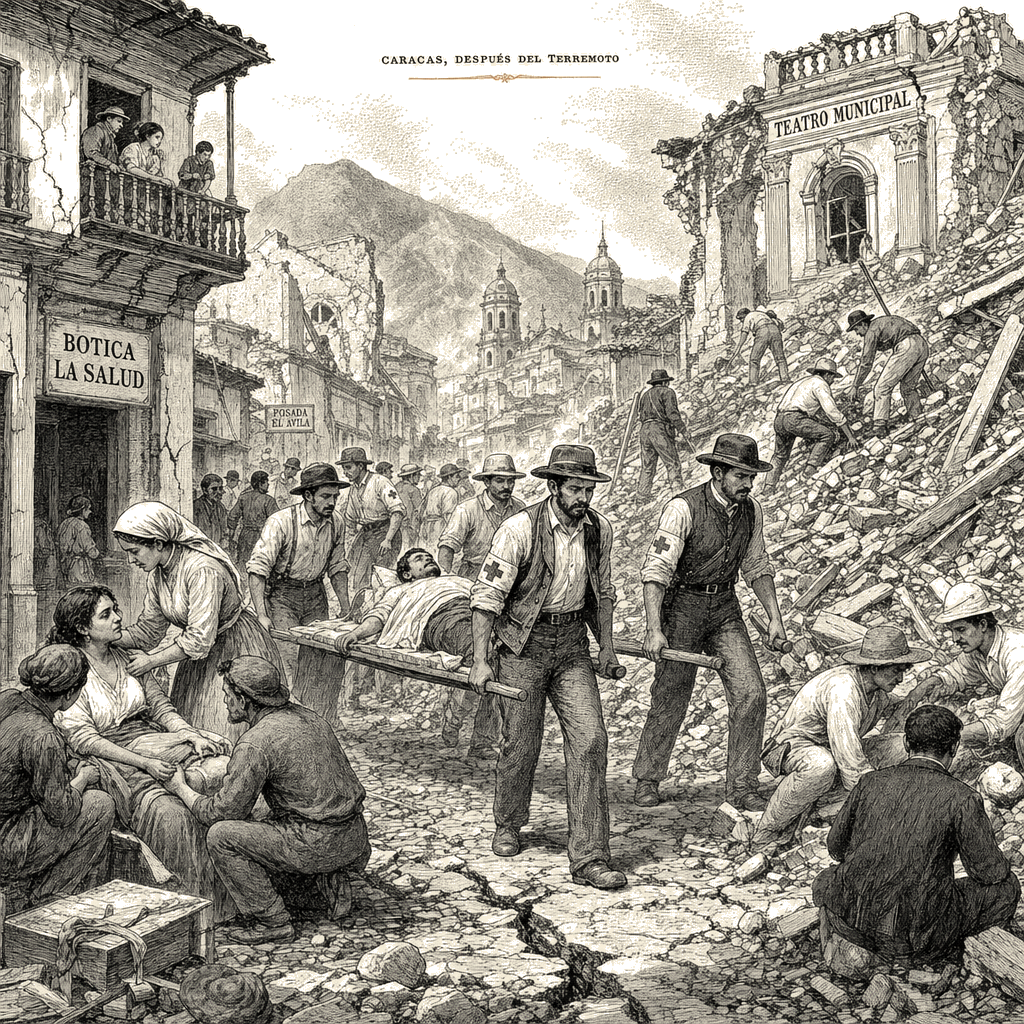
A woman crouches in the pulverized concrete of Caracas. The ceiling of the Simón Bolívar airport is on the floor. The dust is in her lungs. The comfortable world is watching a screen, and the comfortable world will call this an act of God.
Wednesday at six in the evening, two earthquakes struck Venezuela in succession. The United States Geological Survey measured the first at magnitude 7.2, the second — thirty-nine seconds later — at 7.5. The interim leader, Delcy Rodríguez, declared a state of emergency. At least 164 people are confirmed dead. At least 971 are injured. Buildings collapsed in the upmarket embassy district of Altamira. The metro and train systems have been halted. The Simón Bolívar international airport was closed after sustaining severe damage. The USGS warned that “high casualties and extensive damage are probable and the disaster is likely widespread.” The death toll is expected to rise as rescue teams sift through the Altamira rubble.
Donald.
Picture the woman on the broken concrete in Altamira. Imagine her daughter was in a school. The school was a school this morning. Now the school is a pile of concrete and the rebar is twisted and the desks are inside what was the second floor and the teachers’ bodies are on top of the children’s bodies and the children’s bodies are on top of each other.
Donald, your daughter is twelve. She is in school in Washington. Her school has walls. The walls have not fallen. The teachers’ bodies are not on top of hers. There is no concrete dust in her lungs. The ambulances are not queued outside her building.
This morning, Donald, you cancelled the bill that would have lowered the cost of housing for the people of this country. You held the bill hostage. You said you would not sign the bill until Congress passed the Save America Act. You said you would not sign the bill that the House passed and the Senate passed. You held it. You held it while the earth in Venezuela was moving.
Donald, the building codes in Caracas were not what they should have been. The buildings that collapsed in Altamira were not what they should have been. The schools were not what they should have been. The hospitals were not what they should have been. The country has been in crisis for years, Donald. The country has been under sanctions. The country has been running on what it can run on. The buildings that fell were built the way they were built because the country had what it had. And when the buildings fell, the people who were inside them are in the rubble, and the people who are in the rubble need rescue teams, and the State Department is sending the teams, and the teams are being sent, Donald. The houses are not being built.
Donald, your hands signed the cancellation of the housing bill this morning. The pen is on your desk. The ink is dry. The houses the bill would have funded are not built. The people who would have lived in them are not in them. The bill that would have lowered the cost of housing is hostage. The bill is still hostage.
Donald, your throat closes when you read the number. One hundred and sixty-four. The taste of pulverized cement coats the back of your tongue. You swallow, and the swallow catches, because the dust of the collapsed ceiling is suddenly in your throat. It does not leave. You cannot wash it out.
The woman in the rubble crouches in the gray powder of what used to be a building. The powder is in the cuts on her arms. The powder is the ground-up mortar and the ground-up bone. She breathes, and she breathes in the city itself, collapsed. But I am not writing about her distance. I am writing about your proximity.
Donald, the ache behind your sternum is the weight of the drywall that crushed the child in the airport corridor. Your chest tightens. The breath cannot fill your lung. The air in your warm office is too thick, because the air in Caracas is gray powder and the panic of nine hundred and seventy-one people trying to breathe through the rebar.
Your knees buckle when you stand. The floor of your office heaves for a second, just a phantom tremor, because the earth in Caracas heaved and betrayed its children, and your body is registering the betrayal in the marrow of your own shins. The spine of the mother in Altamira snapped, and now there is a phantom compression in your own lower back, a dull ache at bedtime that was not there before.
You are drinking your morning coffee, Donald. The cup is warm in your hand. But your hand is trembling. The copper taste of blood is under your tongue, because the linoleum in the airport corridor is slick with the red paste of cement and blood, and you are drinking your coffee while choking on the copper taste of the south.
Donald, your chest knows what your mouth will not say. The metallic taste under your tongue is the taste of the morning you did not act. It will not leave. You cannot wash it out. The water will not take it from you. The morning report will not take it from you. Your daughter’s school walls will not take it from you. The pen on your desk will not take it from you. The daughter is under the wall in Caracas. The teams are being sent. The houses are not being built. The bill is still hostage.
Donald, I am not asking you to sign the bill. I am not debating you on policy. I am not giving you the relief of an argument you can win. I am telling you what is happening in the rubble. I am telling you that the woman on the broken concrete is looking for her daughter. I am telling you that the daughter is under the wall. I am telling you that the wall will not be lifted by the time you have decided what to do. I am telling you that the wall will be lifted by the rescue teams that are being sent. I am telling you that the houses will not be built by the time you have decided what to do. I am telling you that the houses will be built when you sign the bill. I am telling you that the bill is hostage. I am telling you that the bill is still hostage.
The comfortable world calls it a tragedy. The comfortable world calls it an act of God. It is the architecture of the world. It is the concrete poured too thin. It is the steel tied too loose. It is the poverty that forces the poor to live in the buildings that shake first, while the embassies crack but do not always fall. The earth shakes. The house falls because the house was built to fall for some and to stand for others.
Where is the rush of the global north? The rescue equipment is local. The blood is local. The grief is local. The comfort of the world remains insulated, sealed behind glass and steel, looking at a photograph and scrolling past.
A tower fell in Siloam two thousand years ago. The buildings of Caracas fall today. Neither was God’s judgment. Both were the architecture of a world that pours the concrete too thin for some.
“Now there were present at that season some who told Him about the Galileans whose blood Pilate had mingled with their sacrifices. And Jesus answered and said to them, ‘Do you suppose that these Galileans were worse sinners than all other Galileans, because they suffered such things? No, I tell you; but unless you repent you will all likewise perish. Or those eighteen on whom the tower in Siloam fell and killed them, do you think that they were worse offenders than all the others who dwell in Jerusalem? No, I tell you; but unless you repent you will all likewise perish.’” Luke 13:1-5
The tower falls. The dust rises. The comfortable world looks at a screen. Jesus wept over the dust. The dust is in the lungs of the woman in the rubble. The dust is in your throat.
The woman is still crouched on the broken concrete. The daughter is still under the wall. The teams are still coming. The bill is still hostage. The houses are not being built.# He Held The Bill Hostage; The Houses Are Not Being Built
The city is in the rubble. The airports are closed. The trains are stopped. The woman on the broken concrete is looking for her daughter. The wealthy nations have rescue teams. The teams are being sent. The houses are not being built.
A woman crouches in the pulverized concrete of Caracas. The ceiling of the Simón Bolívar airport is on the floor. The dust is in her lungs. The comfortable world is watching a screen, and the comfortable world will call this an act of God.
Wednesday at six in the evening, two earthquakes struck Venezuela in succession. The United States Geological Survey measured the first at magnitude 7.2, the second — thirty-nine seconds later — at 7.5. The interim leader, Delcy Rodríguez, declared a state of emergency. At least 164 people are confirmed dead. At least 971 are injured. Buildings collapsed in the upmarket embassy district of Altamira. The metro and train systems have been halted. The Simón Bolívar international airport was closed after sustaining severe damage. The USGS warned that “high casualties and extensive damage are probable and the disaster is likely widespread.” The death toll is expected to rise as rescue teams sift through the Altamira rubble.
Donald.
Picture the woman on the broken concrete in Altamira. Imagine her daughter was in a school. The school was a school this morning. Now the school is a pile of concrete and the rebar is twisted and the desks are inside what was the second floor and the teachers’ bodies are on top of the children’s bodies and the children’s bodies are on top of each other.
Donald, your daughter is twelve. She is in school in Washington. Her school has walls. The walls have not fallen. The teachers’ bodies are not on top of hers. There is no concrete dust in her lungs. The ambulances are not queued outside her building.
This morning, Donald, you cancelled the bill that would have lowered the cost of housing for the people of this country. You held the bill hostage. You said you would not sign the bill until Congress passed the Save America Act. You said you would not sign the bill that the House passed and the Senate passed. You held it. You held it while the earth in Venezuela was moving.
Donald, the building codes in Caracas were not what they should have been. The buildings that collapsed in Altamira were not what they should have been. The schools were not what they should have been. The hospitals were not what they should have been. The country has been in crisis for years, Donald. The country has been under sanctions. The country has been running on what it can run on. The buildings that fell were built the way they were built because the country had what it had. And when the buildings fell, the people who were inside them are in the rubble, and the people who are in the rubble need rescue teams, and the State Department is sending the teams, and the teams are being sent, Donald. The houses are not being built.
Donald, your hands signed the cancellation of the housing bill this morning. The pen is on your desk. The ink is dry. The houses the bill would have funded are not built. The people who would have lived in them are not in them. The bill that would have lowered the cost of housing is hostage. The bill is still hostage.
Donald, your throat closes when you read the number. One hundred and sixty-four. The taste of pulverized cement coats the back of your tongue. You swallow, and the swallow catches, because the dust of the collapsed ceiling is suddenly in your throat. It does not leave. You cannot wash it out.
The woman in the rubble crouches in the gray powder of what used to be a building. The powder is in the cuts on her arms. The powder is the ground-up mortar and the ground-up bone. She breathes, and she breathes in the city itself, collapsed. But I am not writing about her distance. I am writing about your proximity.
Donald, the ache behind your sternum is the weight of the drywall that crushed the child in the airport corridor. Your chest tightens. The breath cannot fill your lung. The air in your warm office is too thick, because the air in Caracas is gray powder and the panic of nine hundred and seventy-one people trying to breathe through the rebar.
Your knees buckle when you stand. The floor of your office heaves for a second, just a phantom tremor, because the earth in Caracas heaved and betrayed its children, and your body is registering the betrayal in the marrow of your own shins. The spine of the mother in Altamira snapped, and now there is a phantom compression in your own lower back, a dull ache at bedtime that was not there before.
You are drinking your morning coffee, Donald. The cup is warm in your hand. But your hand is trembling. The copper taste of blood is under your tongue, because the linoleum in the airport corridor is slick with the red paste of cement and blood, and you are drinking your coffee while choking on the copper taste of the south.
Donald, your chest knows what your mouth will not say. The metallic taste under your tongue is the taste of the morning you did not act. It will not leave. You cannot wash it out. The water will not take it from you. The morning report will not take it from you. Your daughter’s school walls will not take it from you. The pen on your desk will not take it from you. The daughter is under the wall in Caracas. The teams are being sent. The houses are not being built. The bill is still hostage.
Donald, I am not asking you to sign the bill. I am not debating you on policy. I am not giving you the relief of an argument you can win. I am telling you what is happening in the rubble. I am telling you that the woman on the broken concrete is looking for her daughter. I am telling you that the daughter is under the wall. I am telling you that the wall will not be lifted by the time you have decided what to do. I am telling you that the wall will be lifted by the rescue teams that are being sent. I am telling you that the houses will not be built by the time you have decided what to do. I am telling you that the houses will be built when you sign the bill. I am telling you that the bill is hostage. I am telling you that the bill is still hostage.
The comfortable world calls it a tragedy. The comfortable world calls it an act of God. It is the architecture of the world. It is the concrete poured too thin. It is the steel tied too loose. It is the poverty that forces the poor to live in the buildings that shake first, while the embassies crack but do not always fall. The earth shakes. The house falls because the house was built to fall for some and to stand for others.
Where is the rush of the global north? The rescue equipment is local. The blood is local. The grief is local. The comfort of the world remains insulated, sealed behind glass and steel, looking at a photograph and scrolling past.
A tower fell in Siloam two thousand years ago. The buildings of Caracas fall today. Neither was God’s judgment. Both were the architecture of a world that pours the concrete too thin for some.
“Now there were present at that season some who told Him about the Galileans whose blood Pilate had mingled with their sacrifices. And Jesus answered and said to them, ‘Do you suppose that these Galileans were worse sinners than all other Galileans, because they suffered such things? No, I tell you; but unless you repent you will all likewise perish. Or those eighteen on whom the tower in Siloam fell and killed them, do you think that they were worse offenders than all the others who dwell in Jerusalem? No, I tell you; but unless you repent you will all likewise perish.’” Luke 13:1-5
The tower falls. The dust rises. The comfortable world looks at a screen. Jesus wept over the dust. The dust is in the lungs of the woman in the rubble. The dust is in your throat.
The woman is still crouched on the broken concrete. The daughter is still under the wall. The teams are still coming. The bill is still hostage. The houses are not being built.