
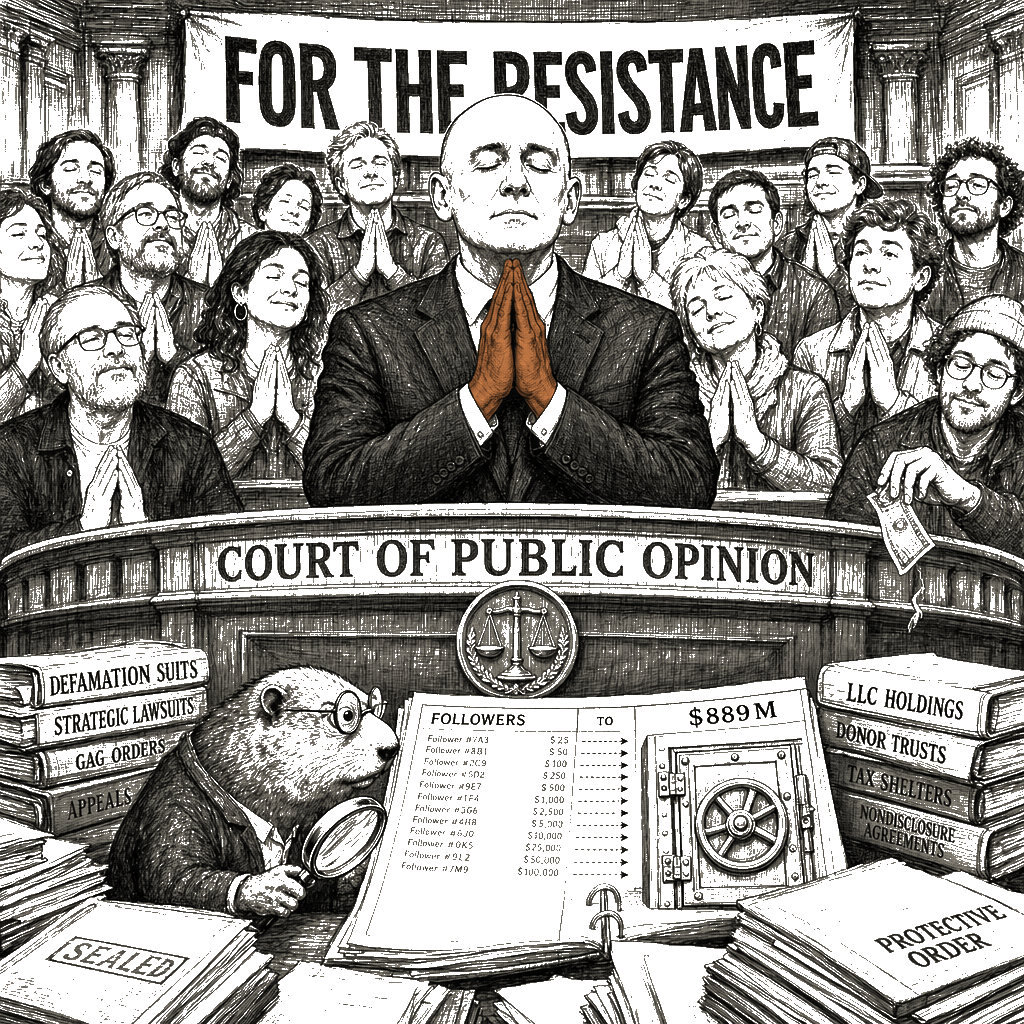
Guo Wengui built a U.S.-based political crusade against the Chinese Communist Party, used it to take more than a billion dollars from his own followers, and on Monday a federal judge in Manhattan gave him thirty years and ordered him to forfeit $889 million. The people the government says he stole the money from are now asking President Trump to pardon him.
The man is also known as Miles Kwok. A federal jury in July 2024 sided with the government on nine of twelve counts of racketeering and fraud. Judge Analisa Torres told the court she “struggle[s] to compare Mr. Guo’s case with any other.” The government’s sentencing memo compared him to Bernard Madoff, the late Ponzi operator who drew 150 years, and said Guo was more destructive than Sam Bankman-Fried, the crypto kingpin who lost his appeal last week and is serving twenty-five. There was no softness in the math.
For those keeping score on the racket: build a brand around a real persecution story — the more genuine the persecution, the better, because real martyrdom makes the followers loyal and the skeptics suspect. Wrap yourself in the flag of the resistance. Run the money through operations that look, from the outside, like the work of liberation. The followers, who have every reason to believe and no good way to audit, send what they can. The leader lives rather well. The cause endures in his image. The mechanism does not require a communist enemy or an American one; it requires only a story potent enough that questioning the man is treated as betraying the story.
I have watched this movie since Madoff got 150 years in 2009. The trust-based extraction engine that runs on a charismatic man, an attractive story, and a follower base too loyal to verify the books. Madoff took about $17.5 billion in real principal from people who thought he was investing their retirement. Bankman-Fried took about $8 billion from customers who thought they were buying into the future of money. Guo Wengui took more than a billion from followers who thought they were funding the resistance to a one-party state. Three men, three stories, the same mechanism: the story was so compelling that asking for proof felt like betrayal. The pattern is not the men. The pattern produces this on schedule whenever a sufficiently single man is given a sufficiently potent story and too little oversight.
The defendant’s lawyers called the government’s valuation “flawed arithmetic” and pointed to the loyalty of many the government named as victims. Continued loyalty is not innocence; it is the price of admission to the racket. Madoff’s investors wrote checks year after year without ever asking for an audit, because admitting you were conned is harder than sending one more. The man in the praying posture in the courtroom, hands clasped, nodding toward his supporters, was running the same play in the last minute of his sentencing that he had been running for years: the pose of the martyr, the post of the unjustly accused. A federal jury saw through it on nine of twelve counts.
Now the double standard, named plainly. The federal judiciary has done its work: thirty years, $889 million in forfeiture, the grifter bound by the same laws that bind the rest of us. But the pardon power — accessible only because the grifter is politically useful — sits one desk away. The people the government says were robbed are the people asking the President to release the man the government says robbed them. A pardon would do what the sentencing did not: it would ratify the racket in writing, from the highest office, with the victims who asked for it on the record as co-signers, because the loyal base must defend the man to avoid admitting they were the marks. The law binds Guo Wengui to thirty years. The law’s exception, reserved for the politically useful, would release him on the petition of the very people he took the money from. That is who the law binds and who it protects.
I won’t mention the pardon application, except to note this: the signature, if it comes, would be the loudest sentence of the whole affair.
The cause was real. That is what made it worth stealing.