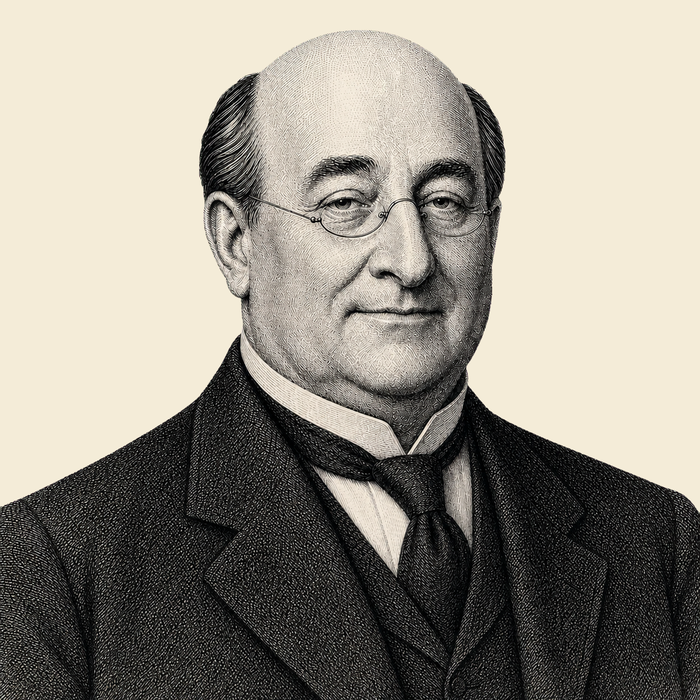
In a profile in The Wall Street Journal of Edwin Meese III at ninety-four, James Taranto marks the Supreme Court’s decision in Trump v. Slaughter as the latest entry in a forty-year ledger. On Monday the Court overruled Humphrey’s Executor, the 1935 decision that shielded members of the Federal Trade Commission and other “independent” agencies from at-will removal. The president, the majority held, may fire them. Taranto is correct to credit Meese, whose 1985 address to the American Bar Association called for a “Jurisprudence of Original Intention” and was denounced at the time by Justice Brennan as “arrogance cloaked as humility.” The six-justice conservative bloc that produced Slaughter also produced Loper Bright, overturning Chevron deference; Dobbs, returning the question of abortion to the states; Students for Fair Admissions, ending race-conscious admissions; and Kennedy v. Bremerton, protecting a coach’s post-game prayer. These are not random victories. They are the restoration of a constitutional order that the New Deal and the Warren Court had remade in the image of their policy preferences.
The case for originalism does not depend on which party benefits from it. It rests on the proposition that the Constitution has a fixed meaning, that the document is not infinitely malleable, that it has edges, and that the judge’s task is to find those edges rather than to redraw them. Article II vests the executive power in the President; Humphrey’s Executor carved out exceptions the text does not recognize. Chevron required judges to defer to agency interpretations of “ambiguous” statutes, converting the executive into a lawmaker when Congress had not acted. As Chief Justice Roberts wrote in Loper Bright, “our role is, as always, to independently interpret the statute and effectuate the will of Congress.” The Constitution assigns the making of law to Congress, the execution of law to the President, and the interpretation of law to the courts. For decades those boundaries were blurred. The originalist court has restored them. Meese, asked by Taranto whether originalism is conservative, answered flatly: “They’re either constitutional or not an accurate reflection of the Constitution.” This is fidelity, not partisanship. Slaughter itself illustrates the point: the removal power it recognizes will belong to every future president, of whatever party.
At eleven weeks she began to bleed.
Her name was Brittany. She had two children at home. The pregnancy had been unplanned, but she had welcomed it. The bleeding did not stop. Her partner drove her forty minutes to the nearest hospital with an obstetric unit. The physicians determined that the pregnancy was nonviable, that the fetus had no chance of survival, and that the tissue remaining in her uterus had set in motion a chain of events that would kill her if the chain were not broken. The procedure her physicians recommended was a dilation and curettage. It is among the most common obstetric interventions. Under the state’s law, which the Court in Dobbs had authorized to take effect, it had become a felony.
The law’s medical-emergency exception was narrow. The hospital’s general counsel required confirmation from the county prosecutor before the procedure could proceed. The county prosecutor, in turn, required documentation that met the statute’s criteria. Brittany lay in a hospital bed. Her hemoglobin fell. Her blood pressure dropped. Her temperature spiked. Her heart rate climbed. The medical staff started intravenous antibiotics, but the source of the infection, the retained tissue, remained. Her kidneys began to fail. Her liver function deteriorated. She grew confused, then incoherent. The county prosecutor withheld authorization. The medical staff watched her slide into septic shock, forbidden by the statute the prosecutor enforced to perform the procedure that would have stopped the cascade. Twenty hours passed. The infection overwhelmed her.
When the procedure was finally approved, the window during which it would have been straightforward had closed. She was too sick for the simple intervention that would have saved her. She required a hysterectomy. She required a ventilator. She required vasopressors to keep her blood pressure high enough to perfuse her organs. She required all of these, and she received them, and none of them were enough. She was taken to surgery. She was then taken to intensive care. She died three days later. The medical examiner listed the cause of death as septic shock secondary to retained products of conception. The state maternal mortality review committee determined that her death was preventable.
The originalist court has not failed. It has succeeded. The order it restores is the order the document describes, the order that was always there for those with eyes to see it: liberty requires structure, structure requires boundaries, and boundaries require someone to enforce them. She has paid.
The order has disclosed where she stood. She stood outside the covenant and the station that the originalist order, faithfully applied, enshrines. The physicians were constrained by the statute; the statute was authorized by the Court; the Court’s order did exactly what it was designed to do. It sorted her outside the wall. She was not of the household whose liberty the Constitution enshrines. The wall is the spine. The wall is the order. The wall is the work.
Brittany is not a tragedy. She is the proof.