Trump’s bombing of Iran helped get an American detained. He is now taking credit for her release.
Dena Karari is free. Let that be said first, and let it be said plainly. A woman is reunited with her family, a human being is no longer in a prison cell, and the long work of being a person outside a cage is hers to do. Whatever else is true of this hour, that is true of it, and the column does not flinch from saying it.
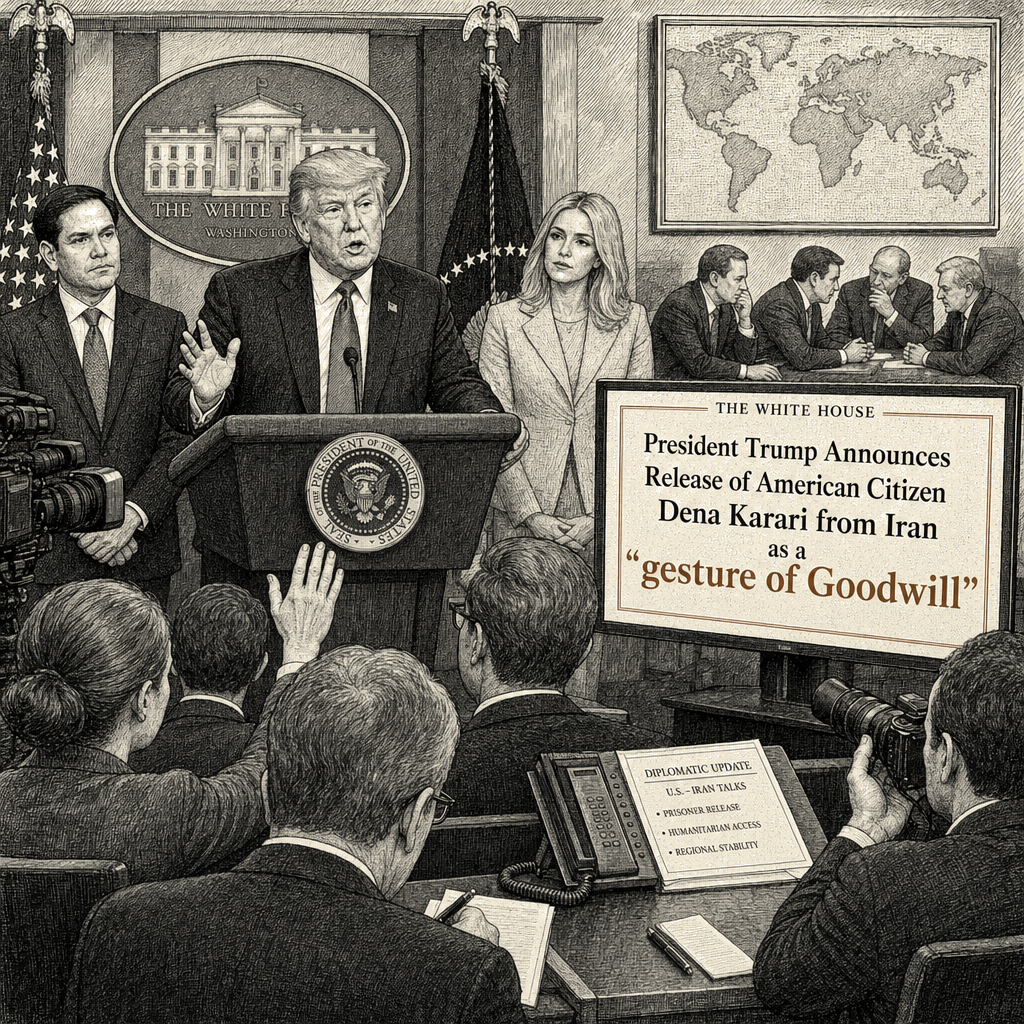
But the same administration that helped produce the conditions in which she was detained is now the administration credited with freeing her. You bombed the country that took her hostage; you are now crediting yourself for her release. “You shall not wrong or oppress a resident alien, for you were aliens in the land of Egypt” — the commandment is older than any flag, and it does not stop applying because the alien holds an American passport [Exodus 22:21]. The cycle is complete, and the framing of Ms. Karari’s release as Tehran’s “gesture of Goodwill” — the same framing this publication noted yesterday — converts the operation into presidential achievement.
Ms. Karari was charged with espionage after the United States joined Israel in bombing Iran. Pope Francis, speaking of the people whose human rights are denied them in the world’s prisons, named the structure plainly: “They are real, and we cannot pretend not to know.” The prisoner in the cell is not a chip. The prisoner is a person. Jesus of Nazareth said, in words the gospels preserve and the poor still repeat: “I was in prison and you did not visit me” [Matthew 25:43]. There is no country-club exception, no diplomatic waiver, no asterisk that exempts the American held by the country we bombed.
This pattern is not new. The hostage crisis of 1979 taught Washington that captives are currency; every administration since has spent them the same way. Ms. Karari’s own lawyer credited “the extraordinary and relentless efforts” of the president — the same president whose administration’s actions helped produce the captivity the lawyer worked to end. I am a citizen of the country that made the war. The comfort of blaming the harm on one man is itself a way of avoiding the harder work. Three weeks ago, this publication noted that the same dynamic had been visible in the prior ceasefire deal, in which the agreement was framed, in Tehran, as a victory for Tehran — a framing the White House could not afford to admit. The framing is always someone else’s victory; the framing is always the other side’s magnanimity; the human being at the center is always the chip.
What would a humane foreign policy require? It would require that the release of an American citizen not be a presidential talking point but a quiet diplomatic outcome. It would require that the citizens of the country we bomb not be transformed into leverage for our citizens. A war that produces prisoners you then trade for credits is not a war any just-war doctrine can justify; it is a transaction with human bodies. The just-war tradition I take seriously requires last resort, proportionality, and non-combatant immunity as conditions for the use of force. By the time the war has produced a detained American charged with espionage, those conditions have been violated twice — once by the war, once by the treatment of the prisoner it produced.
Ms. Karari is free. I am glad of it. The door of return is open to the people who held her, to the people who bombed her country, to the columnists who narrate the operation as goodwill, and to the column’s own nation — for the same tradition that names the prisoner as a person names all of us as persons, and refuses to write any of us as anything else.
The cell is empty. The work of being the country that does not fill it is not yet begun.